
Are we dinosaurs or can we evolve?

A comprehensive report from the World Wildlife Federation and the Zoological Society of London finds that wild animal populations dropped by 58% between 1970 and 2012, and will likely drop a further 67% by 2020 if nothing is done to prevent the decline.

The report points to human activity as the main cause. Habitat degradation and destruction, hunting and overfishing, the illegal wildlife trade, invasive species, disease, pollution and climate change are causing an extinction crisis unlike any since dinosaurs disappeared 65 million years ago.   Humans will feel the impacts, the study notes [yes, even those who deny this is happening].  The planet will continue without a doubt, the question is will humans survive or go the way of the dinosaurs.  See:  Extinction crisis signals that it’s time to change course:

Living systems keep the air breathable and water drinkable, and provide nutritious food. To continue to perform these vital services they need to retain their complexity, diversity and resilience.

…We are entering a new era in Earth’s history: the Anthropocene. An era in which humans rather than natural forces are the primary drivers of planetary change. But we can also redefine our relationship with our planet, from a wasteful, unsustainable and predatory one, to one where people and nature can coexist in harmony.

The report points out that, beyond the crisis’ immediate and direct causes, our mindsets and systems are at the root of the problem. The outdated notions of gross domestic product and unlimited growth on a finite planet, short-term political and business thinking, externalization of social and ecological costs, rampant consumerism, and a failure to understand the connections between actions and consequences and between living systems have put us on an unsustainable course, pushing planetary processes beyond safe boundaries.

To address this, we must find ways to live sustainably, especially regarding energy and food. Rapid renewable energy development and shifting from fossil fuels to clean sources are crucial. So are consuming less animal protein — especially in high-income countries — and reducing waste along the food chain.

…To a large extent, conserving energy and consuming less of everything will determine whether we succeed or not. And while overconsumption, especially among the world’s most well-off, is a key factor in the breakdown of natural systems, overpopulation can’t be ignored. The best ways to address the population problem are to improve women’s rights and provide greater access to birth control and education…Better education, especially in areas like critical thinking and Indigenous knowledge, will help us progress even further.

The challenges may be huge, but a better world is possible. The alternative is to watch as animals and plants go extinct, water becomes scarce, weather hits more extremes, conflicts over land and resources increase, and life becomes more difficult for people everywhere.

All seems perfectly logical to me.
Posted in Main Page | Comments Off on Are we dinosaurs or can we evolve?

Trump, Brexit and the return to nationalism

Following the Brexit vote in June, I wrote in our month end letter, Necessary Disruption:

“Since the referendum, accusations of xenophobia have been rampant. While racist zealots abide in extreme pockets of all nations, this is far too simplistic an assessment of the majority vote last week. The reality is that a record number of the population voted to ‘Brexit’ amid intensifying financial stress on working people. This has compounded since the 2008 crisis, increasing strain on domestic social programs as they struggle with austerity cut backs, while inundated with the added crush of global migrants needing resources (an estimated 60 million refugees are displaced in the world today). The most significant impact of the UK referendum is not its actual outcome, but rather the reminder it serves to other EU members and the world that geopolitical unions are never static, but always evolving.”

Following the Trump win, there is a similar movement to discount the result as just sexist or bigotry and intolerance.  But there were legitimate reasons to question Hillary Clinton’s ability to lead necessary change in America–and they were nothing to do with her sex.  Trying to blame her loss on sexism is as simple-minded as trying to Blame Trump’s win on xenophobia.  There are real concerns that are driving the masses to search for new ideas and systems today.   Charles Gave in President Trump and the fall of Davos Man, explains the turning point away from super-national ideals this way:

“So these men of Davos were not only intent on destroying our nations, they were also destroying our standard of living. Presumably this was because their attempts to destroy local sovereignty were not succeeding in creating faster growth. Apparently they reasoned that if destroying sovereignty does not work, then destroying the financial expression of that sovereignty – national currencies – would have more success. Inevitably under such stewardship, the world economy has gone from bad to worse.

The consequence is the “surprising” – at least to the men of Davos – election of Donald Trump as president of the United States, a result which has momentous implications not just for the US, but for the grand projects pursued by Davos man everywhere around the world.

“We the people” are in the process of taking back their sovereignties, and are serving notice to the technocrats that they are fired. First Brexit, now Trump, next Italy, probably to be followed in due course by the Netherlands and France.

This discussion on The National this week, further enlightens on the ‘every person’ challenges that are driving the masses to retrench and look for local and national solutions to current strains and stagnant incomes.

The pent-up rage against both parties, mostly over the issue of immigration, is the reason why Trump won, says author of Adios America.  Here is a direct video link.

Ironically, spreading environmental hardship due to climate change is also a huge factor driving refugees and immigration across the world today. And yet, conservative interests are so far still doubling down on the very policies and industries which are causing the problems globally. Fortunately, the business of clean tech and energy is already exploding in the next growth boom for the world economy. Consumers and business already clearly see the enormous prosperity that this innovation offers through profits, jobs, cost savings and health benefits.  So we are past the point where misguided government policies can stop it, even if they foolishly decide to resist it for a while longer in preference for allegiance to old tech sectors and donors.

Posted in Main Page | Comments Off on Trump, Brexit and the return to nationalism

Longer human ‘healthspans’ require smart ecology management

Exciting new studies have succeeded in reversing the ill effects of aging in mice. United Biotechnology says their focus is not on getting humans to live much longer than 150 years, but rather to enhance people’s ‘health-spans,’ by keeping people’s minds and bodies healthier for longer.  See:  Unity Biotechnology to stop aging

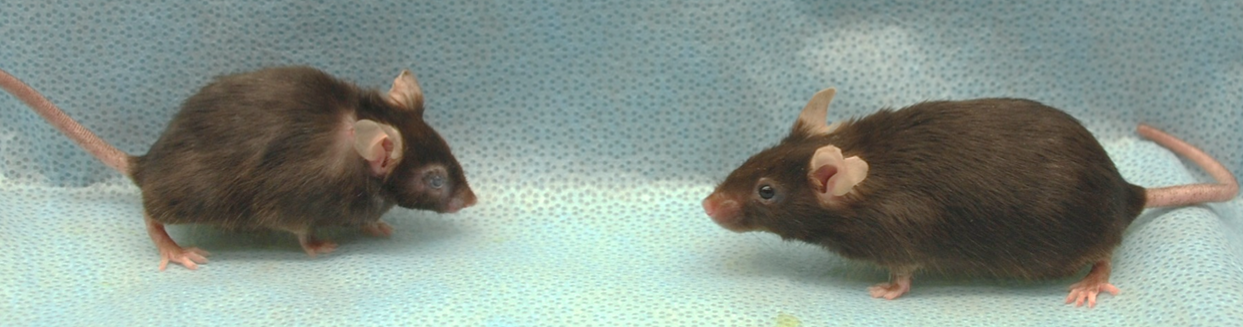
A February 2016 study published in Nature in particular sparked a lot of interest on senescent cells. In it, researchers from the Mayo Clinic College of Medicine purged mice of their senescent cells twice a week. The mice who had these cells removed ended up with healthier hearts and kidneys and fewer cataracts than the mice that were the same age but didn’t have their senescent cells cleared. They also tended to be more active and live longer than the control mice.

Here’s a look at what a pair of genetically identical mice that were the same age looked like. The one on the right has had its senescent cells cleared:
mouse photo


Yes, aging like the mouse on the right looks much funner than the one on the left. But if we are living to 150, we better be laser focused on efficient resource management and how to keep our planet healthy.

Posted in Main Page | Comments Off on Longer human ‘healthspans’ require smart ecology management





