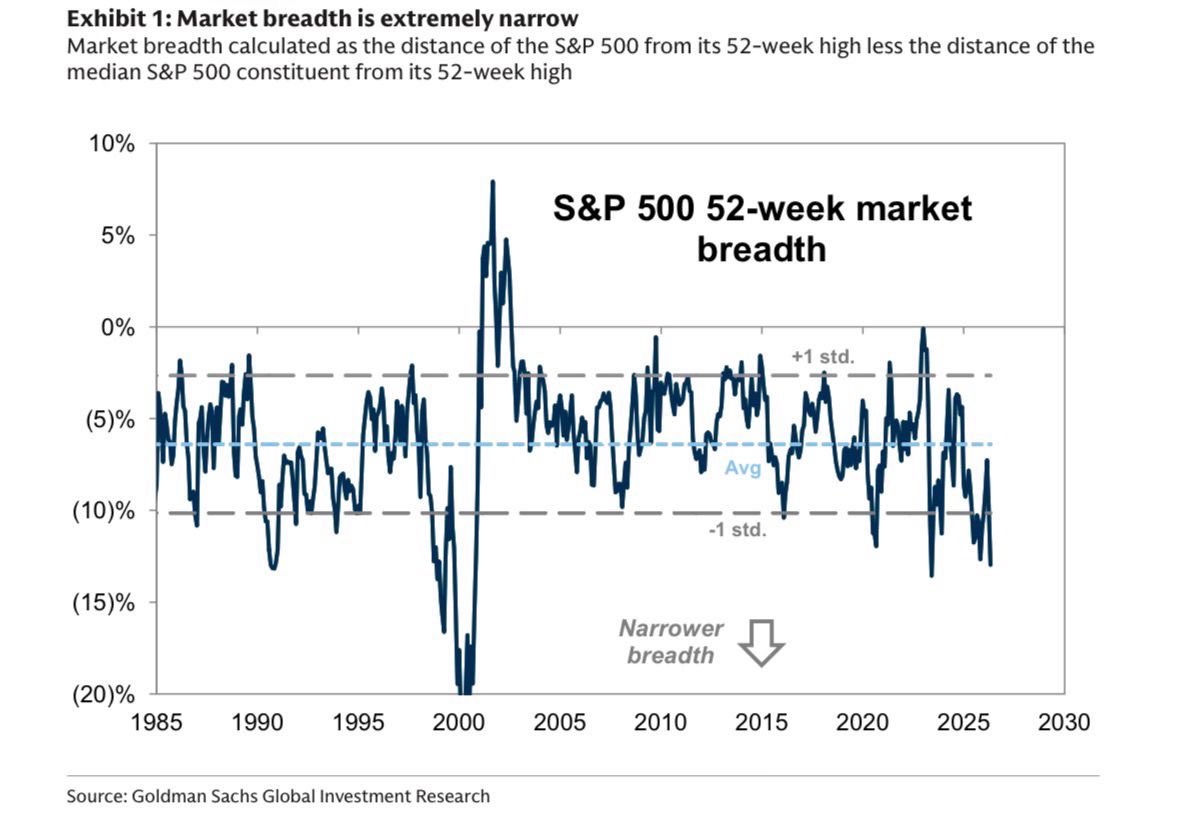
Aging populations likely to weigh on lofty asset valuations

It’s official, as of the 2016 census released today, Canada now has more citizens over the age of 65 than under the age of 15. See: Canadian seniors now outnumber children for the first time. Here is the chart, showing the cross over last year, and the projected spread set to widen over the next 45 years.
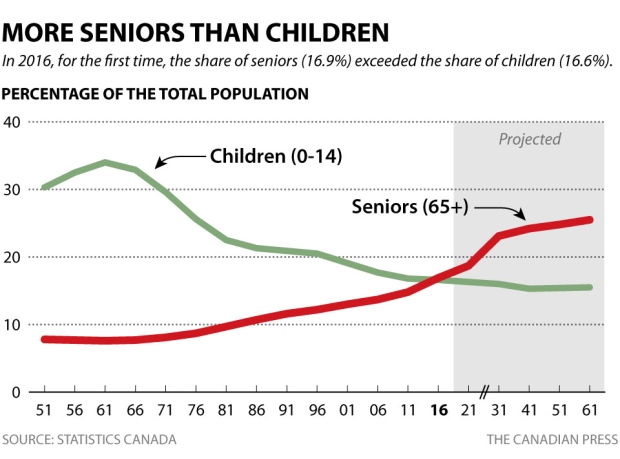
At current birth, death and immigration numbers, a full 23% of the Canadian population is projected to be seniors in just 14 years, on par with Japan today–the world’s ‘oldest’ population where retirees are no longer net savers, but already net-sellers of financial assets and real estate in order to raise cash for living expenses.  Near zero investment yields are accelerating the need for retirees to consume savings in Japan and most of the world.

As in most wealthy countries, the average number of live births for Canadian women at 1.59, is less than the 2.1 needed to maintain, let alone grow the population.  Only more immigration can soften the rate of decline in our working age to total population ratio, and immigration has become increasingly unpopular with the masses.
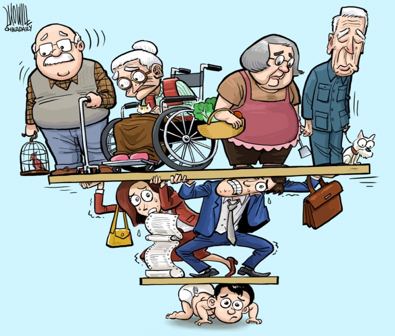
The trends do not bode well for consumption demand, nor the many income, benefit programs and subsidies, that are dependent on worker contributions and taxes.

Less income, less wants and less spending, are all part and parcel of a population naturally inclined to downsizing, lowering expenses, and moving to elder-friendly residences.

The defining question for the real estate frenzy that’s driven an estimated 84% (Scotiabank) of Canada’s economic growth over the last 6 years then, is who will buy our present concentration of single-detached homes (53.6%, see bel0w) full of old-tech energy and efficiency systems, presently trading far, far, above reasonable affordability and income multiples, amid escalating taxes of every kind?

What about foreigners looking to park money in Canadian assets, can’t they ‘buy it all’ and save the day? Doubtful for many reasons, but lest we forget:  the ones with the buying power are also predominantly of the same aging demographic. They can’t be voracious forever.  In all these circumstances, it’s hard not to see, today’s lofty asset prices must have a target on their bubble.
Posted in Main Page | Comments Off on Aging populations likely to weigh on lofty asset valuations

All the Plenary’s Men: another look at the banking cartel still ruling the world

A look at how and why bankers have continued to get away with crimes against humanity with nothing more than pay-to-play fines paid by their corporations…

The question at bar is why the U.S. Department of Justice has failed to prosecute any too-big-to-fail banks or—more importantly—their bankers, even for admitted crimes.

It’s a crucial question, because after eight straight years of unremitting prosecutorial failure, it looks very much as if a select group of top banks can, in fact, do no wrong. If that’s the case, then our constitutional republic isn’t merely in trouble. It’s dead.

A person or group of people who satisfy Blackstone’s criterion for ultimate sovereign power—the power to commit crimes with impunity—can’t exist in a nation where the law reigns supreme. And yet here we are a decade after the financial crisis began in earnest, and not one TBTF bank executive has gone to jail.

Legally, the TBTF banks are indistinguishable from the King, since the power to commit crimes with impunity swallows all other sovereign powers; such a power isn’t even supposed to exist in the U.S., and yet it does. Here is a direct video link.

Posted in Main Page | Comments Off on All the Plenary’s Men: another look at the banking cartel still ruling the world

If credit cycle has peaked, stocks should have too

Auto makers are releasing April sales numbers today and so far, all are reporting a fourth monthly decline, sending their share prices lower. See Every major carmaker whiffs on sales.

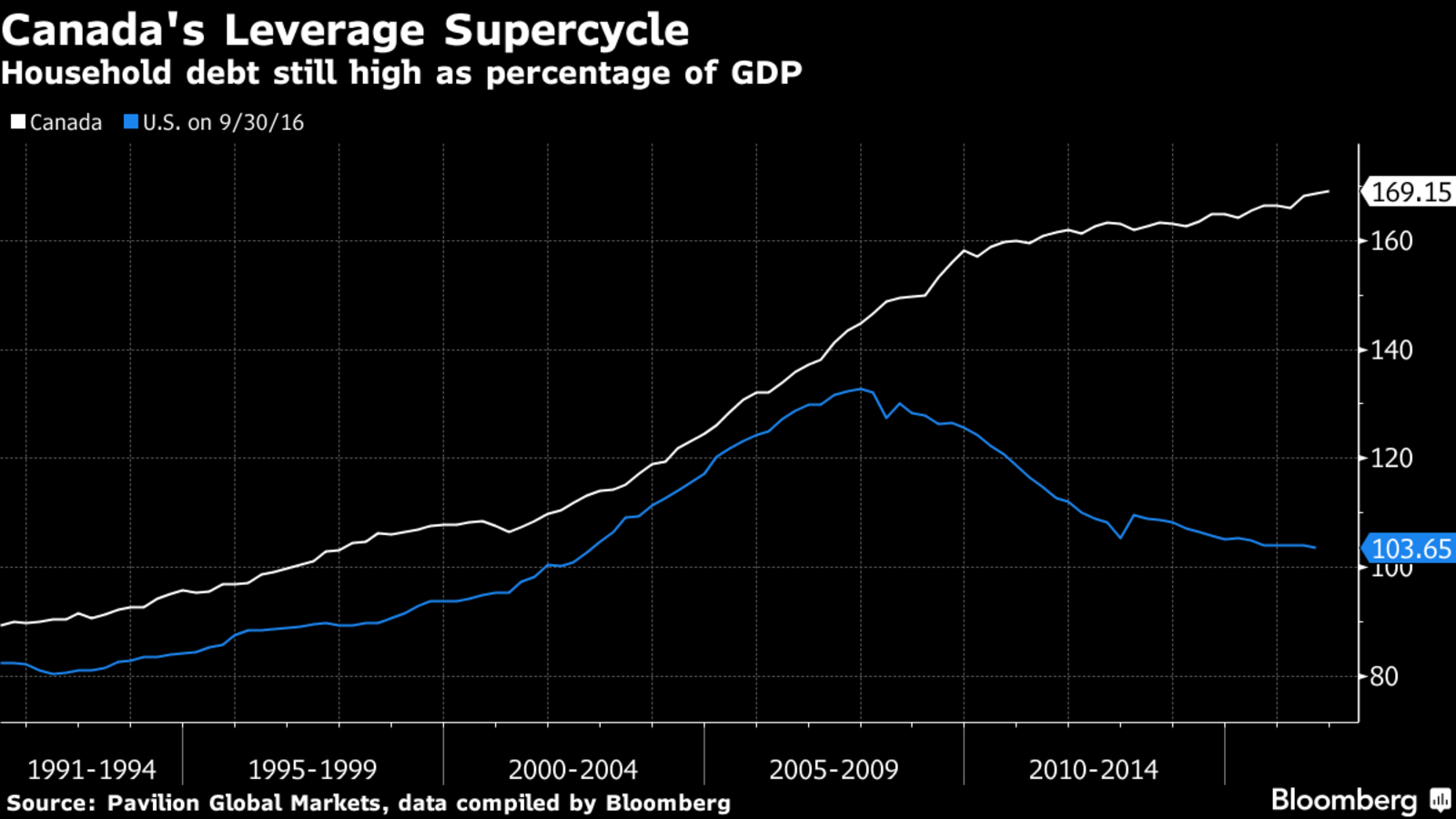
After seven straight years of prodding purchases with increasingly lax lending and uber-generous incentives, disappointment and mean reversion are due. No expansion can last forever, especially one this inherently self-destructive. Canada for one, has never had higher household leverage as shown here since 1990.


Weak auto sales weighed down consumer spending and hurt GDP growth in the first quarter. A year over year decline in 2017, would mark the first since the last recession.

At the same time, the other debt-enabled piston of the consumer-led economy–real estate and related services–is looking more precarious as mortgage magicians meltdown. This chart shows the spread from industry leader Home Capital to the shares of the other non-bank lenders who helped to fund Canada’s consumer debt bubble the past 8 years.


So far the broader Canadian financial sector index (XFN) is only down some 2% since March 1, 2017. But we should make no mistake, bank lenders are also heavily exposed to both household credit and the commercial realty sector.

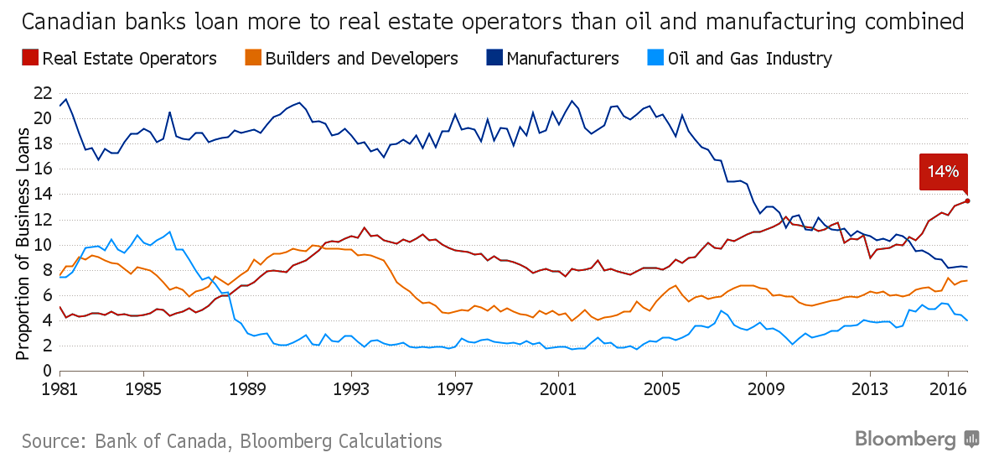
As shown below, realty operators are now a full 14% of the business loans held by Canadian banks–more than oil and manufacturing loans combined.  Note that real estate operator loans have led since the oil and manufacturing sectors turned down in 2014.

If the concerns here were contained to just a few borrowers at the margin, that would be easier to overlook. But debt burdens and shrinking revenues are the rule today, not the exception. And knock-off effects connect from the economy through the stock market, which in Canada is about 70% concentrated in just energy and financial shares.

This means that all of the mutual funds, ETFs and asset allocators who are all set up to track the broader index, are also over-exposed to the financial and energy sectors, as both move through a secular consolidation likely to persist for several years.

Tracking markets up is great, it’s tracking them back down that sets holders back years in wasted time and money.  And yet, that’s precisely what most advisors, managers and products, are designed to do.

Posted in Main Page | Comments Off on If credit cycle has peaked, stocks should have too