Ford behind on EVs, announces catch-up plan

It looked like Ford was falling behind in electrification over the past few years with not many vehicles on the roadmap, but today’s announcement give us a better idea of the company’s commitment to EVs. It’s a lot of hybrids, some plug-in hybrids, and one all-electric vehicle so far.

See:  Ford announces all-electric 300 mile SUV, hybrid F-150, Mustang and more

Posted in Main Page | Comments Off on Ford behind on EVs, announces catch-up plan

Mad markets and financial mayhem

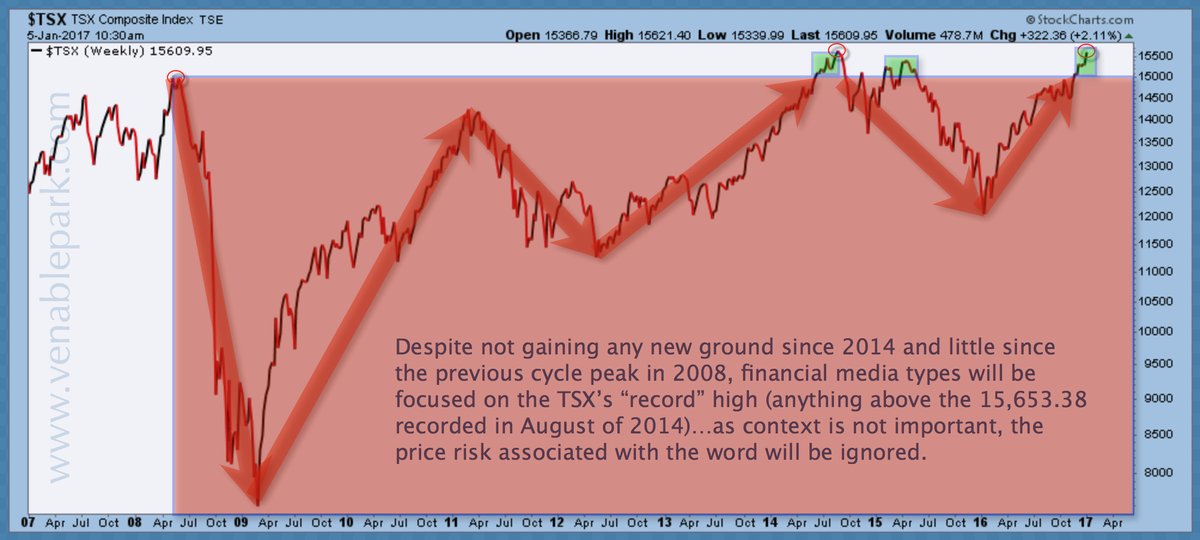
Trumphoria has taken North American stock markets back to the brink over the past few months.  This chart of the Canadian TSX since 2007, shows the wild ride and stagnate decade that has plagued Canadian stocks and the mutual funds, asset managers, pensions and ETFs that are designed to track it top to bottom, over and over again.
TSX back to the brink
Meanwhile capital deficits have compounded throughout and Main Street is left with woefully insufficient savings. The next cyclical bear market will make this painfully apparent even to those who are currently banking on permanently high plateaus holding indefinitely.  Go ahead and ask your advisor or manager when they will sell equity holdings to protect capital from cyclical (and secular) mean reversion? (Spoiler alert:  the answer is never!)  Getting customers to buy, hold and hope, is the finance sector’s business model.  It’s all about keeping a constant distribution channel open to receive products and drive profits for the industry.

Below is my partner Cory Venable’s chart of the Dow since 1997.  The next (and hopefully final) secular bottom test is yet to come. We must not let higher price levels obfuscate the secular trend.  Secular cycles are not defined by price, but by asset valuations that move from historic peaks to below historic average ‘troughs’ by the end.  Today stocks remain near all-time secular high valuations, and this is the most important marker to note.

Dow since 1997

Posted in Main Page | Comments Off on Mad markets and financial mayhem

Vertical farms: smart food solutions

Vertical farmGreat article in The New Yorker January 9 issue on Vertical Farming and innovators in Newark who are growing fresh vegetables with a fraction of the water, no soil or chemicals, nor cross-country transport.

This is the ‘buy local’ movement personified and it is perfectly timed to meet our simultaneous needs for plentiful, fresh, healthy food and a sustainable environment.  See:  The Vertical Farm, growing crops in the city, without soil or natural light:

“Agricultural runoff is the main cause of pollution in the oceans; vertical farms produce no runoff. Outdoor farming consumes seventy per cent of the planet’s freshwater; a vertical farm uses only a small amount of water compared with a regular farm. All over the world, croplands have been degraded or are disappearing. Vertical farming can allow former cropland to go back to nature and reverse the plundering of the earth…

Today in the U.S., vertical farms of various designs and sizes exist in Seattle, Detroit, Houston, Brooklyn, Queens, and near Chicago, among other places. AeroFarms is one of the largest. Usually the main crop is baby salad greens, whose premium price, as Ed Harwood realized, makes the enterprise attractive. The willingness of a certain kind of customer to pay a lot for salad justifies the investment, and after the greens get the business up and running its technology will be adapted for other crops, eventually feeding the world or a major fraction of it. That is the vision.”

Posted in Main Page | Comments Off on Vertical farms: smart food solutions