Subprime auto lending coming back to cost economy

It was noted in the 2006-09 credit bust that people would pay their car loan ahead of everything else, because the car allowed them mobility, and if necessary, a place to sleep even if they lost their home or apartment.  The fact that millions of Americans are already defaulting on their car loans today while the economy is reportedly still at ‘full employment’ and in recovery, not recession, raises huge red flags and should challenge the ‘economy is getting better’ mantra.  See: As auto lending rises, so do delinquences

Regulators are airing “significant concern” about the millions of Americans who are falling behind on their car loans, even as auto lending continues to boom at a near record pace.

On Wednesday, the Federal Reserve Bank of New York noted increasing distress among auto borrowers with shaky credit, as subprime delinquencies rose in the third quarter.

In the third quarter, 2 percent of subprime auto loan balances became at least 90 days delinquent, up from 1.6 percent in the third quarter of 2014.

This chart of motor vehicle loans owned and securitized (packaged and sold to investors) since 1945, shows that this credit has exploded higher since the 2008 credit bubble.  No deleveraging here folks.  Next to shelter costs, auto loans are the largest outlay for families.

auto debt

This video report gives more context to the perverse incentives that have been driving these practices.  They have allowed some companies and salespeople to extract commissions and fees up front, by ‘selling’ vehicles, making the loans and then packaging them into subprime bonds and selling them to desperate for yield investors.  But it leaves borrowers worse off in the end, and the social and financial costs for taxpayers, that much greater.  Predatory, financially suicidal practices are counterproductive:  not net progress.  The charade must end.

Banks and private equity firms searching for high-yield investments have fueled a boom in subprime auto loans to buyers who can’t afford them, including those who recently filed for bankruptcy. Here is a direct video link.
Posted in Main Page | Comments Off on Subprime auto lending coming back to cost economy

Oil-phoria bounce on OPEC deal, now what?

OPEC says the persistence of excess supply and weaker global demand growth have prompted its members to agree on production limits in January for the first time since 2008. Non-OPEC producers are not on side as yet.  And history tells us that even when these agreements are accepted in principle, about 60% of the limits are actually honored.  The inclination for cash-strapped countries to nod agreement and then cheat production curbs, is endemic.

The US–swing producer to the world–certainly will not be agreeing to an output freeze.  To the contrary Trump co is vowing to double down on US oil production.  And now that WTIC has recovered to the $50 range, producers everywhere have increased incentive to drill, baby, drill.

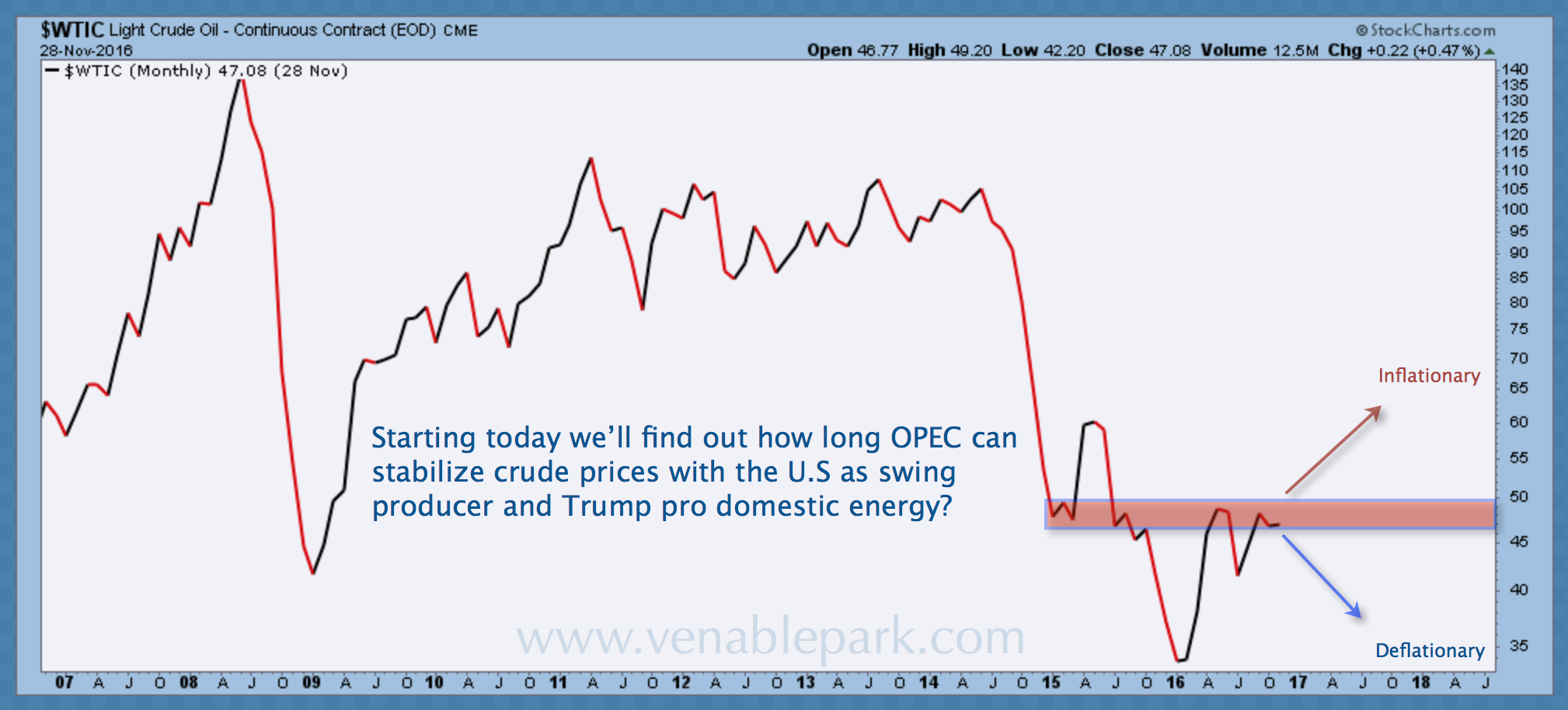
This chart courtesy of my partner Cory Venable gives a long term view of West Texas Crude since 2007.  Here we can see what happened to the price of oil the last time that OPEC agreed to cut output in 2008:  price plunged about 75% as the global economy recessed.  It then recovered on stimulus hopes and stockpiling into 2011, before faltering afresh, as global growth turned down once more and has sputtered since.  Technological advances in production and efficiency along with the natural tendency of aging consumers to use less, are formidable deflationary forces pushing down on the price of oil, and these are set to continue no matter what OPEC does.
WTIC Nov 29 2016


Most important to grasp is that 2017 is a dramatically different world than 2008.

Today technology is transforming the energy landscape faster than most can imagine and appreciate.  Energy costs are falling as technology is allowing alternate fuel types and sources along with energy efficiency (like net zero buildings, electric transportation, horizontal farming, energy capture and recycling etc.) to boom.   See:  India unveils the world’s largest solar power plant, as just one recent example.  (Also watch:  Inside Story- Solar power-bright future?) Governments and status quo corporations can waste more time and money trying to prevent this life-improving gift for the masses, but they will fail.

The energy revolution is as big for the world today as the dawn of personal computing and the internet was in 2000.  In reality the two are directly related, since the advances in energy are made possible by the ongoing computing revolution.  And all of this is coming just in time for an aging, indebted population, desperately needing productivity increases for households and businesses, after a decade of wasteful financial engineering and mal-investment on non-productive consumer goods.

This future is very bright.  Trying to lean against this change is as futile as trying to block out the sun from shining on the planet.  Literally.

Posted in Main Page | Comments Off on Oil-phoria bounce on OPEC deal, now what?

Canadian credit boomerang coming full circle

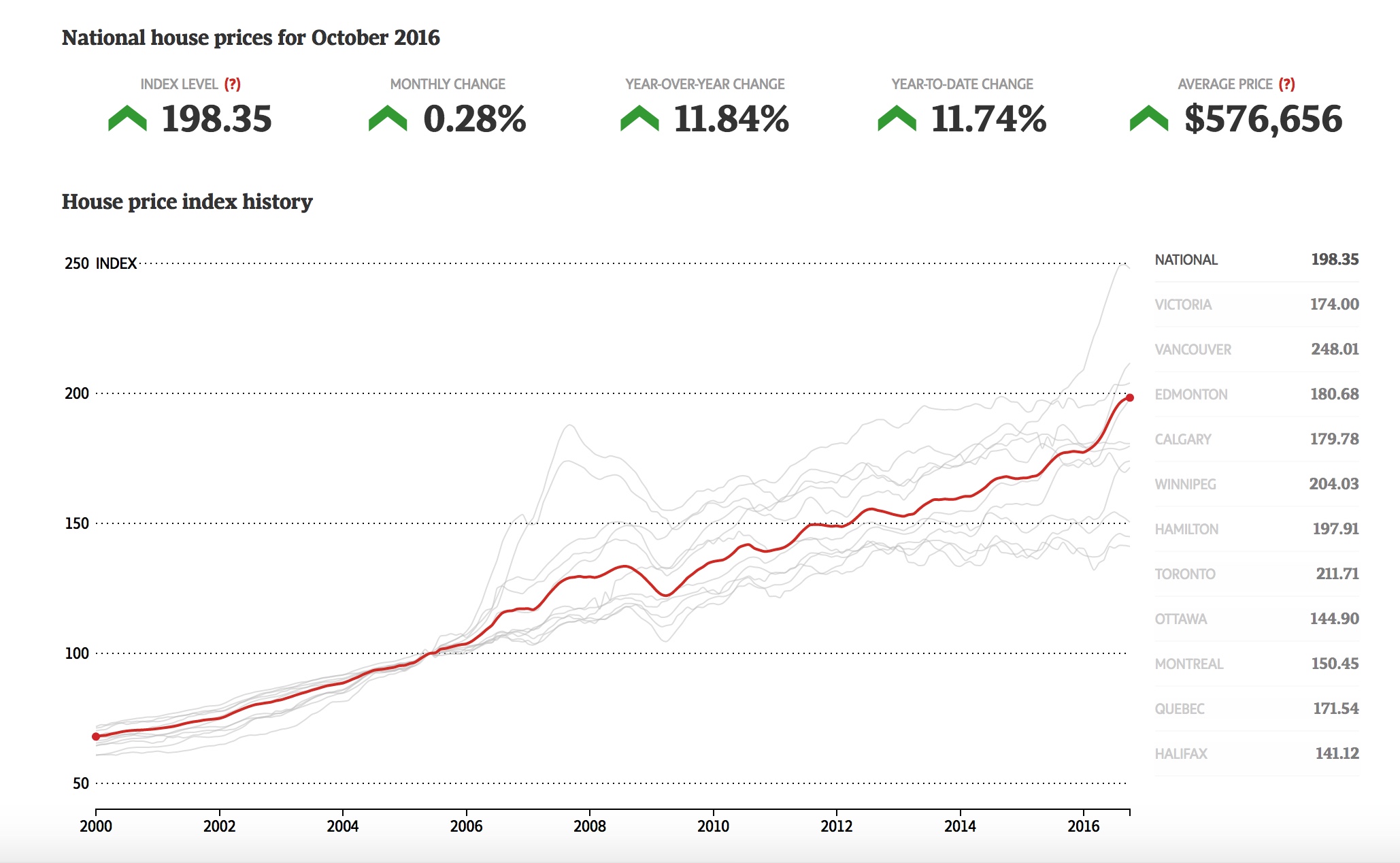
Nationally the average home price in Canada is about $500,000.  In the largest 11 cities, where the bulk of the population lives, the average is $576,000.  As shown in this chart from the Globe and Mail, the average home price in these cities has risen more than 11% in the past year, doubled since 2005 and almost tripled since 2000.  Sound reasonable?
fullsizeoutput_534
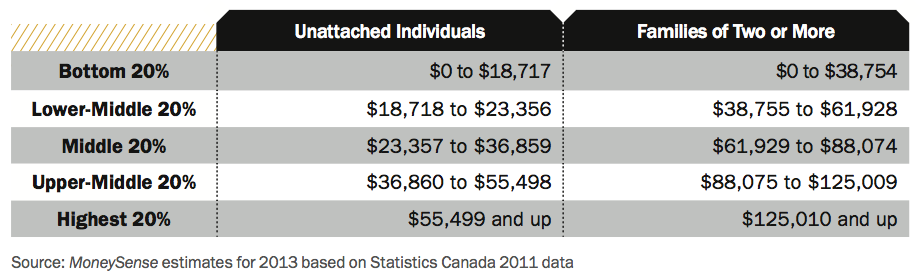
Canadians pay for their housing costs out of after tax income, and Stats Can tells us that the median after tax income for Canadian families is $54,600 according to their latest survey.  This table shows the before tax income levels for individuals and families, at the latest data.Income levels Canada
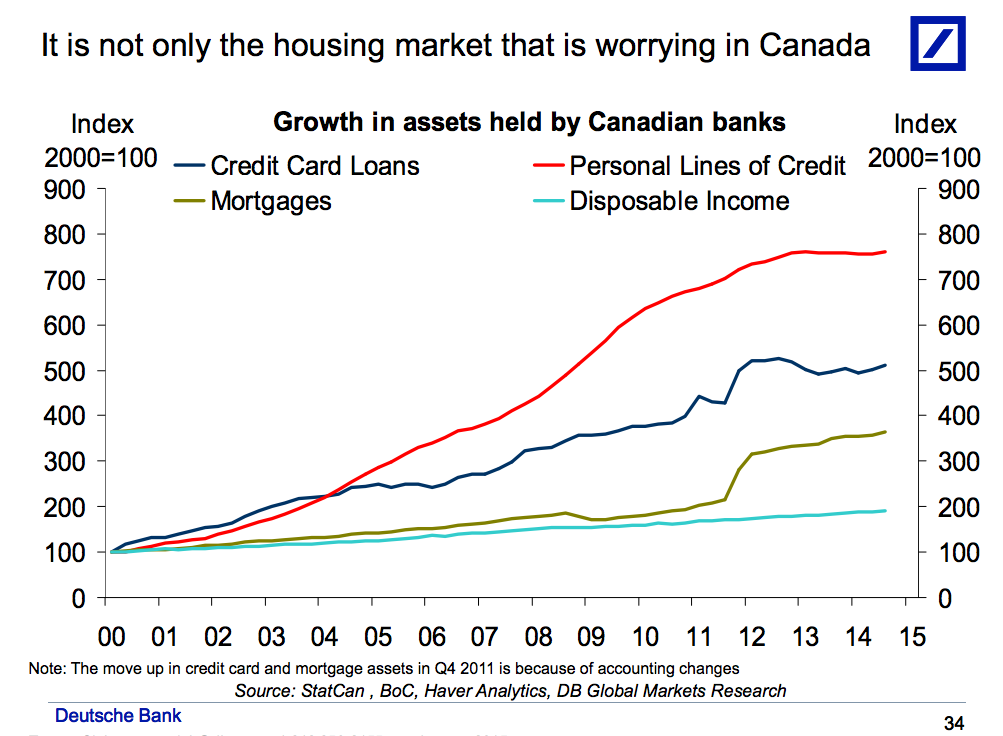
Which brings us here:  the chart that shows how Canadians have managed to keep consuming and pay for their tripling shelter costs over the past 16 years as their disposable incomes rose only modestly (aqua line at bottom).  Debt of every kind has soared (other lines).
Cdn income flat and debt up
Which brings us to this story yesterday: Canadian banks could see ‘significant losses’ if the housing market turns.  … or people lose jobs, or boomers start wanting to liquidate cash out of their housing and reduce their expenses, or rates rise just a percent or three:

Canada’s banking regulator warned on Monday that lenders could face significant losses if housing markets turn in the event of an economic downturn and emphasized the need for stringent underwriting practices.

Which bring us to the Canadian stock market (TSX 60 is 36% finance sector) and all the retirees, mutual funds and pensions who have trebled all their income-desperate-bets on this ‘can’t lose’ sector (along with real estate and REITs) over the past 5 years, as consumer credit went loco.

The cruel result of all this, is that those who are least risk tolerant and have no time to make back losses, are today the most risk exposed.  What many thought was financial progress through QE mania the past few years, is really just a huge credit boomerang headed back to hit when Canada can least afford it.

Posted in Main Page | Comments Off on Canadian credit boomerang coming full circle