Care about a viable climate and your health? cut the meat

Some 15% of planet-warming emissions come from the keeping and eating of cows, chickens, pigs and other animals – more than the emissions from the entire transport sector. Not only do livestock emit methane, but land clearing and fertilizers for animal feed release large quantities of carbon.

Today China has about 19% of the world’s population and consumes 28% of global meat including half of the pork. The average American and Australian consumes twice as much meat per person in comparison.

This year the Chinese government has outlined a plan to reduce its citizens’ meat consumption by 50%, in an effort to slow runaway global warming, obesity and diabetes. See: China’s plan to cut meat consumption by 50% cheered.

New dietary guidelines drawn up by China’s health ministry recommend that the nation’s 1.3 billion population should consume between 40g to 75g of meat per person each day. The measures, released once every 10 years, are designed to improve public health but could also provide a significant cut to greenhouse gas emissions.

According to a new report by WildAid, the predicted increase in China’s meat consumption would add an extra 233m tonnes of greenhouse gases to the atmosphere each year, as well as put increased strain on the country’s water supply, which is already blighted by polluted and denuded rivers and groundwater.

The report warns that unchecked Chinese meat consumption will also degrade its arable land and worsen the country’s problems with obesity and diabetes. An estimated 100 million Chinese people have diabetes, more than any other country.

Research released by the thinktank Chatham House in 2014 forecast that China alone is expected to eat 20m tonnes more of meat and dairy a year by 2020 and warned that “dietary change is essential” if global warming is to not exceed the 2C limit eventually imposed at the climate accord in Paris last year.

A separate report by scientists at the Oxford Martin School this year found that the widespread adoption of vegetarianism around the world could bring down greenhouse gas emissions by nearly two-thirds.
Posted in Main Page | Comments Off on Care about a viable climate and your health? cut the meat

That 70’s show haunting today’s equity markets

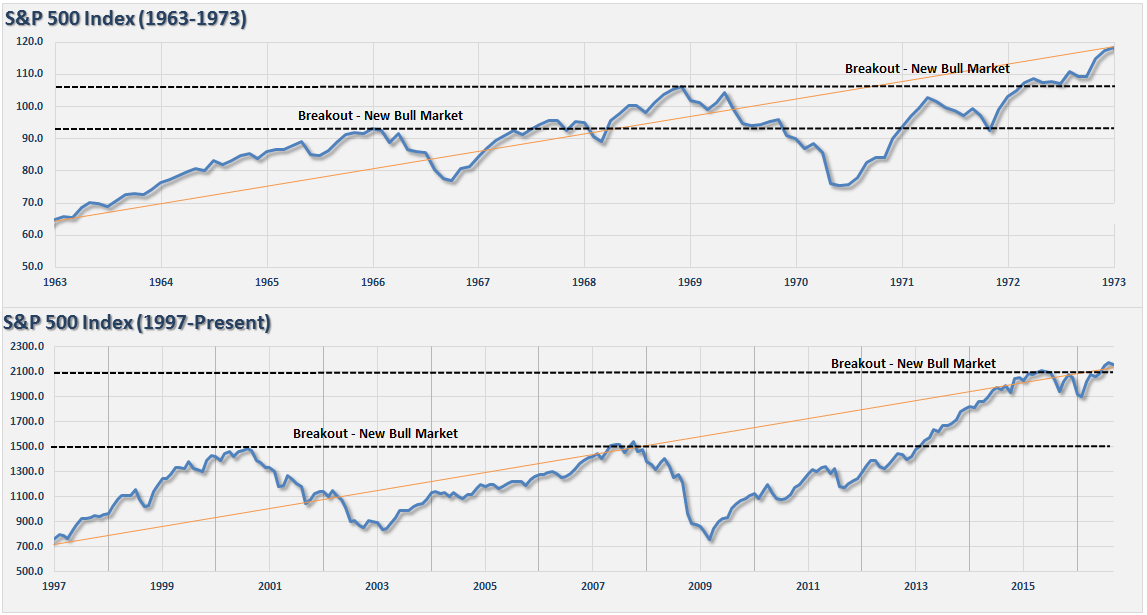
Good article courtesy of Lance Roberts this morning, in answer to the long-always propaganda suggesting that 2015 was the end of the secular bear that began in 2000 and we are now in the midst of a new secular bull market likely to continue for many more years.  See:  Past is prologue: new secular bull or repeat of the 70’s.

In the top panel Roberts shows the S&P 500 price action from 1963 to 1973 compared with 1997 to present in the bottom panel.

SP500-1960-1970-2000-Present-Bull-Bear-101616

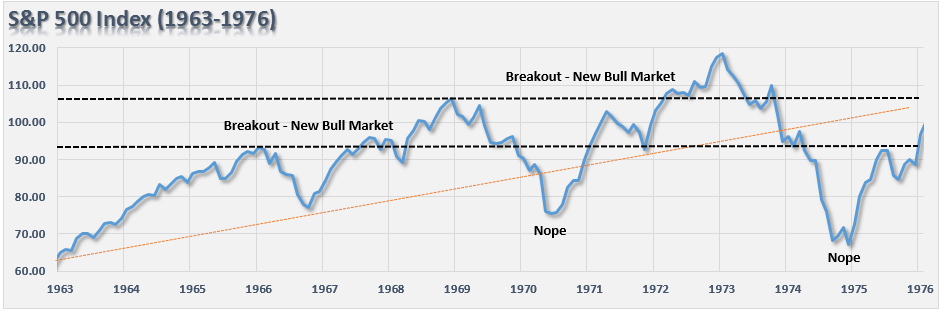
Those banking on a new secular breakout in 1972, were punished brutally for their error. What followed was a third massive decline of -45% for the broad market as shown here.

SP-500-1963-1976

To wit:

The second breakout in 1972, like the previous, was the setup for the final market dive that reset valuation levels back to historic secular bear market lows. That crash also created the necessary extreme negative in investor psychology. The 1974 bear market low is known as a “black bear market” because investors were so brutally ravaged by the crash they did not return until nearly two decades later.

Asset valuations are more extreme and vulnerable today than at any of the 3 cyclical peaks during the 1966-82 secular bear market.  Structuring our portfolio to minimize losses in the next decline, and maintain liquidity and strength of mind to be one of the few able buyers from panicking sellers, should be the wise person’s raison d’être today.

Posted in Main Page | Comments Off on That 70’s show haunting today’s equity markets

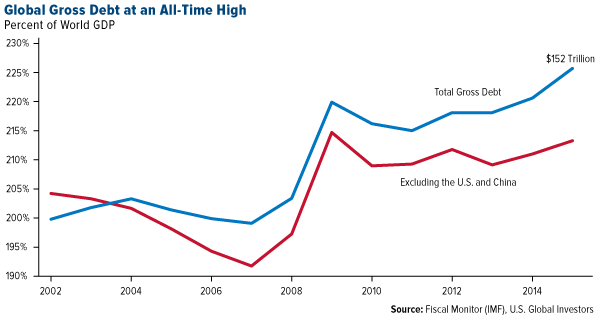
Global economy cracking under weight of debt and high prices

Wolfstreet.com offers some useful analysis and charts on real economy trends. Editor Wolf Richter did a worthwhile interview on Peak Prosperity this weekend where he explains, among other things, why assets are not more valuable just because prices go up: “You can’t have median homes that require multi-millionaires to live in them, because you know, we just don’t have that many millionaires.”  Also discusses spreading strains in the global banking system and the likelihood of bail-ins from bank equity and bond holders in the next resolution phase. Real world commonsense assessments are helpful.

Wolf Richter joins the podcast this week to discuss the deterioration of the global macro situation, and how he is seeing growing signs of recession breaking out across the economy. Here is a direct video link.

See The economy is cracking under too much debt:

“…one of the biggest mistakes the central banks made during the financial crisis: They stopped the debt from blowing up. So we never had a cleansing.

Global-Gross-Debt-All-Time-High-10062016

Posted in Main Page | Comments Off on Global economy cracking under weight of debt and high prices