
China: vendor-take-back financier to global debt bubble

China has provided several forms of vendor-take-back financing for the western credit/consumption bubble 2005-2015.  First by recycling its export profits back into US and European treasury bonds (which kept rates low and allowed more borrowing in the west), then by funding the world’s largest stimulus program in 2008 to boost global demand in the short run, and lastly in recent years, with capital fleeing China (some legal and some not) to buy up property and businesses in the west.

All of these actions have China debt iif_0helped boost official demand numbers and asset prices, but with it, also more superfluous inventories, inefficient allocations of capital, and of course debt on debt on debt.  Officially China now has a debt to GDP ratio of 275%+ as charted here.  Fitch estimates that loans are going bad in China today at 10x the officially reported rate.
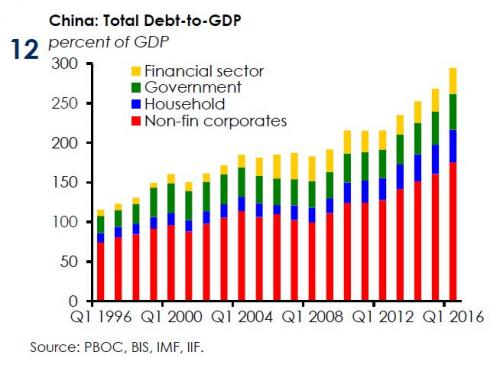
As with all extend and pretend strategies that throw good money after bad, they delay, but also magnify, the underlying fundamental problems which require structural reform, debt write-offs and lower prices to clear the excesses of the prior boom.

The below discussion focuses on the steps the Chinese government has taken to paper over growing losses in the banking system while “peer to peer” market place lending (MPL) has ballooned on top of official debt totals. Of course all of the comments made by Cornish are also words of warning to the other countries who have been adding more debt (now globally 35% higher than in 2008) rather than allowing the economy and financial markets to reprice and heal.

Jonathan Cornish, head of north Asia bank ratings at Fitch Ratings, discusses China’s latest debt for equity swap, China’s non-performing loans and the outlook for the credit market. Here is a direct video link.

Posted in Main Page | Comments Off on China: vendor-take-back financier to global debt bubble

TED: What a driverless world could look like

What if traffic flowed through our streets as smoothly and efficiently as blood flows through our veins? Transportation geek Wanis Kabbaj thinks we can find inspiration in the genius of our biology to design the transit systems of the future. In this forward-thinking talk, preview exciting concepts like modular, detachable buses, flying taxis and networks of suspended magnetic pods that could help make the dream of a dynamic, driverless world into a reality.  Here is a direct video link.

Posted in Main Page | Comments Off on TED: What a driverless world could look like

The Behavioral Economics of Recycling

When I was very young, there was no municipal garbage pick up in our village, people were required to take their own garbage to the dump. This caused us to care about how much trash we created. My farmer grandparents naturally composted and sorted waste into recyclables. Pop, beer and milk bottles all had return deposits when you took them back to the stores that sold them. The focus was intuitively on how to reduce and reuse. Then in the 1980’s consumer goods manufacturing moved to Asia, and started shipping to us from overseas. Suddenly packaging refuse exploded.

Today our family is so programed to sort our trash and compost that we are frequently shocked and grossed out when we travel to countries like America and the Caribbean to see still how little trash management is even attempted. Same goes for businesses like Starbucks who hand out tons of packaging and yet often provide no recycling receptacles for customers to sort their trash into. Once it is in your behavior to reduce, reuse and recycle it feels disgusting, rude and unintelligent to toss everything into one trash bag. These behavior patterns are learned. We need more individuals and business owners to help lead change. One easy start is that businesses should not be allowed to sell products in packaging they do not collect or sort for recycling. Full stop.

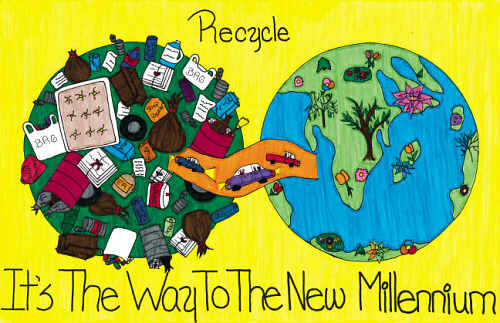
recycleHere is an interesting article about the behaviors that drive decisions to recycle or not, and how it effects our tendencies to consume. Food for thought.

See: The Behavioral Economics of Recycling: there’s more happening than you think.

Posted in Main Page | Comments Off on The Behavioral Economics of Recycling



