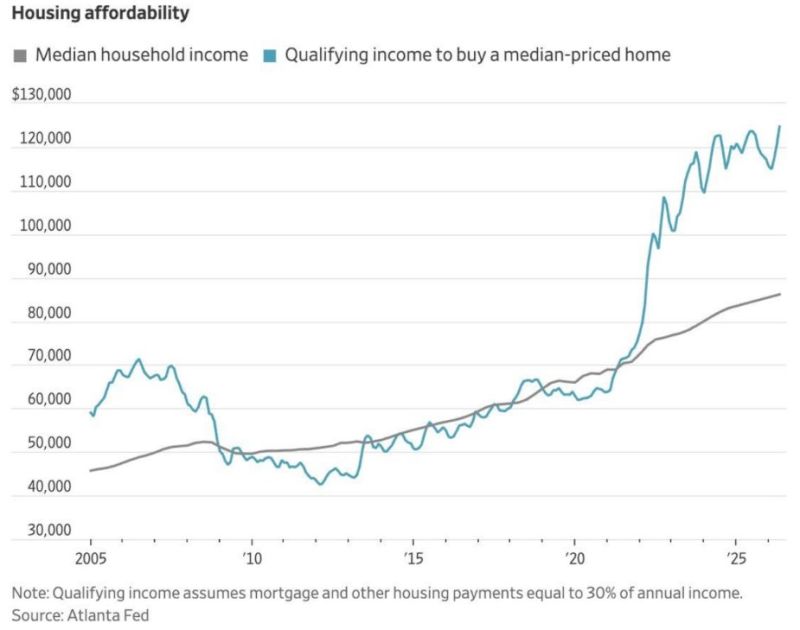
MacLean’s leads with a worthwhile article on Canadian housing risks this week, see: A housing market that’s too hot to handle:
After years of pumping money into the country’s frothiest housing markets, Canada’s big banks are suddenly—and alarmingly—nervous about the debt-fuelled monster they’ve helped to create…
And the CBC’s Don Pittis offers this insight today: Bank of Canada must open people’s eyes to debt.
As Canadian personal debt keeps bouncing higher, the question is whether individuals signing on the dotted line for enormous loans actually realize what they are getting into.
Evidence from Newfoundland and Labrador, where house prices have begun to fall just as other costs are rising and job markets weaken, indicates that Canadians really don’t understand the dangerous downside of overwhelming debt.
“They’re feeling like the goal posts have moved,” says Robin Whitaker, a St. John’s anthropologist interviewing first-time homebuyers to study the effect of debt on the lives of ordinary people. She says anxiety levels are increasing as the provincial government’s austerity budget pushes up the annual cost of living by as much as $6,000 per household, according to some estimates.
The article notes, in passing, a rarely mentioned catalyst in the present epidemic of financial illness and economic weakness: a financial industry driven by self-serving, damaging recommendations focused on
Most often the front line people doing the recommending are in precarious financial condition themselves. Whether oblivious or willfully blind to the harm they are inflicting, sales reps (banks/mortgage brokers/investment dealers/mutual fund and ETF companies) have helped to spread financial disease far and wide. As researcher Robin Whitaker notes: “Quite a few people are feeling like they did all the right things you are told to do,” says Whitaker.”
Now we are getting to the meat of the matter:
“We all as consumers have difficulties with self-control,” says Saul Schwartz, an expert in consumer debt who teaches behavioural economics at Carleton University. “That means you drink too much and get a hangover, you eat too much and gain weight, you buy things and end up more in debt than you wanted to be.”
But while the urge to have it all now is one reason for growing consumer indebtedness, Schwartz says it’s only half of the problem.
“Lenders, retailers, anybody who you might be buying things from, takes advantage of that lack of self-control and they are not sufficiently regulated,” Schwartz says.
Given these facts about human nature and the societal need for financial viability, solutions must include:
- A separation of traditional banks (that take in government insured deposits and make loans) away from product creating sales arms and their insatiable growth targets.
- A move back to prudent loan practices that keep the risk of collection with lenders making the loans, so that they have every incentive to be conservative in advancing funds.
- A return to conventional 20% down-payment requirements on homes and vehicles, where people are forced to save and cultivate financial discipline before trying to ‘have it all.’
- Last but not least, we must demand a fiduciary standard from everyone that works in the financial ‘advising’ business, this means they must be trained and paid to manage risk, not sell it to their clients.