
Global oil glut still building

The International Energy Agency forecasts that sluggish growth in China and Europe will reduce oil demand growth to 1.2 million barrels a day in 2016, down from 1.8 million barrels a day in 2015.  At the same time major producers pumped higher-than-normal volumes of crude in January.  The top two, Russia and Saudi Arabia for instance,  produced near record volumes of 10.9 million and 10.2 million barrels a day respectively. See the chart here.

While some are banking on an output freeze agreement between the world’s major producers this weekend, capping production at record highs is not likely to alleviate the existing supply glut.  See:  OPEC Doha meeting.

All around the world, supertankers are lined up in massive traffic jams hoping to get their product to shore before prices drop further. See:  Band plays on, global oil glut leaves tankers in huge traffic jam.
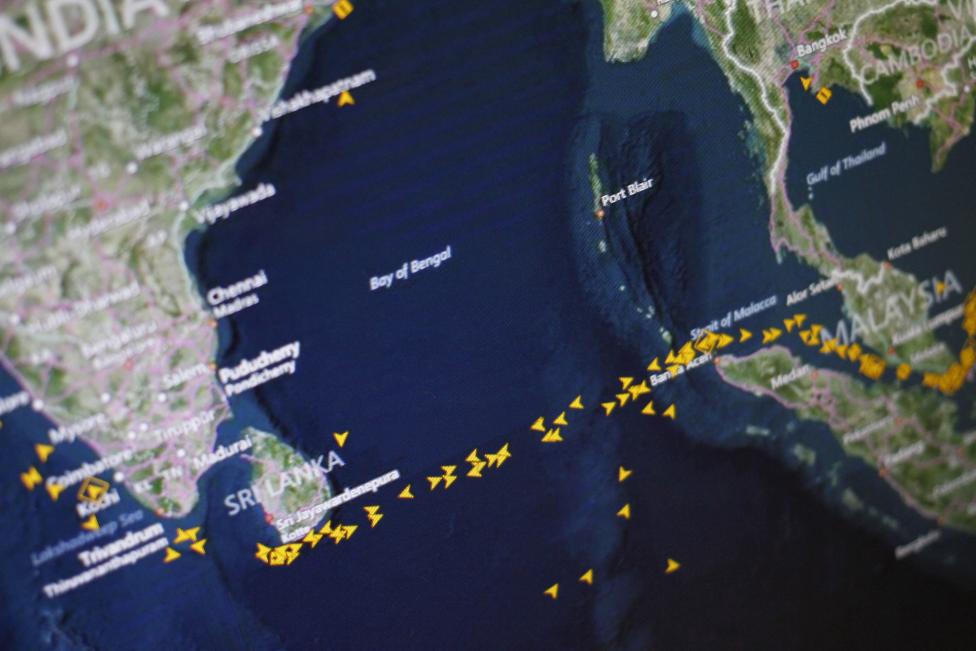
VLCC supertankers are seen travelling between India and Southeast Asia in this illustration photo of an Eikon ship-tracking screen April 7, 2016. REUTERS/Thomas White/Illustration

VLCC supertankers are seen travelling between India and Southeast Asia in this illustration photo of an Eikon ship-tracking screen April 7, 2016. REUTERS/Thomas White/Illustration

“As ports struggle to cope with a global oil glut, huge queues of supertankers have formed in some of the world’s busiest sea lanes, where some 200 million barrels of crude lies waiting to be loaded or delivered.

The vessels, filled with oil worth around $7.5 billion at current market prices, would stretch for almost 40 km (25 miles) if formed up in one straight line.”


Which brings us to this chart showing the recent trader-driven rebound in WTI amid the price big picture since 2006….bullish?
Crude April 13, 2016

Posted in Main Page | Comments Off on Global oil glut still building

CA sues Morgan Stanley for ‘massive harm to public-sector workers’

In terms of their profits, fraud is the dominant business model of investment banks.  Today they are still being allowed to pay cost-of-business-fines and continue.  And we the people, keep paying a crushing price in capital losses and deficits in our most critical institutions and expenditures.  This latest story is more of the same, the State of California is trying to go after Morgan Stanley for financial damages for the 2008 losses.  See:  CA sues Morgan Stanley over public pension funds.

The State of California has sued investment bank Morgan Stanley, filing a complaint in San Francisco Superior Court, seeking redress for what officials said was massive harm to its public-sector workers.

“Public employees in California, including peace officers, firefighters, teachers, and other public servants, suffered major losses as a result of Morgan Stanley’s residential mortgage-backed securities, in which high-risk home loans were purchased from subprime lenders, bundled together and sold for billions of dollars to investors,” the complaint alleges, according to CBS San Francisco.

The nauseating reality here is that as one of the big 5 US investment banks, Morgan Stanley (thanks to the removal of Glass Steagall and regulatory forbearance since) still commands FDIC underwriting for its reckless risk taking with client deposits in 2016. So not only have they been granted a license to continue abusing trust and selling toxic products as ‘investments’ but they get to retain their proceeds of fraud and have the insurance of taxpayer bailouts when they blow themselves up again.

For the big banks it is a brilliant business indeed.  For the rest of the population who keep paying and tolerating this while taking financial ‘advice’ from the cartel, Stockholm Syndrome must be real.

Posted in Main Page | Comments Off on CA sues Morgan Stanley for ‘massive harm to public-sector workers’

Reforming education and finance from the ground up

As plans for increased student funding and forgiveness of education loans are being rolled out by well-meaning politicians from Obama to Trudeau, Senator Warren to candidates like Bernie Sanders, the elephant in the room–top-heavy, resort-style, debt-fattened institutions and directors–is growing larger and more unsustainable by the day. In a world of stagnant wages since the 1980’s, the 137% spike in the cost of higher education over the past 15 years (chart below) has only been made possible by families and governments taking on now crushing levels of debt. Does this look reasonable to anyone?

higher-education8-15Costs have to revert. Leaner more effective education models must be cultivated.  The ‘add-even-more-government-backed-debt and stir days’ that fueled rapid growth and allowed the post-secondary sector to become cost-prohibitive for the 99.9%, are done.  The below segment covers some refreshing observations on this topic.

Investor and entrepreneur Peter Thiel talks about education in America. Here is a direct video link.

Posted in Main Page | Comments Off on Reforming education and finance from the ground up





