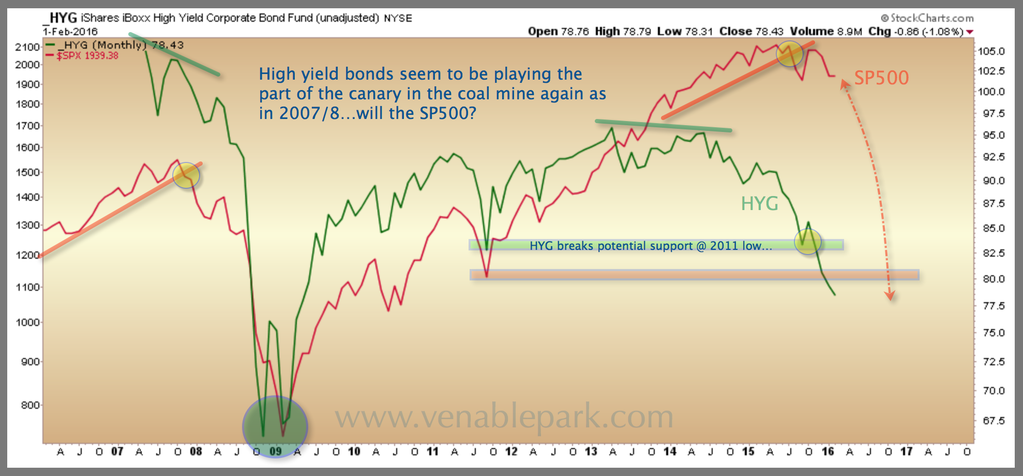
US leadership candidates like Cruz and Clinton imply business as usual for corporate welfare and Wall Street. But Trump (who talks about getting rid of carried interest and tax loopholes) and Saunders (who says breaking up the finance cartel is top of his to do list), present wild card threats. The tight race in Iowa last night, offered the status quo no reassurance.
At the same time, the traditional power of the oil lobby is also under threat (BP and EXXON tanking with crude this morning, as the Saudis signal a willingness to dig in for the long haul, raising capital if necessary via their first ever bond float).
And on the monetary policy front, Central Banks have deservedly lost the hearts and minds of thinking people everywhere.
In short, the presumptions on which the world has been run the past 30 years, are disintegrating under asset markets that have been overly-complacent and confident. Suddenly participants are having to face the risk and uncertainty that real families and small businesses feel in their bones everyday. This revelation and necessary repricing are long overdue. (You can tell someone is living in the alternative reality, theoretical world, with no actual understanding of risk, when they talk about markets or business needing or waiting for ‘certainty’. Good luck with finding that!)
John Mauldin articulates the growing angst well this week in Tokyo doubles down:
“In the world of the leading economists and central bankers, “everyone” believes what “everyone” knows to be true. All their research agrees with them, and any that doesn’t is labeled as flawed. Any empirical evidence that shows quantitative easing hasn’t been working is ignored or explained away, even when it is presented by outstanding academic economists. No, quantitative easing didn’t work because we didn’t do enough of it. Negative interest rates aren’t working because we haven’t gone low enough.”
As does John Hussman in his latest missive yesterday, The gas pedal is useless when the spark plugs are gone:
“All of this madness goes back to Ben Bernanke, who is the intellectual architect of quantitative easing, and who successfully encouraged Japan to pursue this policy n 2000. Thoughtful, informed policy is typically conducted within a carefully considered “range” having reasonable upper and lower bands. Bernanke’s abandonment of every such bound has produced policies that are, quite literally, deranged.”