Realism not blind optimism key to financial success

Marc Faber, editor and publisher of the “Gloom Boom Doom” report, and Frank Berlage, chief executive officer at Multilateral Partners, discuss what investors should look for in 2016.  Here is a direct video link.

David Levy, chairman of the Jerome Levy Forecasting Center, discusses why he’s predicting a recession in the U.S. in 2016. Here is a direct video link.

Posted in Main Page | Comments Off on Realism not blind optimism key to financial success

After the debt rush: oil tsunami swamping unprepared

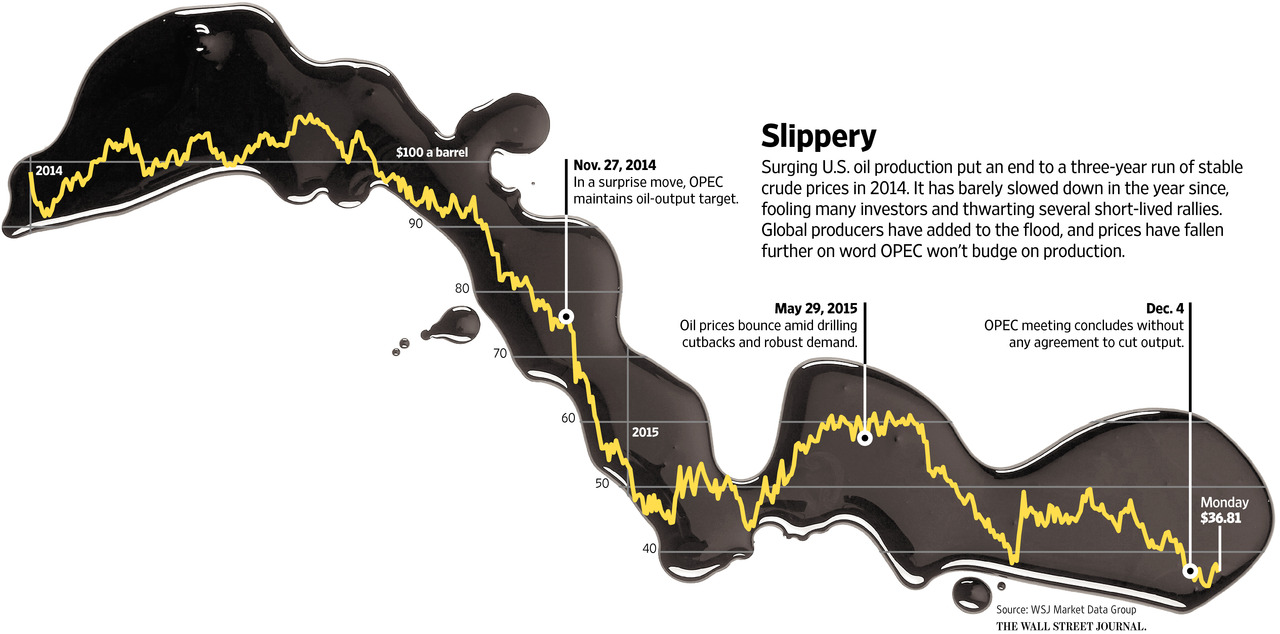
Very few saw it coming, but today everyone knows what happened to oil prices over the past year.  This graphic from the Wall Street Journal captures the relentless price tsunami which has been hammering so many investors, companies and countries over the last 12 months.
Oil graphic Dec 30 2015
As always, the financially critical question is what happens from here?
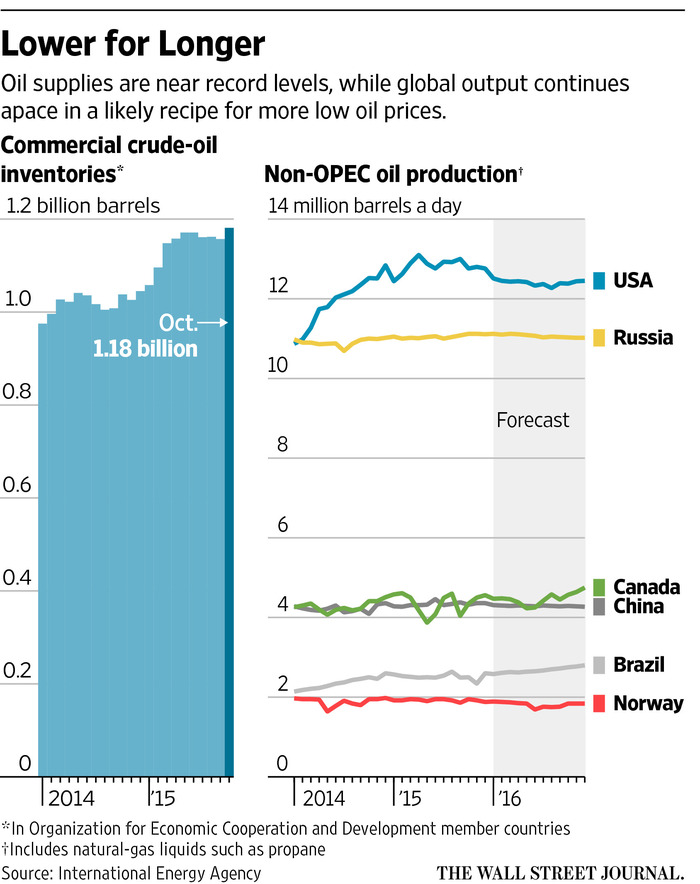
Oil supply and demand Dec 30 2015 To postulate it is important to note that oil production and inventories have increased, not fallen with prices, as so many had predicted.

Second it is essential to comprehend just how indebted and cash-strapped the price collapse has left many unprepared producers and related service providers.  The net effect of high debt and plunging income is an increasing desperation for cash flow to cover expenses.  Those in weak financial circumstances are in no position to strategically game output.  To the contrary, they are likely to pump even more superfluous product as prices plunge.

With growth recessing all around the world, and alternative energies booming, oil demand is not likely to soak up excess supply quickly.  In response the US is moving to export and the Saudis are slashing budgets and hunkering down for a long haul.  2016 is unlikely to be kind to the many companies and governments that have factored in a presumption of crude above $50 a barrel.  See:  Not even OPEC can fix oil glut.

And yet, today under $37, the probability of even lower prices from here must be acknowledged.  In fact charted here since 1982, the 2005-2015 decade of crude above $40 a barrel (brown band) was an anomaly caused by the banker-stoked global credit bubble.  Now that the whole world is in the debt hangover phase , crude in the $20’s (green band) is entirely reasonable–it might even be dear.
WTIC Dec 30 2015

Posted in Main Page | Comments Off on After the debt rush: oil tsunami swamping unprepared

Earnings recession spreads as buyback well dries up

The number of companies with the worst credit ratings and most negative outlooks jumped to 195 in December. Thirty-four of them were in the oil and gas sector, but 33 were financial companies, underlining the close nexus between energy and other sectors.  See:  Debt distress at highest level since recession.

The bond markets are starting to factor in the dangerous combination of rising interest rates as well as profit weakness in several sectors. The U.S. distress ratio – a measure of the amount of risk the market has priced into bonds – hit 20.1% in November, which is the highest level since hitting 23.5% in September 2009, says S&P. That’s an onerous indicator since September 2009 takes investors back to the last recession.

There is very good reason for distress in the corporate sector, debt levels have positively exploded over the past 7 years as companies have borrowed to jimmy rig earnings growth via buybacks, mergers and acquisitions. Think this trend is sustainable?
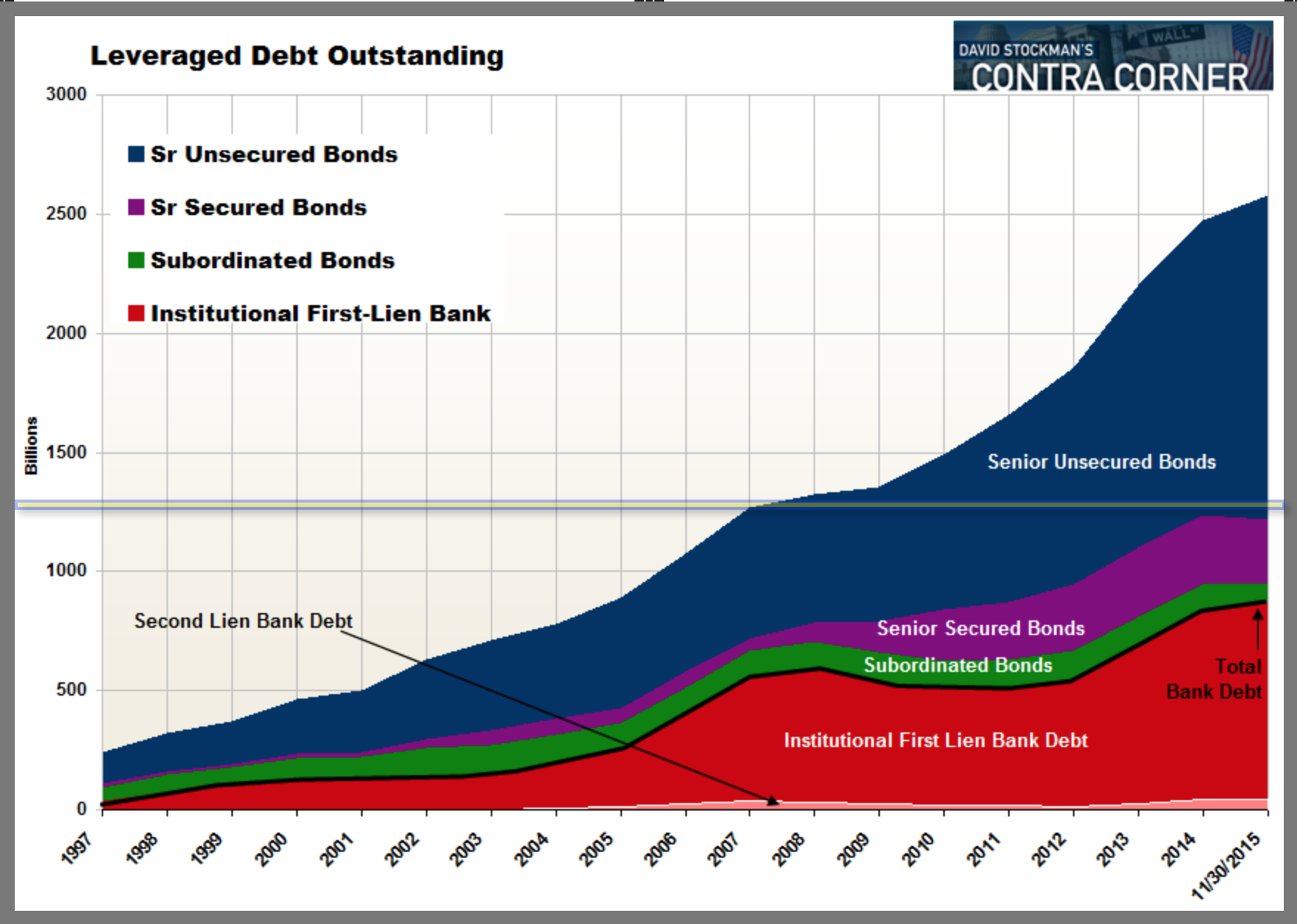
buyback debt taken onDespite the buybacks, net income has been weakening for over a year and it’s not just energy.  Third quarter 2015 reported earnings for the last 12 months, came in at $90.66/share down 15% from the $106 reported in Q3 2014. This puts S&P 500 earnings back at the same level reported in Q2 2013, when the S&P was 1600–some 22% below current levels. See:  Safe on the sidelines

The trouble with hopes that continued buy backs will reverse negative earnings trends in 2016 is that the source of record buybacks the past 3 years–cheap corporate debt–has ended.  Corporate bonds have plunged and yields have soared across the spectrum.  CCC credits that were borrowing at 8% in 2014 are now having to pay 18%.  The math of leverage has officially turned brutal.

Screen Shot 2015-12-29 at 9.25.27 AM
And its not just junk credits that are blowing out.  As shown below, flows are moving out of investment grade corporates (LQD in blue) too.
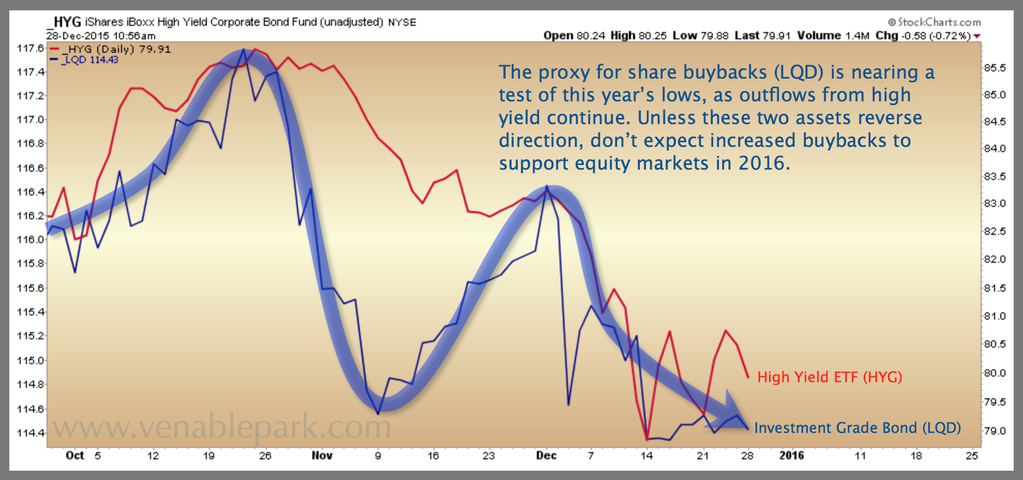
outflows from corp debt

Posted in Main Page | Comments Off on Earnings recession spreads as buyback well dries up