Wealth: hard to build, easy to lose

70% of wealthy families lose their wealth by the second generation, and a stunning 90% by the third.  A new survey by the Williams Group wealth consultancy surveyed ‘high net worth individuals’ with more than $3 million in investable assets to ask how they are preparing the next generation for handling money.  See:  Poor little rich kids: most kids from wealthy families squander their inheritance:

“Looking at the numbers, 78% feel the next generation is not financially responsible enough to handle inheritance… Most of them have no clue as to the value of money or how to handle it.”

Consuming principle to fund spending and betting principle on risky financial assets are time worn ways to lose a fortune. Following mainstream financial advice sales is another.

And then there is the usual:  blowing principle on depreciating consumer assets.  Studies show it takes the average recipient of an inheritance 19 days until they buy a new car.

Wealth preservation has always depended on the personal discipline of keeping risk low, not losing principle, and spending less than one earns in income.

It’s not rocket science, but evidently, it’s very hard for most to do.
Posted in Main Page | Comments Off on Wealth: hard to build, easy to lose

Energy sector losing lift once more

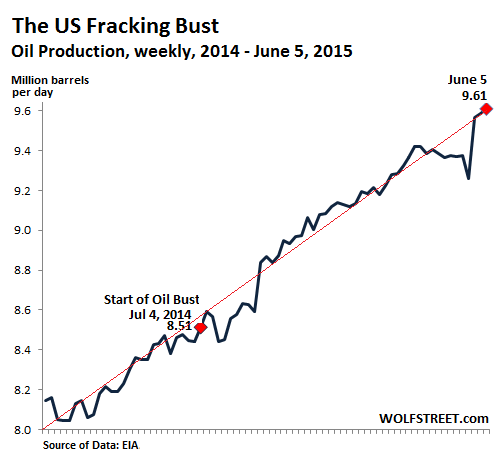
US oil production (along with global oil production) has continued to ramp over the past year as lower prices prompt over-levered players to pump more in order to grab the necessary life-blood of solvency–cash flow.
US-oil-production-weekly-2014-2015-06-05


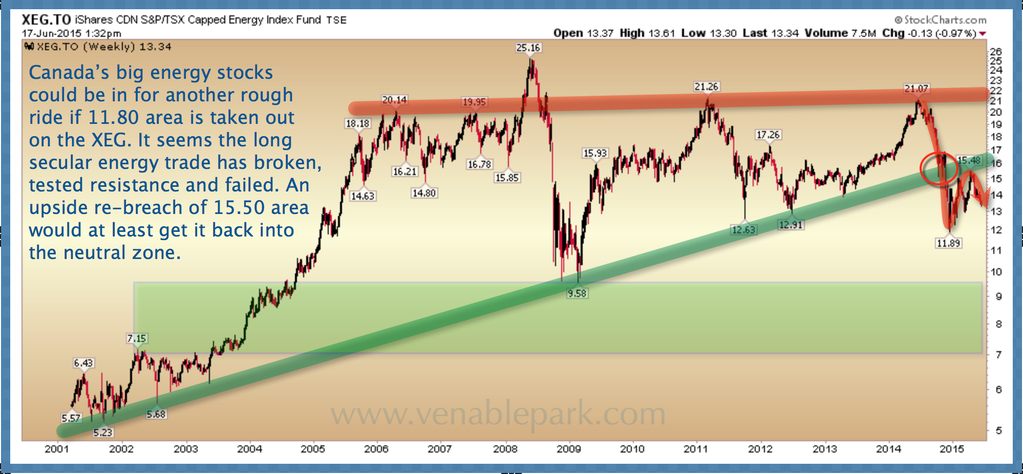
Their poker face seemed to convince some traders and hopefuls in March, that the bottom might be in for oil and energy company shares.  Since April however, crude prices have flat-lined and energy shares (XEG Index below) have relapsed, suggesting that the cyclical rebound in the energy sector that led the North American economy out of the 2008 recession, is now behind us and more mean reversion (lower green band area) room lies ahead.
XEG June 17 2015

Posted in Main Page | Comments Off on Energy sector losing lift once more

This week in history: TBTF banks were broken up

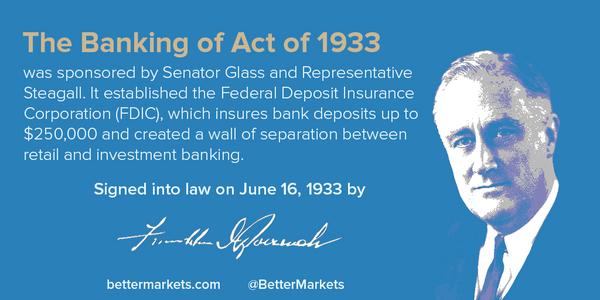
This week in 1933, Congress passed The Glass-Steagall Act, also known as the Banking Act of 1933 (48 Stat. 162) prohibiting commercial banks from engaging in the investment business (ie., underwriting, trading, speculating and selling risk products while calling it “financial advice” and having the assurance of tax-payer bailouts when players implode.)

Banking act anniversary


The Banking Act of 1933 was enacted in response to the reckless practices that led to the financial bubble and crash of 1929, the failure of nearly 5,000 banks, and the Great Depression that followed. Similar legislation was then replicated in most developed countries around the world. The legal separation between risk selling, lending and financial advice, set the world on a path toward greater stability that lasted for over 60 years, until relentless lobbying from the banks finally overturned the legislation in 1999. The global economy has paid the price ever since with increasing, cumulative costs in a series of financial bubbles and collapse.

We will be cleaning up the financial mess from these decisions for years to come. But if we are to make lasting progress and actually heal, we must first stop the bleeding and re-break up the banking cartel once more plaguing the world.  A new bipartisan 21st Century Glass Steagall Act has already been proposed and must be passed in all civilized nations.  You can read it here.  Spread the word.

Posted in Main Page | Comments Off on This week in history: TBTF banks were broken up