The trouble with extremely over-valued assets, is that their valuations typically mean revert either through many years of stagnation or a period of abrupt losses. Either way, it can take a decade or more before valuations recover their prior cycle peak. By the time they finally do, most previous owners have long since cashed out with losses, either because they can’t afford to hang on, or because they don’t have the time or psychological strength to wait years for capital recovery.
We saw this after the Great Crash, where it took 25 years before stocks returned to their 1929 peak. We see this in American housing, where nearly 10 years after the 2006 peak, many properties and owners are still in a net loss position. We are likely to see a similar cycle play out over the next decade in Canadian realty (and other ‘hot property’ places like New Zealand and Australia) as well as in presently jubilant stock and bond markets in much of the world. Those holding these assets today, have signed up for a trying road ahead. A generally better plan, wherever possible, is to avoid holding extremely valued assets in the first place. See we can.
“It’s great news that the level of negative equity is falling, but what really worries me is the depth of negative equity. Millions of Americans are so far underwater, it’s likely they may not regain equity for up to a decade or more at these rates,” said Zillow Chief Economist Dr. Stan Humphries. Here is a direct video link.
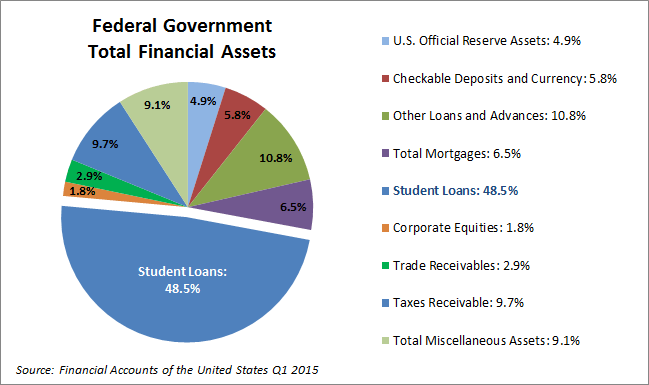 48.5% of all the financial assets held by the US government–by far the largest asset on its books–7.5x larger than the 6.5% in mortgages outstanding and 5x the size of taxes receivable at 9.7%.