
Canadian economy contracts

Today we have official confirmation that Canadian GDP contracted at a 0.6% annualized rate in Q1 2015 and Q4 2014 was revised lower than previously reported. See Canada’s GDP contracts the most since 2009. Much to the surprise of every economist surveyed:

The drop exceeded all 22 economist forecasts in a Bloomberg News survey, in which the median call was for an expansion of 0.3 percent.

But not to worry, those same economists are all predicting a rebound in the second half of the year…
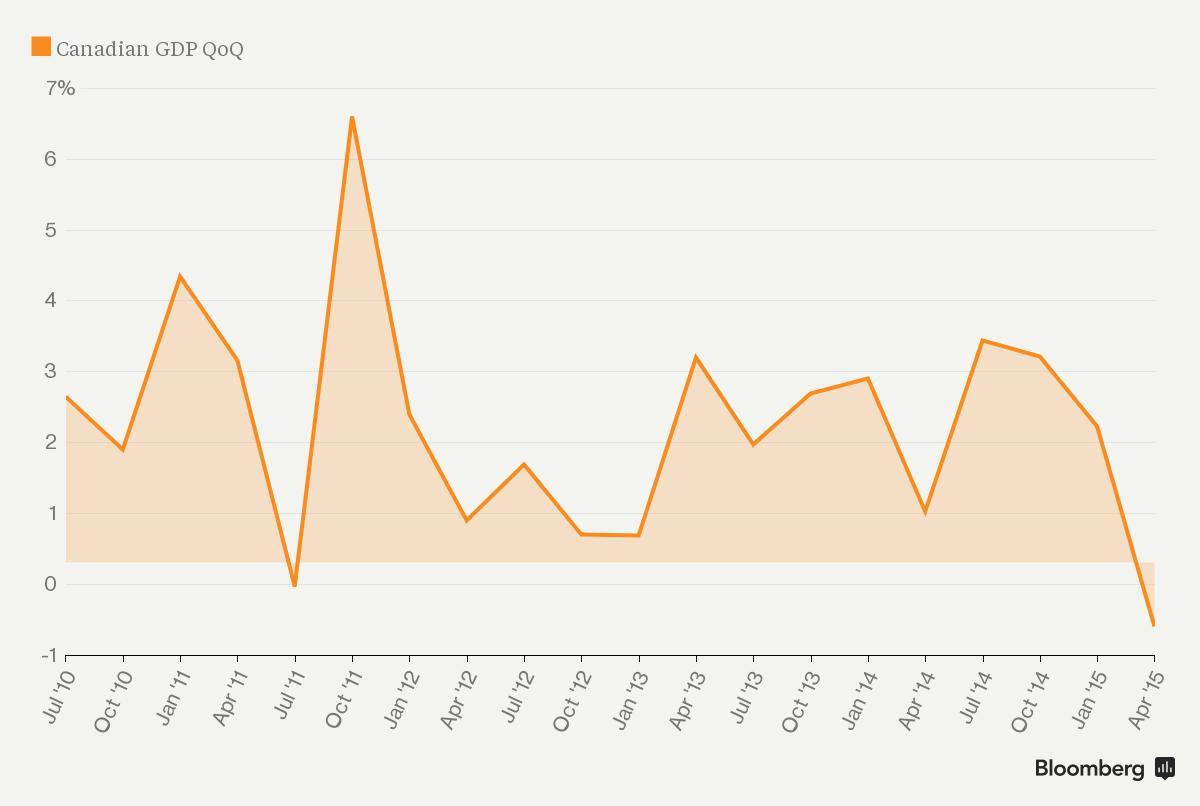
Cdn GDP contracts

Weakness was across the board with business investment falling 9.7% annualized (led by oil and gas cuts) and consumer spending also falling to just .4% annualized–both the lowest spending since the great recession in Q1 2009.  Even vehicle purchases declined–when 0% down and 0% rates for years are no longer moving cars, you know consumers are tapped out.

With Canadian housing and stock market valuations ‘to the moon Alice’, it might be wise to review all those robust earnings and sales forecasts that the sell side has ‘priced in’…

Posted in Main Page | Comments Off on Canadian economy contracts

Danielle’s weekly market update

Danielle was a guest today on Talk Digital Network with Jim Goddard talking about recent developments in the world economy and markets.  You can listen to an audio clip of the segment here.

Posted in Main Page | Comments Off on Danielle’s weekly market update

The geography of ill health

Two thirds of American adults are now considered overweight or obese, and a recently published 2013 study by Statistics Canada shows that Canadian numbers are equally sad. Nationally 53.6% of Canadians are rated overweight or obese. The leanest province is British Columbia at 46.9%, with the heaviest–at more than 60% overweight–throughout the Maritimes, Saskatchewan and the Yukon. See more at How Stat’s Can measures the nation’s obesity.
obesity-map
This is not a vanity issue, it is a sickness epidemic that is costing us all by debilitating our population and undermining our medical treatment capacity.  Remarkably, most people surveyed reportedly did not realize that they were affected by excess weight or obesity, or  at risk for weight-related conditions.  See:  Why your weight matters for more.

The health crisis has prompted an intelligent new approach to urban planning away from cars and junk food “swamps” and towards fresh food and mobility.  Researchers in London, Ontario are assessing cities and neighborhoods for what they call “obesogenic” indicators and then recommending health-focused makeovers.  Smart, self-sustaining energy for humans and our machines, all part of the exciting revolution in process.  See:  The geography of obesity for more.

Posted in Main Page | Comments Off on The geography of ill health





