
What policymakers miss

What the finance wizards have forgotten or intentionally overlooked in all their learned theories, is the below chart. The bonanza of babies born after the Second World War in all the world’s most advanced, wealthiest economies (red bars below):

Bommers worldwideChart source:  www.glogster.com

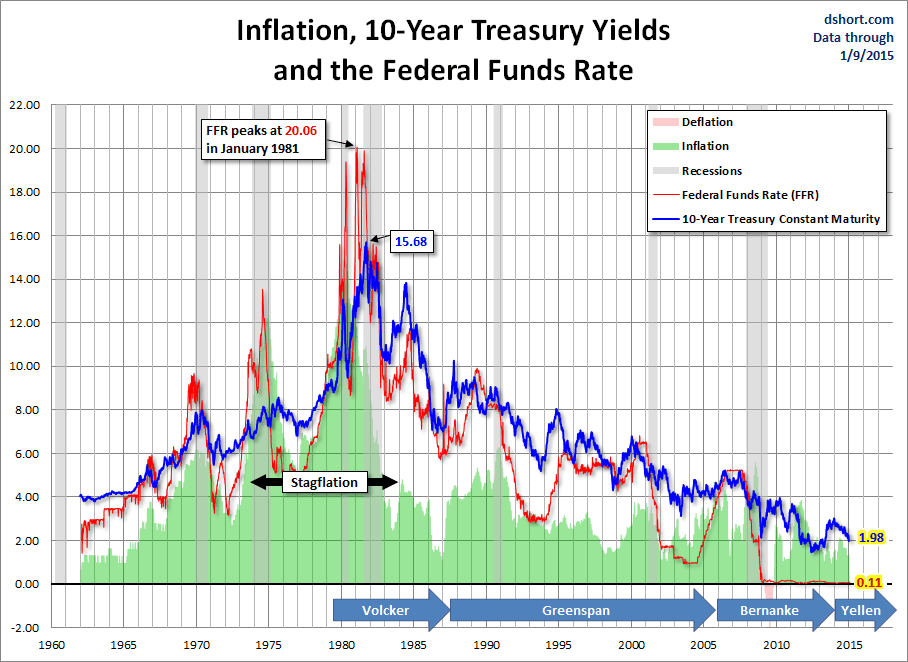
Today this cohort controls the bulk of the world’s wealth. Global boomers were the leading edge driving world demand, inflation and interest rates up between 1964 and 1982 (chart below) as they came of age, but now these former consumption superstars are all between age 50 and 69.
treasuries-FFR-since-1962
Well past their peak spending years (which is age 47 on average), at this stage, the natural inclination is to downsize possessions and cut expenses. This would be the case even if so many age 50+ were not also still in debt today thanks to bad choices made during the credit bubble. The weight of debt only magnifies the natural contraction in consumption as we age.

The real rub is this: where the ‘magic’ of falling interest rates between 1980 and 2005 helped boomers to borrow and spend beyond their means for years, the opposite effect is now in charge: low rates are helping to crush consumption.

Millions of boomers are leaving the work force year after year and trying to fund their spending from savings and the income it can produce. Most have not saved enough, and with asset prices from bonds, to stocks, to real estate being propped by financial intermediaries and central planners around the globe, the resulting low yields are proving the final blow to kill the golden goose of previous consumption rates.

This is the primary reason that QE and all the other antics from bankers to restart previous demand patterns are all doomed to fail. Nay, worse, will only make deflationary trends even more pronounced with each manic episode.

When it comes to higher demand and economic growth, only time, higher savings and lower asset values, can ultimately heal balance sheets and restore purchasing power to a world now awash in excess goods and disinterested, income-starved, shoppers.

The ‘add-debt-and stir ‘ ‘genius’ led by bankers, is falling deservedly on its own grotesque sword.


Posted in Main Page | Comments Off on What policymakers miss

Not just oil that’s deflating…

In today’s “Bart Chart,” Bloomberg’s Mark Barton takes a look at the commodities market on “Countdown.”
Here is a direct video link.

Posted in Main Page | Comments Off on Not just oil that’s deflating…

Swiss central bank cries ‘uncle’ on efforts to stem deflationary forces

Another day, another central bank takes it in the coffers for trying to counter the formidable deflationary forces sweeping the world.  The Swiss economy is export centric (like most others) and the Swiss National Bank has been trying to stop the franc from appreciating through monetary interventions by holding a set peg of 1.20 franc per euro the past 3 years. This morning it gave up and the franc rocketed 14% higher against the Euro and the US dollar. Levered traders are being sideswiped as usual. Many people in other countries like Hungary and Poland had foolishly borrowed money, including their mortgages, in francs the past couple of years. Those debts just got a whole lot bigger to repay. Lenders will face defaults.

Not one of 22 economists surveyed by Bloomberg at the start of January saw this coming, and only four saw it happening in 2016. Global capital is flooding into the perceived “safe haven” of the strengthening franc. This means weaker demand for Swiss exports as cheaper goods from Europe (weaker euro)–along with Japan and China and plunging commodities–continue to export deflation to the world… The weight of over-consumption during the debt bubble continues to mean revert with a crushing weight on central bank ‘interventions’.

Komal Sri-Kumar, global president at Sri-Kumar Global Strategies, discusses the Swiss National Bank ending their minimum exchange rate and the impact of Europe on global interest rates. Here is a direct video link.


Needless to say, companies are unprepared for this sudden shift as well.  Swiss stocks are down 15% on the news, while Swiss Treasuries are bid even as they pay negative yields all the way to 9 years. Here is a direct video link.

Posted in Main Page | Comments Off on Swiss central bank cries ‘uncle’ on efforts to stem deflationary forces



