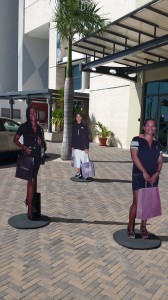
 We drove by a new high end shopping complex over the holidays that had been finished in 2011 with many of the well known brand names in house. The place looked very prosperous. Except that there were no visible people coming in or out.
In their place, the mall had staged the entrances with a number of smiling cardboard cutouts of people carrying bags from the various stores. We took some pictures (see left). It was eerie. Reminded us of this scene from ‘I am Legend’.
Insanely overbuilt in the credit bubble, the world is now awash with impossible amounts of retailers and retail space that is only just beginning to close. More announcements on this theme today:
On Thursday, J.C. Penney said that it will close 40 of its locations—about 4 percent of its stores—this year. Then Macy’s said it would close 14 stores in early spring. The announcements came one day after teen retailer Wet Seal said it will shutter about two-thirds of its 500-plus stores, and a bankruptcy judge in Delaware ruled that Deb Shops can shut down nearly 300 stores as part of its liquidation.
These are far from the only retailers whittling down their square footage. See: Retailers are closing up shop
The tricky bit is to figure out what can be done with what will be a mounting pile of empty buildings. Since most places also have far too many housing and commercial office units, it is not likely that a refit to these alternates will make sense in many cases. The most realistic course may actually be to bring in the repo companies and literally take down and recycle the parts and constituent commodities (more supply to swamp already excess inventory). In other instances, perhaps a switch over to fitness complexes, manufacturing, hydroponic growing or alternative energy operations may work.
One of the biggest growth areas for jobs in the next few years may well be in the reclamation and restoration business. Companies and workers will be needed to retrofit and take apart the excesses of the credit bubble in order to restore more useable green space, forests and growing areas. Sounds like progress.











