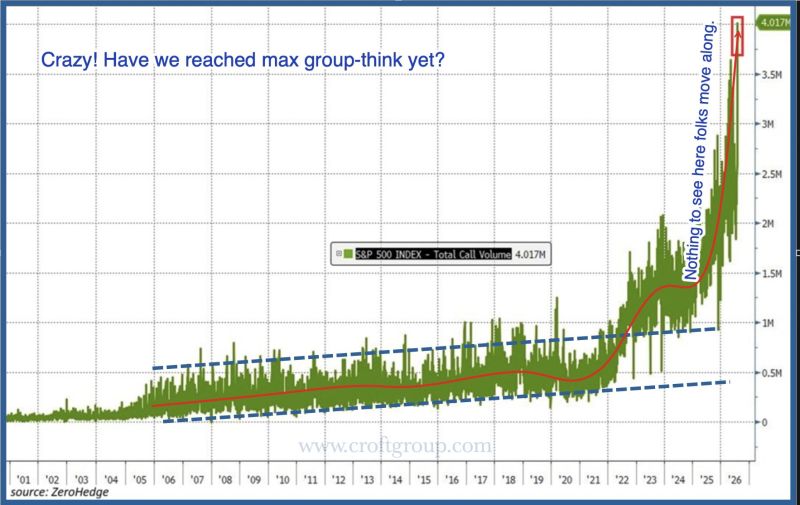
Tech and small cap indices led broader markets into the bear market declines of both 2000 and 2007.
“Beneath the U.S. stock market’s record-setting gains, trouble is stirring.
About 47 percent of stocks in the Nasdaq Composite Index (CCMP) are down at least 20 percent from their peak in the last 12 months while more than 40 percent have fallen that much in the Russell 2000 Index and the Bloomberg IPO Index. That contrasts with the Standard & Poor’s 500 Index (SPX), which has closed at new highs 33 times in 2014 and where less than 6 percent of companies are in bear markets, data compiled by Bloomberg show.
The divergence shows the appetite for risk is narrowing as the Federal Reserve reins in economic stimulus after a five-year rally that added almost $16 trillion to equity values. It’s been three years since investors saw a 10 percent decline in the S&P 500 and they’re starting to avoid companies that will suffer the most when the market stumbles…”
See: Record S&P masks 47% of NASDAQ mired in bear market
Posted inMain Page|Comments Off on S&P high masks bear market underway within leading sectors
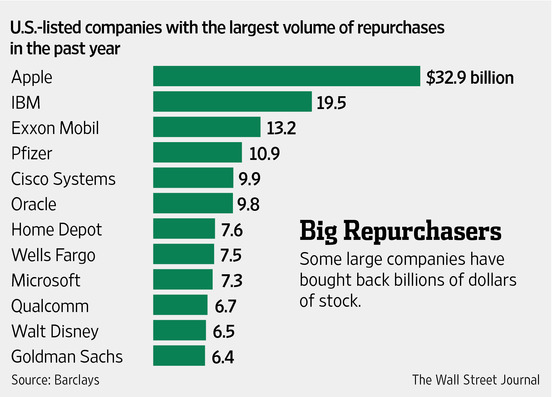
In a related outcome, corporations have continued to borrow record amounts at low rates to buy back their own shares at the highest stock valuations in 6 years. See: Companies’ Stock Buy-backs help buoy the market, even as trading volumes plunge and the liquidity pool grows ever shallower for those now in.
Posted inMain Page|Comments Off on The deforming effects of zero rates
About 9,000 U.S. taxpayers have each accumulated at least $5 million in individual retirement accounts, said the Government Accountability Office, raising questions about some investors’ tax-advantaged returns. Here is a direct video link.
Meanwhile CNBC reports on the drop in 401(k) balances among the majority of households nearing retirement. Here is a direct video link.
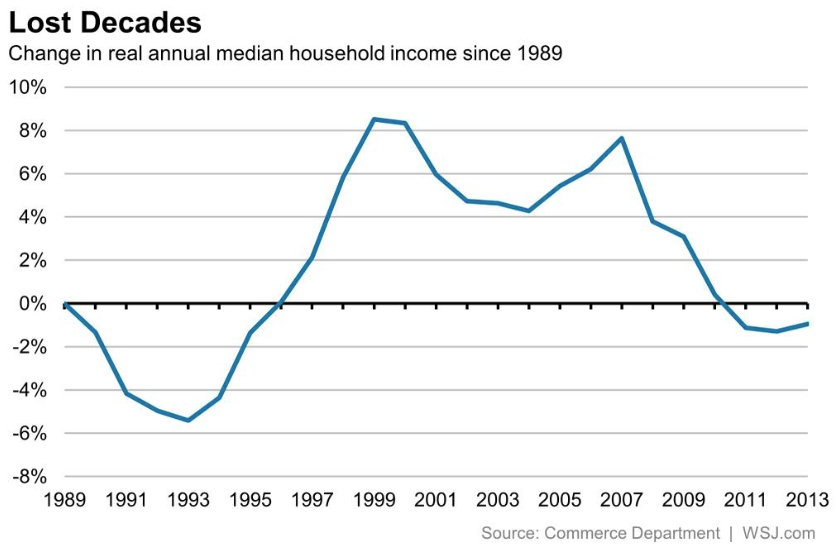
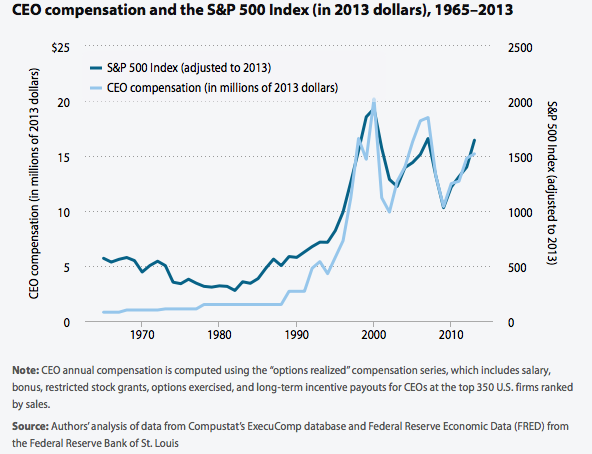
Yes some people work harder than others. Yes some people save more than others. But the real reason for the massive polarization between the top .1% today and everyone else has most to do with the level and type of income each is able to earn. As shown below, most workers are paid in wages which have been falling since 1999 when Central Banks and governments decided to promote the financial-ization of the global economy and asset bubbles as a primary monetary tool. Companies have responded to slowing revenues by slashing payroll costs in order to increase their earnings per share. At the same time executive compensation has increasingly focused on stock options that have ballooned and crashed and ballooned with the S&P 500 over the past 18 years as shown below. As the c-suite has become obsessively focused on their own share price to increase their compensation they have funneled corporate cash away from capital expenditures and investment in their business and into share buy backs as a sure fire way to goose their own pay. As a result, executive pay that was 20 times the average worker in 1965, is today nearly 300 times the average worker.
It may all sound like good fun, but it is actually self-defeating: it has made the entire economy weaker and vulnerable on the violent swings of a boom and bust crash course. (Read: Robert Frank’s “The High Beta Rich”, for more on why that’s a problem for tax collection and budget planning).
When this present asset bubble bursts again, we will see once more how incredibly wasteful and misguided capital allocations have been the past few years. And the entire society (.1% and everyone else) will realize that we have fallen far behind in productive investment and policies needed to enable a progressive and sustainable economy.
Posted inMain Page|Comments Off on The economic drag of our polarized populace
“An explosive critique about the investment industry: provocative and well worth reading.”
Financial Post
“Juggling Dynamite, #1 pick for best new books about money and markets.”
Money Sense
“Park manages to not only explain finances well for the average person, she also manages to entertain and educate while cutting through the clutter of information she knows every investor faces.”
Toronto Sun