Sanctions to tip an already weak Russia into recession

A playground of “hot money” traders the past couple of years, the Russian stock market offers a helpful big picture on the math of loss and investment returns.

After losing 82% of their value from 2008 to 2009, Russian stocks rallied with the rest of global markets into the spring of 2011 gaining back 55% of their down cycle loss.  Only to resume decline as global growth turned down once more despite QE mania out of Central Banks. Now down 50% from their rebound peak in 2011 and on the verge of the next economic recession, a downside test toward the 2009 lows (as other commodity-centric sectors have done) may well lie ahead. The universal truth is that highly levered economies and markets leave no buffer for unexpected hurdles or disappointing results; when those buying your securities are not investors but “traders” prices tend to readjust at the lightening speed of margin calls, leaving financial havoc and stress in their wake.
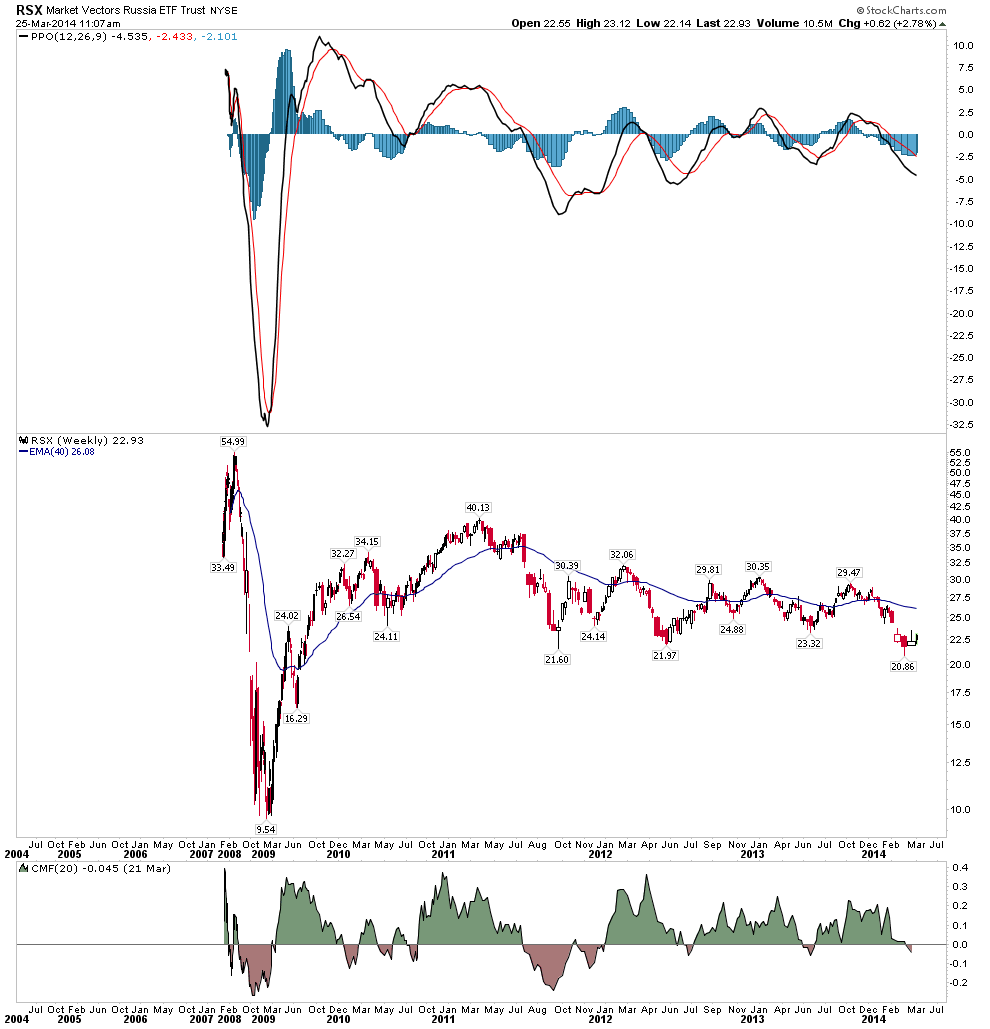
Russian ETF

“Even before its standoff with the West, some analysts were predicting Russia would fall into recession.

But now banks, including state run VTB Capital, say EU and US sanctions imposed for Moscow’s incorporation of Crimea, are likely to tip it over the edge.

VTB expects the Russian economy to shrink for at least two quarters as penalties bite.

Latest figures also suggest a slowdown. Russia’s main stock index has dropped by around 12 percent since the start of the year. The rouble is the world’s second worst performer against the dollar. While capital flight, which has risen recently, is expected to rocket because of the crisis.” Here is a direct video link.

Posted in Main Page | Comments Off on Sanctions to tip an already weak Russia into recession

China PMI, Copper and wasted stimulus dollars

China HSBC flash PMI fell to a weaker than expected 48.1, and copper continues to take a hit. Here is a direct video link.

Posted in Main Page | Comments Off on China PMI, Copper and wasted stimulus dollars

Chinese year of the horse a tough one for global growth

The HSBC Flash China Manufacturing Purchasing Managers’ Index™ (PMI™) is the earliest available indicator of manufacturing sector operating conditions in China. In March the reading contracted below 50 for the 3rd consecutive month, now at the lowest level in 18 months.

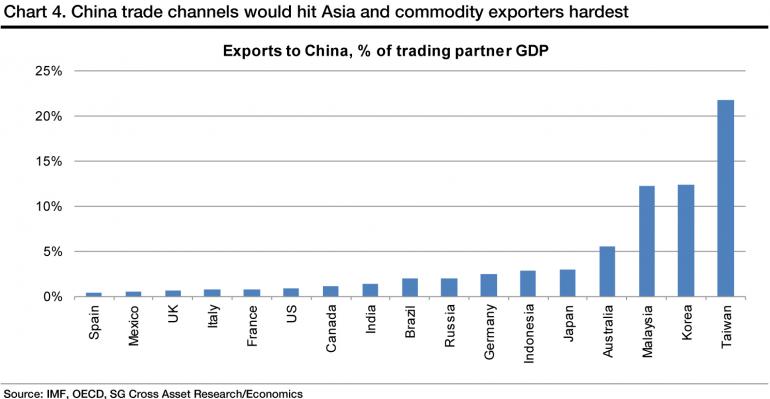
During the past five years, China accounted for 43 percent of worldwide growth. Now swimming in debt and liquidity constraints thanks to Foreign Reserves that have been mal-invested in risk markets and pledged multiple times over, a necessary slowdown of investment by the Chinese government is reverberating around the world. From Australian miners to South Korean consumer electronics manufacturers, the major beneficiaries of China’s astronomical growth are now the most vulnerable. See: China’s economic hard landing.
exports-china

Years of poor policy decisions encouraged by a decade of record commodity sales, have left Canada particularly il-prepared for this slowdown. Ray Dalio of Bridgewater Investments recently explained why the next decade is likely to prove a disappointing one for the Canadian economy. See: Hedge fund legend warns of a decade of risk for Canada.

“For more than a decade major global macro pressures have benefited Canada on an absolute basis and relative to the U.S.,” but those conditions “have now left the Canadian economy unbalanced and at significant risk for the next decade.”

The hedge fund firm says Canada’s commodity-dependent economy is in trouble because it is “one of the highest cost producers” meaning that capital investment by energy producers will go to lower cost countries.

“The rest of the Canadian manufacturing economy has been hollowed out to a significant degree due to years of underinvestment, as the commodity-driven surge in the currency made other industries unprofitable,” the note says.

In addition, there is the continuing concern about Canadian households’ high debt levels, and the box that puts the central bank in.

The economy might require further stimulus in the form of interest rate cuts, but lower rates would feed the housing market and borrowing by overburdened consumers.

“Therefore, our likely outlook for Canada is a lagging economy that is just beginning a needed de-leveraging in order to re-balance,” the note says.

American economist Jim Rickards recently explained more on the the downside of the “China Miracle”. Here is a direct video link.

Posted in Main Page | Comments Off on Chinese year of the horse a tough one for global growth