Andrew Huszar, a senior fellow at Rutgers Business School and former official at the Federal Reserve Bank of New York, talks about the Fed’s policy of quantitative easing and his role in the first phase of the program. Here is a direct video link.
Former Fed official: ” we knew QE wasn’t working in 2010, we should have stopped”
Posted in Main Page
Comments Off on Former Fed official: ” we knew QE wasn’t working in 2010, we should have stopped”
Signing bonuses to brokers–the industry’s dirty (big) secret
The investment sales business has been moving through a period of consolidation over the past 13 years–especially over the past 5 since the great recession. Notwithstanding the last year of QE mania that finally goosed US stocks slightly above their 2000 and 2007 cycle peaks once more, stocks have been a losing bet for long-term investors, pensions and long always investment funds since this secular bear period began in 2000. This chart courtesy of my partner Cory Venable captures the nominal experience well. (Of course in real returns, the reality is even worse with the S&P earning negative returns since 2000).
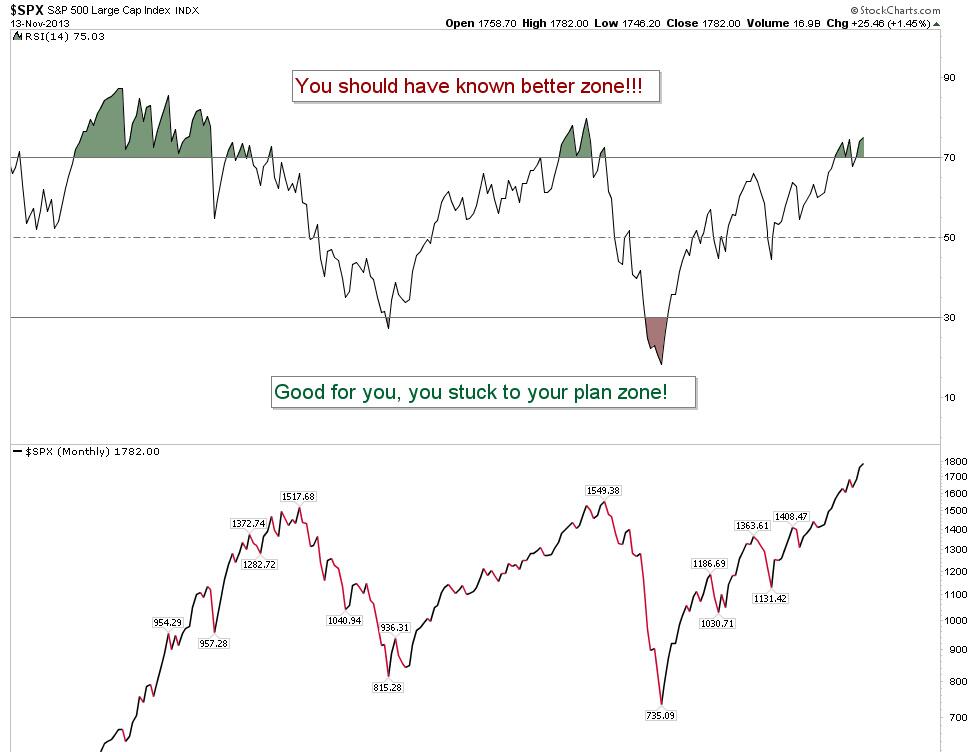
This has made for many unhappy customers at traditional investment sales and management shops. Clients have been moving from one adviser to another looking for better returns: higher yields, free lunches and “different” stock markets (those that only go up!) in which to be invested.
Hand in hand with all of this disquiet and volatility has been a higher than normal migration of investment brokers from one sales firm to another. If one pays attention they will note that many “advisors” have switched firms a couple of times over the past 13 years. (The pattern is actually about once each 5 year market cycle anyway, but the increased volatility and negative returns of secular bear periods accentuate the pattern.)
Each switch the broker calls up existing clients (they try to do this after stocks have been in the rally part of the cycle and before the next bear market hits so clients are more amenable to sticking with them) and convince clients that the new firm is far more client focused: “much better products and far more accurate research and insights”.
What the clients are not told of course, is that their “advisers” are offered huge financial incentives to bring clients over to the new firm. Depending on the size of client assets that a broker is able to move, upfront signing bonuses paid from the acquiring firm can run from several hundred thousand to more than a million dollars. The more they are paid up front, the more the incentive to the broker to convince their trusting clients that the move is in the “clients’ best interests”. After the move of course, there is also increased pressure on the brokers to “produce” commissions and fees from their client assets in order to pay their new employer back for the signing bonus they received up front.
All of these inside deals are just another common way in which sales firms and advisers make secret profits at the expense of trusting clients. So the next time, your friendly broker calls to tell you how a move with them to a new firm is all about better client service. Ask what bonus they are being paid in the move. Since the fees they receive will be then be recouped from your life savings, you really do have a right to know.
Posted in Main Page
Comments Off on Signing bonuses to brokers–the industry’s dirty (big) secret
Deflation sobers up investment outlook
When the European Central Bank slashed its overnight rate last week it admitted the truth about its record monetary interventions over the past 3 years: they have not succeeded in their stated goal of creating inflation. Weak global demand, record unemployment and massive over-capacity have all managed to outweigh the feverish attempts by central bankers to reflate the global economy. Even after trillions of liquidity injections dumped into the financial system, the world is growing today at about half the rate clocked at the credit bubble peak in 2007.
Conditioned on the inflationary experiences of the 1980’s and 1990’s, few people or experts today comprehend what an era of deflation portends. Unlike inflation that erodes purchasing power over time, deflation reduces relative prices (and corporate revenues and earnings) and thereby increases the purchasing power of cash. In a deflationary environment, investment returns are driven by increased purchasing power after prices drop, much more than through income yields while one waits. Inflation increases wages and prices and therefore decreases the weight of fixed debt repayments. Deflation on the other hand, penalizes those in debt and holding inflated assets and rewards those with low debt, cash and high quality bonds.
In other words, deflation rewards those who have been prudent fiscal managers, and penalizes those who have not. This is why deflation scares the hell out of investment bankers and those who are levered off an assumption of rising stock, commodities and real estate prices over the next couple of years. But it brings great opportunities for those who have been managing their risk, controlling their costs, and building their liquid savings.
For a rare and excellent summary of the investment implications of the present deflationary environment, see: Deflation threat in Europe may prompt investment rethink
Posted in Main Page
Comments Off on Deflation sobers up investment outlook