US dollar trumping other global currencies in 2013

The US dollar consolidated some gains last week, but year to date the greenback has been climbing against nearly every major currency in the world. Since commodities like oil are priced in U$, the climbing dollar translates into increased cost pressure on many of the world’s already struggling economies. This morning the Indian Rupee(INR) hit an all time record low against the U$. The 10th largest economy by nominal GDP and the 3rd largest by purchasing power parity (PPP), India like most countries has been facing significantly slower growth and demand since the global credit bubble burst.
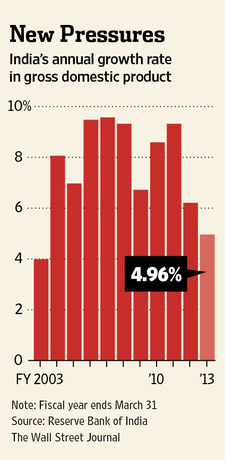
A weakening Rupee helps to make Indian exports cheaper, but for a country that imports 80% of its oil, the retreat of the Rupee also leaves less room for monetary easing as inflationary pressures build amid weak domestic fundamentals. (Same negative cost effect for Japan on weaker Yen: see video report here).

Furthermore, the US Fed’s Quantitative Easing has driven speculative money flows into most emerging economies, markets and currencies over the past 3 years, and the inevitable ‘tapering’ or dreaded reverse of those flows poses a significant price risk to Indian capital markets which have been weakening now since 2011. See: Rupee’s slide to record drags down bonds, most Indian stocks.


Posted in Main Page | Comments Off on US dollar trumping other global currencies in 2013

Chinese economy disappoints on massive over-capacity and weak demand

Zhu Haibin, Chief China Economist and Head of Greater China Economic Research at J.P. Morgan says monetary easing may not be effective to address the structural problems facing China’s economy at this moment. Here is a direct video link.

Posted in Main Page | Comments Off on Chinese economy disappoints on massive over-capacity and weak demand

Gross: Fed likely to taper in 2013 out of necessity

Bill Gross, founder and co-CIO of Pimco, thinks the Fed will have to “taper” its bond purchases by the end of the year because lower deficits in Washington mean the Treasury will issue less debt, which could create a shortage of Treasury securities if the Fed continues QE at its current pace.

Gross still doesn’t think the economy is strong enough to stand on its own, without support from the Fed. But he has also derided quantitative easing as “chemotherapy” that may do more harm than good. Gross cites three side effects of QE that could be distorting the economy and holding back growth. First, super-low interest rates encourage saving, leaving less money available for investment. Second, financial firms that rely on more normalized interest rates for income are less profitable, which means they hire fewer workers. Finally, low returns on investment discourage companies from deploying capital in the real economy, contributing to lower growth and fewer jobs. See his article: Wounded Heart.

Here is a direct video link.

Posted in Main Page | Comments Off on Gross: Fed likely to taper in 2013 out of necessity