Trump bluster losing luster

At some point in every cycle, bullshit stops baffling brains, and blind faith is beaten into submission. Revelation is making some progress in a few areas; see “Investors See Big Losses From President’s Brand.” To wit:

Shares of Trump Media & Technology Group, which operates the president’s Truth Social platform, have tumbled 75% since Trump’s inauguration. Digital “meme coins” named for Trump and first lady Melania Trump are down 86% and 99% since inauguration day, respectively. One of the Trump family’s crypto ventures, a token called World Liberty Financial, has dropped roughly 40% since its September launch.

At the same time, Goldman Sachs’ basket of unprofitable technology companies, which had surged early in 2025, has plunged by more than 20% since the mid-October peak.

Nearly $1 billion in leveraged crypto positions have been liquidated during another sharp price drop, bringing fresh momentum to a sector-wide dash for cash. Bitcoin (below since 2023) has tumbled 32% since October 6; see ‘Stock Rally Takes a Break as Crypto World Gets Hit.’
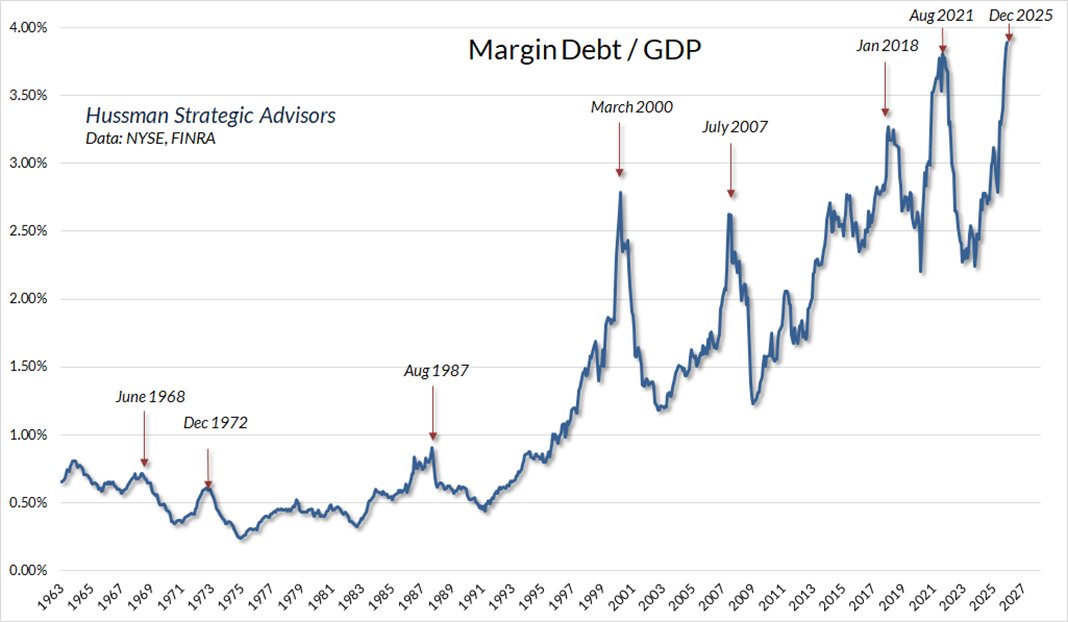
Still, speculative hopes are riding on a Trump ‘yes’ man being named to head the Fed in May 2026, in the presumption that easier monetary policy will keep asset bubbles growing a while longer. Irrational behaviour is admittedly a wildcard. But every bubble ends in a bust — there are no exceptions.

As always, individuals must make risk management decisions and live with consequences.

Charles Mackay’s timeless quote from Extraordinary Popular Delusions and the Madness of Crowds (1841) comes to mind:

“People, it has been well said, think in herds; it will be seen that they go mad in herds, while they only recover their senses slowly, one by one.”

There’s a reason that Mackay’s book has never been out of print since it was published 185 years ago.


Posted in Main Page | Comments Off on Trump bluster losing luster

Canada struggles with the legacy of ‘easy money’

Canada’s economy (GDP) grew at an annualized rate of 2.6% in the third quarter of 2025  after a 1.8% contraction in the second quarter (shown below, courtesy of The Globe and Mail).Consensus expectations were for a much smaller.50% Q3 increase and the upside surprise helped Canada officially avoid two consecutive quarters of GDP decline (a technical recession).

Under the surface, the stronger headline result had more to do with an unusual trade surplus and higher government spending than a broad-based improvement, see Canada’s GDP rebounds in third quarter, but trade numbers mask broader weakness.

Overall, final domestic demand (household consumption, government spending, and business investment) was flat.

Reminder, GDP = C + I + G + (X − M)

    • C = Household consumption (58% of GDP)

    • I = Investment (business investment + residential construction + inventories) (22% of GDP)

    • G = Government spending on goods and services (19% of GDP)

    • X- M = Net exports minus imports

More exports than imports is a net positive for GDP, and the third quarter upside surprise was driven by an 8.6% drop in imports (the most significant quarterly decline since Q4 2022) and a 0.70% increase in exports, led by oil products.

There was also a 12.2% annualized increase in government investment, via an 82% increase in weapon systems spending (not annualized) and a 6.7% annualized pickup in residential spending. Much-wanted business investment remained flat as a pancake.

Despite the weak underpinning, the larger-than-expected GDP increase raised market expectations that the Bank of Canada will pause and not reduce its policy interest rate at the December 10 meeting.

The loonie responded by bouncing .37% to a four-week high against the USD and +0.2% for November.

The Treasury market was less impressed: both the five- and 10-year Canadian yields (which help set interest rates in the real economy) were unchanged on the month.

The housing market continues to weaken as sales volumes sputter at multi-decade lows, and high carrying costs crimp spending ability. Nationally, the average home sale price has fallen 18% from a peak of $837,000 in February 2022 to $690,000 in October, but it is still 33% higher than the $517,000 median sale price at the end of 2019 (CREA).

Amid some optimism in Canada’s latest labour household survey, the more reliable SEPH payroll survey shrank by 58k in September, marking the first year-over-year decline in nearly five years. More than 80% of surveyed industries reported weaker payroll data, suggesting the unemployment rate (officially at 6.9% nationally) is headed higher.

At its October 31 meeting, the Bank of Canada (BoC) lowered its policy rate to 2.25% and suggested that inflation risks from trade conflicts restrict room for further monetary easing, despite ongoing economic weakness:

The Canadian economy faces a difficult transition. The structural damage caused by the trade conflict reduces the capacity of the economy and adds costs. This limits the role that monetary policy can play to boost demand while maintaining low inflation. The Bank is focused on ensuring that Canadians continue to have confidence in price stability through this period of global upheaval.

Years of  ‘easy money’ policies did nothing but boost counter-productive consumption and debt while hollowing out the ability to save and invest across the economy. We’re paying for all of that now. I’d like to believe that policymakers have learned the lesson and won’t return to short-term consumption incentives, but rising unemployment is likely to test their resolve.

Posted in Main Page | Comments Off on Canada struggles with the legacy of ‘easy money’

Will rate cuts continue in December?

Happy American Thanksgiving to our US readers. The segment below offers a worthwhile macro update.

David Rosenberg, founder at Rosenberg Research, discusses the market outlook while awaiting the latest Fed decision. Here is a direct video link.

Posted in Main Page | Comments Off on Will rate cuts continue in December?