Wishing you love, light, and, above all, inner peace. May we make wise choices and have the strength and commitment to see them through. May 2024 be a year of revelation and enlightenment. I love the beauty and simplicity of this quartet. No gimmicks needed.
Canadian debt delinquencies, insolvency proposals, and bankruptcies are all rising sharply for households and businesses. Equifax president Sue Hutchison discussed the latest data on BNN yesterday. We are in the early days of this distress cycle with three-quarters of pandemic-era low-rate mortgages to reset at higher rates in 2024 through 2026: “We expect to see tremendous pressure, or what we’re calling payment shock, with our lenders over the next year or so.” Here is a direct video link.
“In particular, in Ontario and B.C., we’re seeing quite a significant increase in missed payments and delinquencies.
…Credit cards as a percentage of non-mortgage debt was about 40 per cent in Q3 last year. It’s now 78 per cent, so total balances are growing.
The other concern we have in that portfolio of debt is more and more Canadians are both missing payments, but also paying less, so paying their minimum payment versus paying the whole balance off.”
Also, 40% of US borrowers missed their first student loan payment after the pandemic-related pause ended this fall, the Department of Education said Friday.
Posted inMain Page|Comments Off on Debt defaults leaping
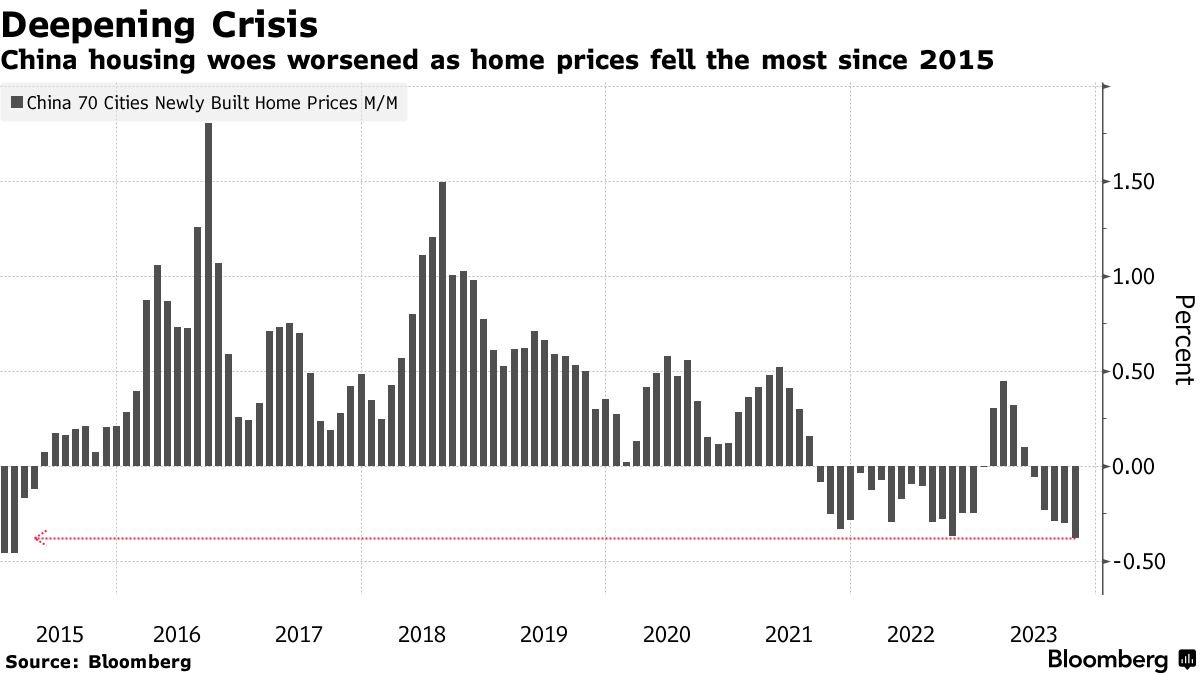
China’s economy is struggling through a multi-year downturn in the property market, a slump in manufacturing activity and falling exports. Other countries and markets should take note.
A triple whammy of falling real estate and stock prices amid credit defaults has hurt household net worth and consumer confidence. See, China’s real estate meltdown is battering the middle class. Unlike the 2023 rebound in North America, Chinese stocks have continued to slump, with the Shanghai Composite -5% year-to-date, -19% since the COVID-rebound peak in July 2021, -47% since July 2007 and today back at the same level as January 2007–almost 17 years ago. Word to the wise: extended capital loss cycles are the historically common outcome after credit abuse and investor euphoria bid asset prices to irrational levels. Other countries, like Canada, have been warned.
For years, banks including Citigroup, JPMorgan and UBS competed hard to win business from China’s giant pool of wealthy people. They hired thousands of relationship managers with the language skills and cultural know-how to gain the trust of mainland China’s moneyed class, and helped them buy shares in Hong Kong, real estate in the U.S. and expensive paintings from European collections.
There was a bonus: Wealthy investors in China had a reputation for taking risks, including using margin loans to buy shares and plowing millions into junk bonds sold by Chinese companies. That gave their banks an extra source of potential profits since private banks earn fees when their customers trade stocks, bonds or other assets.
“An explosive critique about the investment industry: provocative and well worth reading.”
Financial Post
“Juggling Dynamite, #1 pick for best new books about money and markets.”
Money Sense
“Park manages to not only explain finances well for the average person, she also manages to entertain and educate while cutting through the clutter of information she knows every investor faces.”
Toronto Sun