Dramatic late night meetings have arrived at a proposal to raise some additional US tax revenue heading into 2013. If the House approves the Senate’s bill today, Congress will have managed to kick the tough fiscal decisions into February.
The interim deal is to raise tax rates on those earning more than 450K per household. This is a higher threshold than previously proposed and so will raise less revenue over the next 10 years than had been expected. In terms of economic impact, more than 80 percent of households with incomes between $50,000 and $200,000 would also pay higher taxes as the 2 percent payroll tax cut, enacted during the economic slowdown, is being allowed to expire as of yesterday.
Increased tax receipts are a token in the right direction of more shared pain across the various income brackets. But unfortunately it is little more than a token. The proposed tax revenue continues to resemble a blade of grass at the base of a huge oak tree of Federal spending. See: Putting America’s tax hike in perspective for a helpful big picture chart.
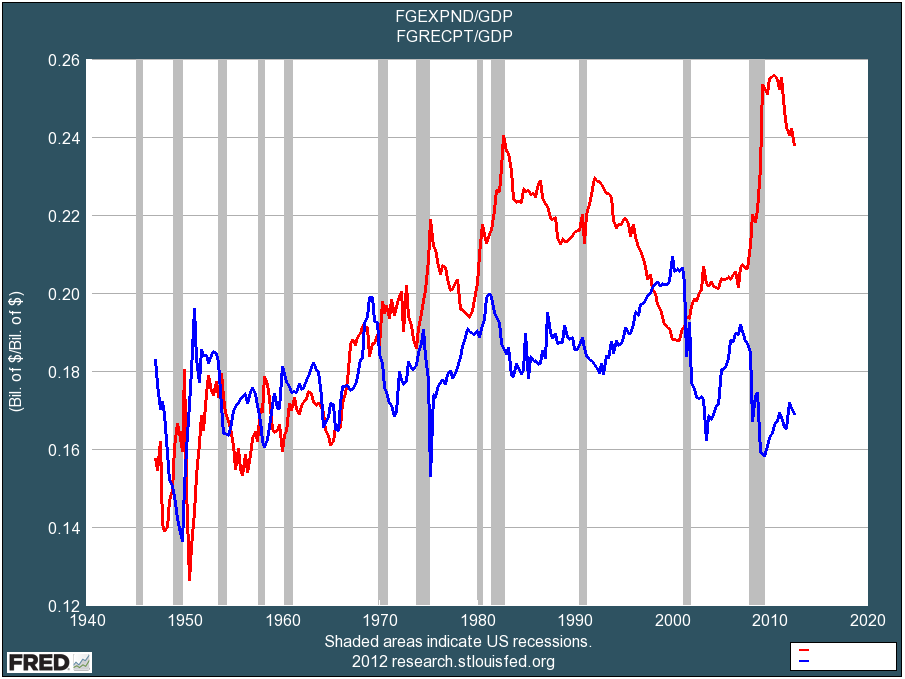
In reality the US debt problem continues to be one of too little income and excessive spending. As shown in the below chart, US spending is now running at 24% of GDP, which is high relative to the 22% average of the past few decades. Tax revenue, meanwhile, is running at only 17% of GDP, which is low relative to the 19% average of the past few decades. The gap in the middle of these two trends is how the debt has skyrocketed the past few years.