The NFIB Optimism Index shows job creation in November was essentially zero. William Dunkelberg, NFIB chief economist, offers insight. Here is a direct link.
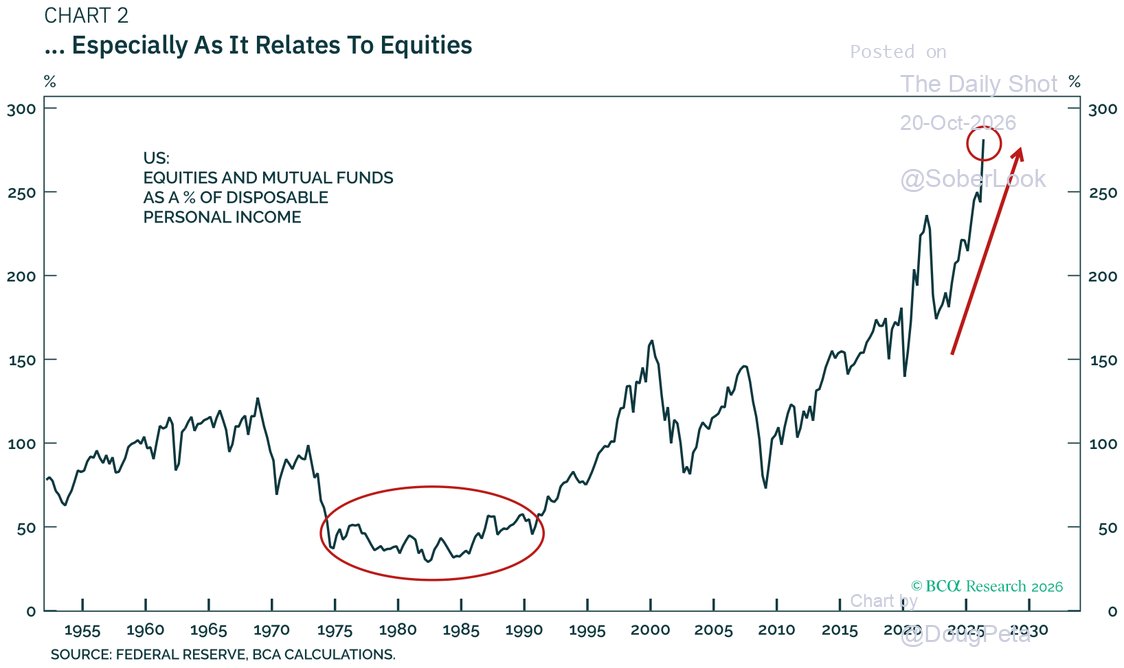
John Hussman’s piece today is worth reading and offers valuable insight on the duration and peril prevalent in secular bear markets. See: Secular Bear Markets: volatility without return. It also reminds that there are cyclical opportunities where one can capture profits in equities at various points within secular bears. Timing these opportunities is everything however, and timing requires some luck and discipline–ideally a bit of both. The facts are that that blind hope aside, from present valuations, stocks are priced to achieve an average return over the next 5 years of something like 3% a year with huge volatility in a best case scenario, and -14.9% a year in a worst case scenario. Hussman explains the math:
“A bit of arithmetic is instructive here. Suppose that future economic growth remains similar to past growth, and normalized earnings grow by about 6% annually. Assume also that at some point, let’s say 12 years into the future, the Shiller P/E simply touches 10 – still above the 5-7 multiples reached in prior secular bears (excluding the bubble period since the late-1990’s, the historical norm for the Shiller P/E is less than 15). Given a dividend yield of 2.3%, and a present Shiller P/E about 21, we can estimate the 12-year prospective return on the S&P 500 on those assumptions at:
As for the past 12 years, we started at a Shiller P/E of 44, moving to 21 at present, and began at a dividend yield around 1.2%. Our arithmetic indicates we should have observed an annual total return of about:
(1.06)*(21/44)^(1/12)+0.012*(44/21+1)/2 = 1.5% annually (Check. The actual return came in at 1.3%).
For optimists, assuming that the Shiller P/E falls no lower than 16, and not until 5 years from now, we would still expect a 5-year prospective total return of just 3.1% between now and that touch-point. For pessimists – or equivalently, for optimists that a secular bull market will begin sooner rather than later – a Shiller P/E of 7 reached 4 years from today would result in a prospective market loss of -14.9% annually over that 4-year period. There are certainly many intermediate possibilities, but unless one expects valuations to remain rich indefinitely, with no retreat to historically normal or undervalued levels as far as the eye can see, the eventual resolution of this period of secular overvaluation leaves little to be desired for long-term investors. I have little doubt that better opportunities will be available even over the course of the present market cycle.”
Hussman’s economic work agrees with ours, and others like Gary Shilling and the Economic Cycle Research Institute (ECRI), in the conclusion that the US very likely joined a global recession in the 3rd quarter of 2012. Once begun we know that during secular bear deleveraging periods, recessions tend to last 12 to 18 months. Over the past 100 years, 20% of the time stock markets have not followed the economy down but have continued to climb during a recession. 80% of the time however global stock markets have declined, with the S&P 500 losing an average of 25 to 45% of its value.
Lakshman Achuthan of Economic Cycle Research Institute, explained these odds in this recent clip. See here for a direct link.
So the question is what are thinking people to do in the face of these odds and how much does each of us wish to bank on best case scenario luck?
Most managers and advisers are wed to the theory of constantly buying and holding stocks in client accounts regardless of odds for success. In essence they are saying that regardless of the fact the recessions during secular bears are recurring and long and devastating to invested capital 80% of the time, they are going to direct all of their client chips on to the 20% chance for good luck. The reward for the client if such 1/5 odds pan out? Why the chance for that 3% gross annual return (Hussman’s best case math above) less any commissions and management fees paid. A ride that not only requires one to stay on the crazy train through each wild plunge and subsequent bounce back, but also requires that an investor can and will wait long enough to see their fortunes come round and round again within their required time horizon.
4/5ths of the time, holding stocks in this environment, will result in negative compound annual returns over a 15 to 20 year holding period. But 1/5th of the time, we might get away with a slightly positive gross return if we are able to stick with it long enough. Fair compensation? This is the question that every one of us has to answer for ourselves if allocating some of our life savings to equities today. How much do we want to bank on these odds?
In a post credit bubble world there is less money to go around–less money to waste. All of the ways in which tax revenue is allocated must be subject to fresh review. The American led war on drugs is certainly one area ripe for review.
“Narrated by Oscar winning actor Morgan Freeman, “Breaking the Taboo” is produced by Sam Branson’s indie Sundog Pictures and Brazilian co-production partner Spray Filmes and was directed by Cosmo Feilding Mellen and Fernando Grostein Andrade. Featuring interviews with several current or former presidents from around the world, such as Bill Clinton and Jimmy Carter, the film follows The Global Commission on Drug Policy on a mission to break the political taboo over the United States led War on Drugs and expose what it calls the biggest failure of global policy in the last 40 years.”
“An explosive critique about the investment industry: provocative and well worth reading.”
Financial Post
“Juggling Dynamite, #1 pick for best new books about money and markets.”
Money Sense
“Park manages to not only explain finances well for the average person, she also manages to entertain and educate while cutting through the clutter of information she knows every investor faces.”
Toronto Sun