When news broke yesterday that Bank of Canada’s Mark Carney had accepted a position as the Bank of England Governor starting in 2013, my immediate thought was that he had timed this exceptionally well.
After 13 years with Goldman Sachs where he and his colleagues orchestrated the global debt/derivatives bubble, Mr. Carney then moved to a role with the Canadian Finance Department in 2004 and the Bank of Canada in 2007, becoming its Chairman in February 2008 just as the global credit bubble was imploding. As monetary policy figurehead, Carney then benefited from a wave of favorable press amid the 2008 financial crisis, because Canadian banks had come into the crisis more regulated and less levered than other countries. This made them more stable and resilient in the storm. It also left them more capitalized and able to lend coming out of the recession. Which they did in spades.
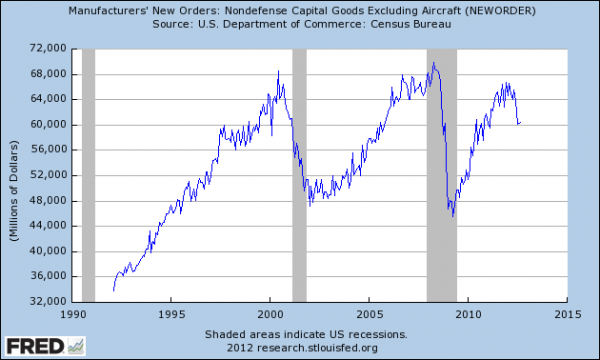
Having timed the credit bubble perfectly for his resume, Mr. Carney is once again ahead of the curve, now leaving the Bank of Canada just as the economy here is weakening into the next global downturn and domestic debt is forging record highs. Canadian consumers are today some of the most indebted in the world, levered off of Canadian realty prices that are some of the most over-valued on the planet.
Mr. Carney takes the Bank of England helm as a White Knight when Britain’s credit and property bubbles have already burst, and the country is already mired in recession. And since he is new to the picture there, none of this can be linked to his dovish, banker trained, add-credit-and-stir policies. Genius indeed.
Squawk Box Europe discusses whether the appointment of ex Goldman, Mark Carney as Bank of England Governor will be a breath of fresh air or another central banker from the same school of thought. Here is a direct link.