The history of humans has some constant themes. An excellent Op-ed in the NY Times this weekend reminds us of how the seeds of economic and social misery have always been sown in the inclination of the haves to pull up the social ladder after themselves once they have managed to climb to the top.
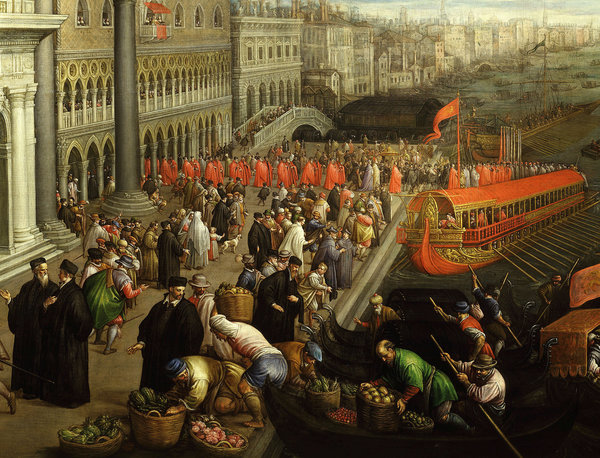
“IN the early 14th century, Venice was one of the richest cities in Europe. At the heart of its economy was the colleganza, a basic form of joint-stock company created to finance a single trade expedition. The brilliance of the colleganza was that it opened the economy to new entrants, allowing risk-taking entrepreneurs to share in the financial upside with the established businessmen who financed their merchant voyages.
Venice’s elites were the chief beneficiaries. Like all open economies, theirs was turbulent. Today, we think of social mobility as a good thing. But if you are on top, mobility also means competition. In 1315, when the Venetian city-state was at the height of its economic powers, the upper class acted to lock in its privileges, putting a formal stop to social mobility with the publication of the Libro d’Oro, or Book of Gold, an official register of the nobility. If you weren’t on it, you couldn’t join the ruling oligarchy.
The political shift, which had begun nearly two decades earlier, was so striking a change that the Venetians gave it a name: La Serrata, or the closure. It wasn’t long before the political Serrata became an economic one, too. Under the control of the oligarchs, Venice gradually cut off commercial opportunities for new entrants. Eventually, the colleganza was banned. The reigning elites were acting in their immediate self-interest, but in the longer term, La Serrata was the beginning of the end for them, and for Venetian prosperity more generally. By 1500, Venice’s population was smaller than it had been in 1330. In the 17th and 18th centuries, as the rest of Europe grew, the city continued to shrink.” Read: The self-destruction of the 1 percent
Today we are repeating many of the same mistakes:
“Even as the winner-take-all economy has enriched those at the very top, their tax burden has lightened. Tolerance for high executive compensation has increased, even as the legal powers of unions have been weakened and an intellectual case against them has been relentlessly advanced by plutocrat-financed think tanks. In the 1950s, the marginal income tax rate for those at the top of the distribution soared above 90 percent, a figure that today makes even Democrats flinch. Meanwhile, of the 400 richest taxpayers in 2009, 6 paid no federal income tax at all, and 27 paid 10 percent or less. None paid more than 35 percent.
Historically, the United States has enjoyed higher social mobility than Europe, and both left and right have identified this economic openness as an essential source of the nation’s economic vigor. But several recent studies have shown that in America today it is harder to escape the social class of your birth than it is in Europe. The Canadian economist Miles Corak has found that as income inequality increases, social mobility falls — a phenomenon Alan B. Krueger, the chairman of the White House Council of Economic Advisers, has called the Great Gatsby Curve.”