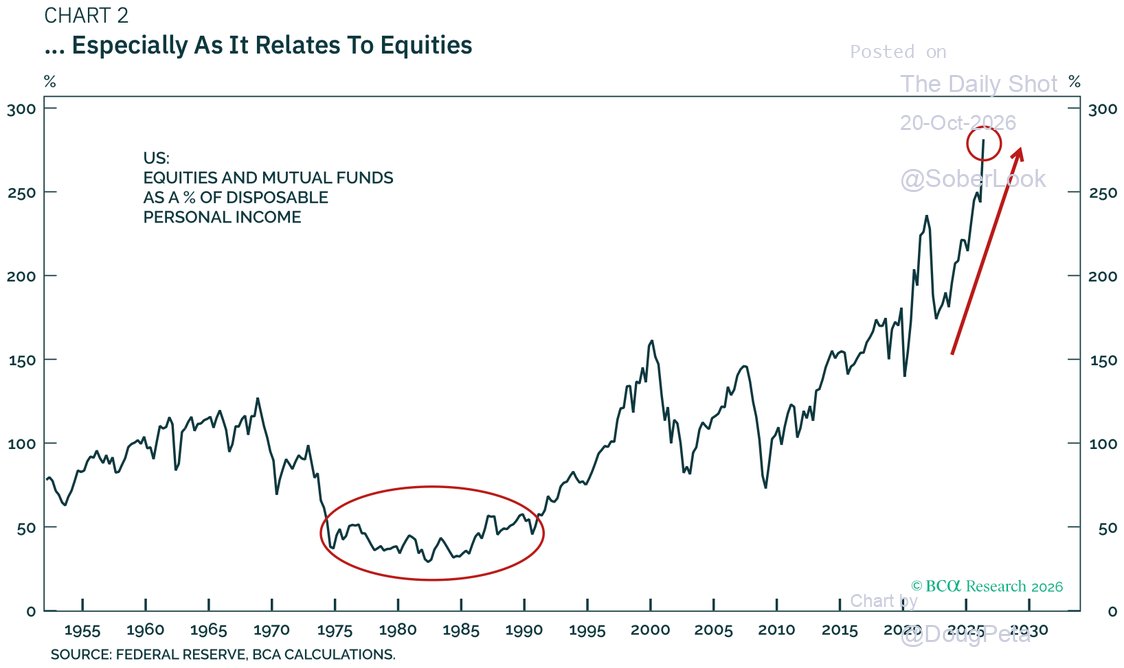
Most commentators are sell-side or long-always managers whose business model makes them congenitally wired to always say that people should be buying and holding stocks regardless of price, regardless of the person’s age or circumstances, regardless of where we may be in a business cycle, regardless of the probabilities for capital loss. Business media collects its revenue from the sell-side, long always firms. It has self-styled its business model as the source “for information so that viewers know what to do with their money”, and many of the anchors and hosts certainly seem to have deluded themselves into thinking that they are offering important insight and information. But in reality a more honest mission statement would read “the source for publicly traded companies and financial firms to flog themselves to new, mesmerized, victims.”
The article offers a wonderful laundry list of some well known offenders. But most important is the realization that these same people and their many colleagues are saying the same bullish things today that they have continued to say through the past 13 years of a secular bear market where their followers and clients have suffered huge risk and huge stress and have flat to negative gains for the experience.
“So if you remember nothing else today, here’s your big take-away: You can never trust Wall Street bulls, they’re lying to you 93% of the time. Studies tell us analysts signal “buys” vastly more than “sells.” And behavioral-science research tells us that bankers, traders and other market insiders are misleading us, manipulating us 93% of the time in their securities reports, PR, ads, speeches, sales material, in their predictions on television, cable shows and when quoted in newspapers and magazines…
March 1999: Harry S. Dent, author of “The Roaring 2000s.” “There has been a paradigm shift.” The New Economy arrived, this time really is different.
October 1999: James Glassman, author, “Dow 36,000.” “What is dangerous is for Americans not to be in the market. We’re going to reach a point where stocks are correctly priced … it’s not a bubble … The stock market is undervalued.”
August 1999: Charles Kadlec, author, “Dow 100,000.” “The DJIA will reach 100,000 in 2020 after “two decades of above-average economic growth with price stability.”
December 1999: Joseph Battipaglia, market analyst. “Some fear a burst Internet bubble, but our analysis shows that Internet companies … carry expected long-term growth rates twice other rapidly growing segments within tech.”
December 1999: Larry Wachtel, Prudential. “Most of these stocks are reasonably priced. There’s no reason for them to correct violently in the year 2000.” Nasdaq lost over 50%.
December 1999: Ralph Acampora, Prudential Securities. “I’m not saying this is a straight line up. … I’m saying any kind of declines, buy them!”
February 2000: Larry Kudlow, CNBC host. “This correction will run its course until the middle of the year. Then things will pick up again, because not even Greenspan can stop the Internet economy.” He’s still hosting his own cable show.
April 2000: Myron Kandel, CNN. “The bottom line is in, before the end of the year, the Nasdaq and Dow will be at new record highs.”
September 2000: Jim Cramer, host of “Mad Money.” Sun Microsystems “has the best near-term outlook of any company I know.” It fell from $60 to below $3 in two years.
November 2000: Louis Rukeyser on CNN. “Over the next year or two the market will be higher, and I know over the next five to 10 years it will be higher.”
December 2000: Jeffrey Applegate, Lehman strategist. “The bulk of the correction is behind us, so now is the time to be offensive, not defensive.” Another sucker’s rally.
December 2000: Alan Greenspan. “The three- to five-year earnings projections of more than a thousand analysts … have generally held firm. Such expectations, should they persist, bode well for continued capital deepening and sustained growth.”
January 2001: Suze Orman, financial guru. “The QQQ, they’re a buy. They may go down, but if you dollar-cost average, where you put money every single month into them, I think, in the long run, it’s the way to play the Nasdaq.” The QQQ fell 60% further.
March 2001: Maria Bartiromo, CNBC anchor. “The individual out there is actually not throwing money at things that they do not understand, and is actually using the news and using the information out there to make smart decisions.”
April 2001: Abby Joseph Cohen, Goldman Sachs. “The time to be nervous was a year ago. The S&P was overvalued, it’s now undervalued.” Markets fell 18 more months.
August 2001: Lou Dobbs, CNN. “Let me make it very clear. I’m a bull, on the market, on the economy. And let me repeat, I am a bull.”