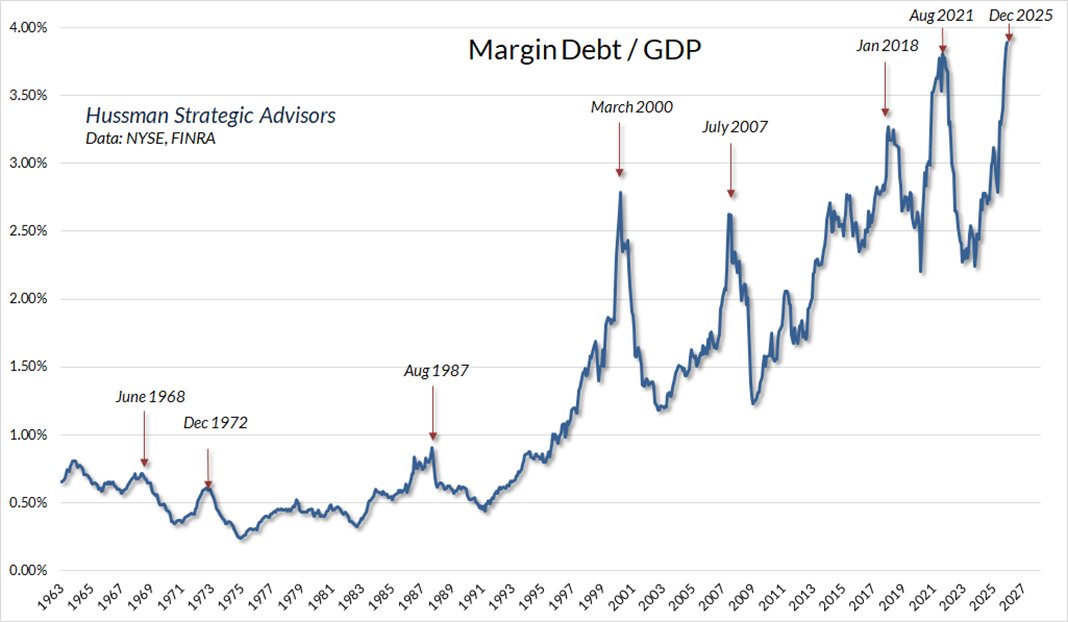
Levered financial bets take people down faster than emails with Epstein. And yet, there are nearly no limits on what our current system allows. Rogues and thieves being able to buy government policies in favour of predators and rampant gambling is a big part of the problem.
Everyone is at greater risk when there are more drunks on the road, and we all pay the price for precarious markets, weakened economies and an increasingly fragile social order. Madness is presently passing as normal, and it’s highly contagious. See, The Crypto Trades That Amplified Gains Are Now Turbocharging Losses:
In years past, U.S. investors haven’t had access to many of the riskier strategies that crypto investors have used in other markets. But that began to change this year, with Trump’s re-election ushering in a more crypto-friendly Washington.
This summer, Coinbase, the largest U.S. exchange, launched perpetual futures, a type of financial contract that never expires and lets traders bet on digital tokens’ rise using up to 10 times leverage. Cboe plans to launch bitcoin and ether continuous futures with 10-year expirations in December.
Crypto lending is also making a comeback. The practice, a staple in the market’s 2021 run-up, looks a lot like traditional banking. A lender takes in deposits from one set of customers, and then lends those funds out to a different group at a higher interest rate than it pays depositors.
But in the crypto markets, lenders typically offer depositors much higher yields than those available in dollar-based bank savings accounts. When crypto markets tumbled in 2022, many of these lenders collapsed.
…While bitcoin’s recent selloff has wiped out some leveraged bets, traders expect it to tick back up.
“Until there’s some sort of overriding body that says this is where you have to cap leverage, I just can’t see that changing,” said Jake Ostrovskis, head of over-the-counter trading at crypto firm Wintermute.
Meanwhile, younger generations, who we need to help drive our economy, increasingly find themselves without a foothold. See, The Kids Aren’t Alright:
Gen Z isn’t ok—that’s the official diagnosis from Oxford Economics, following a deep dive into the generation’s economic prospects. Indeed, the no-hire no-fire labor market, coupled with the asset headwinds of unaffordable housing and low wage growth, means the youngest entrants to the labor market could face “long-term scarring.”
Also, see, Americans with a six-figure income are in ‘survival mode’:
A $100,000 income should put you firmly in the middle class, given that the median annual pay of America’s full-time workers is around $62,000.
Middle-class Americans may not be wealthy, but they have come to expect a measure of economic stability.
Yet, in the Harris survey, many high earners portray themselves living paycheck to paycheck.
Three-quarters of six-figure earners said they had used a credit card recently because they ran out of cash. More than half of six-figure earners said they would have to double their income to feel financially secure.