Up close it may seem that US bond yields have backed up a lot over the past 5 weeks. As the ECB has floundered to find consensus for the next bank bailout scheme, all hopes have turned back to the US Fed and its upcoming meetings on August 31 and Sept 12. Will they or won’t they plunder the coffers once more and flood further infertile cash into the already cash-swamped banking system?
Big picture, even with the recent move higher in yields, as shown in the chart below, 10 year US yields remain well below overhead resistance in the 1.8–1.90 range and may now have already priced in the idea of further Fed easing announcements. Recall the Fed’s assertion that they roll out easing in an effort to lower rates? Except that every time they do rates have only defied this object and moved higher–thereby increasing–not decreasing carrying costs for consumers.
This puts the economy in a lose-lose situation–further QE has already been priced into not just stocks but also bonds and key consumer commodities like oil and food. The latter two are placing unwanted additional stress on the already weak consumer-dependent US economy. More QE is only likely to further extenuate the downturn in demand already underway.
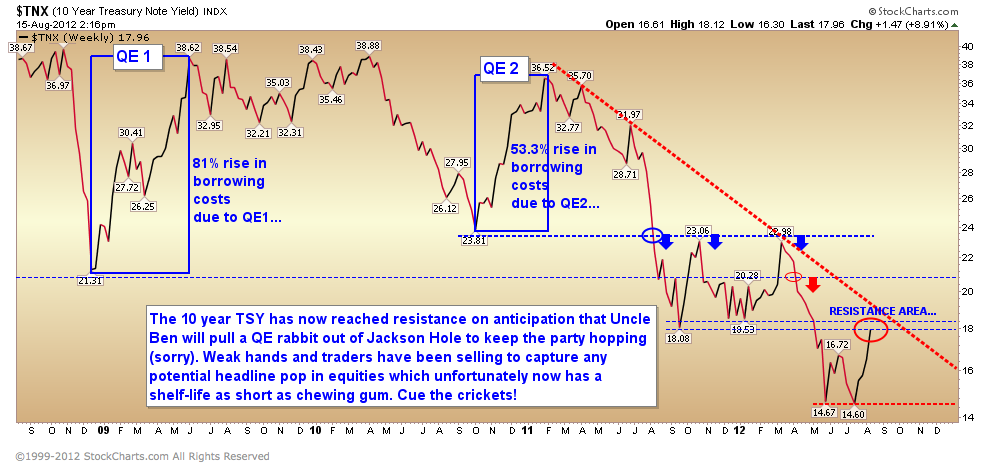
Source: Cory Venable, CMT, Venable Park Investment Counsel Inc.
And one more huge negative of the “zero-rate” policies celebrated by central bankers. As shown in the chart below, zero bound rates do not spur consumption- they force dramatically increased savings for consumers. At today’s savagely suppressed rates, workers must set aside more than 20% of their annual income in order to amass the same nest egg as they would have built with just a 5% savings rate were deposit interest rates in a more normal 5-6% range. At the same time, retirees today are receiving much less income from their savings and so they too have much less to spend in the real economy. With governments hacking their budgets, and consumers scrimping for pennies, this is setting up to be one mother of a global downturn.










