The Loonie is up a cent this morning (at least at the outset) on word from the Bank of Canada that it may have to raise interest rates sooner than previously expected: “In light of the reduced slack in the economy and firmer underlying inflation, some modest withdrawal of the present considerable monetary policy stimulus may become appropriate, consistent with achieving the 2 percent inflation target over the medium term” the BOC said in a statement today.
But we have seen this movie a few times before, as the BOC moved to a tightening bias both in the fall of 2010 and mid 2011, only to quickly retreat again as the European debt crisis blew out to threaten global recovery hopes once more. If the next global recession is already underway, then the BOC is certain to wax more dovish again in the months ahead.
I think the real concern for policy makers (and tax payers who backstop the Canada Mortgage and Housing Corp) in Canada is our froth-filled housing market. See Mortgage market tiptoes toward subprime:
As the big banks get choosier about who they’ll lend money to in this hot housing market, people with questionable credit are benefiting from Canada’s once-small but now booming subprime mortgage industry.
The Canadian Real Estate Association released figures Monday showing Canadian home sales rose 2.5 per cent in March, and the average Canadian home sold for $369,677 last month.
That was actually a slight decline from the level of a year ago, but it comes on the heels of almost uninterrupted strong gains over the previous two years.
Fuelling that boom is a growing pile of mortgage debt, an increasing amount of which isn’t coming from Canada’s major lenders. That’s largely because of recent developments at the Canada Mortgage and Housing Corporation.
The CMHC is the Crown corporation mandated to oversee Canada’s housing industry. The vast majority of Canadian mortgages show up on its books, because CMHC insures the mortgages approved by banks.
In 2010 and again in 2011, hoping to slow down a red-hot housing market, the Department of Finance tinkered with the rules surrounding who can qualify for CMHC-insured mortgages. Moves to shorten the maximum length of the mortgage and raise the minimum percentage a borrower must have as a down payment combined to make CMHC insurance harder to come by.
“The banks don’t want to take on anything that’s not insured by CMHC,” Toronto mortgage broker Marcus Tzaferis of Morcan Direct says. “So that’s pushing borrowers farther and farther out of the mainstream to find financing.”
Industry experts suggest the big banks are currently rejecting as much as 20 per cent of mortgage applications because they don’t qualify for CMHC insurance.
But alternative lenders like Home Capital Group, Equitable Group and Counsel Corp. have stepped in to fill the market niche of funding borrowers who don’t meet traditional lending requirements — known in industry parlance as “subprime” borrowers.
‘There’s a perception that Canada avoided the subprime mortgage crisis because we’re conservative and we have a good system. But it’s not really the case.’—Benjamin Tal, CIBC economist
I think the BOC has very good reason to be worried about Canada’s over-indebted consumers and over-valued realty markets. The inevitable downside is ominous for the Canadian domestic economy. The reality is however that ongoing export weakness is still likely to trump domestic mortgage worries as our commodities-dependent economy turns down in the next global recession. The BOC has premised its bias toward tightening on expectations for firmer-than-expected growth and inflation as well as a less hostile global backdrop. We shall see. My concern is that global hostilities are likely to worsen for a while from here and the BOC will be forced to backtrack some more.

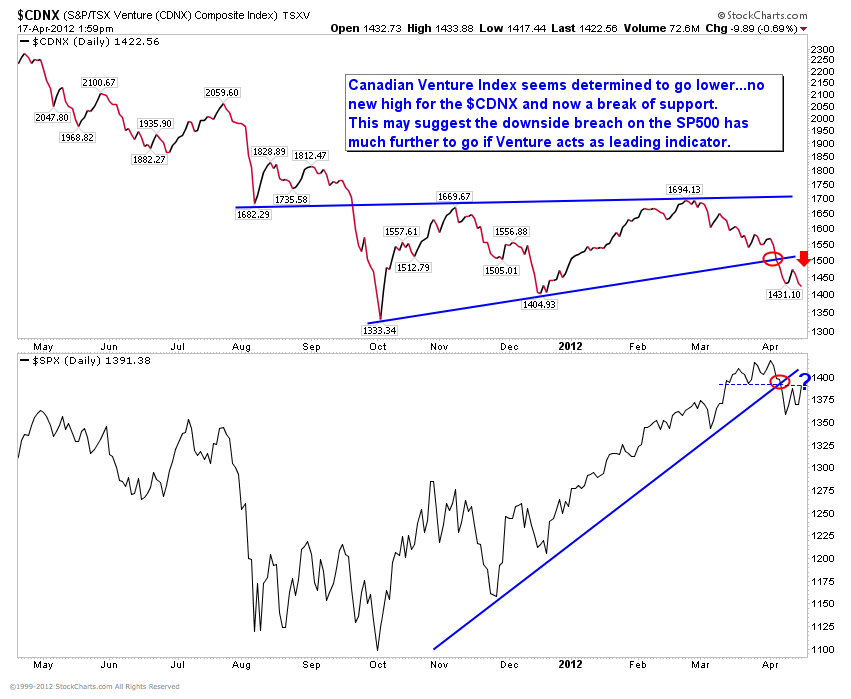 Source: Cory Venable, CMT, Venable Park Investment Counsel Inc.