All in and more

US job growth remained sluggish in November, and the unemployment rate rose to a four-year high of 4.6% (Bureau of Labor Statistics data out today), up 120 basis points (bps) from the April 2023 low of 3.4%.

A 120-bps rise in the US unemployment rate has never occurred in the post-war era without a recession either starting or already underway (grey bars below since 1948).

The Treasury market thinks the US Fed is more likely to cut interest rates in January, with the Fed-leading two-year Treasury yield down to 3.48%, the lowest since July 31, 2022.

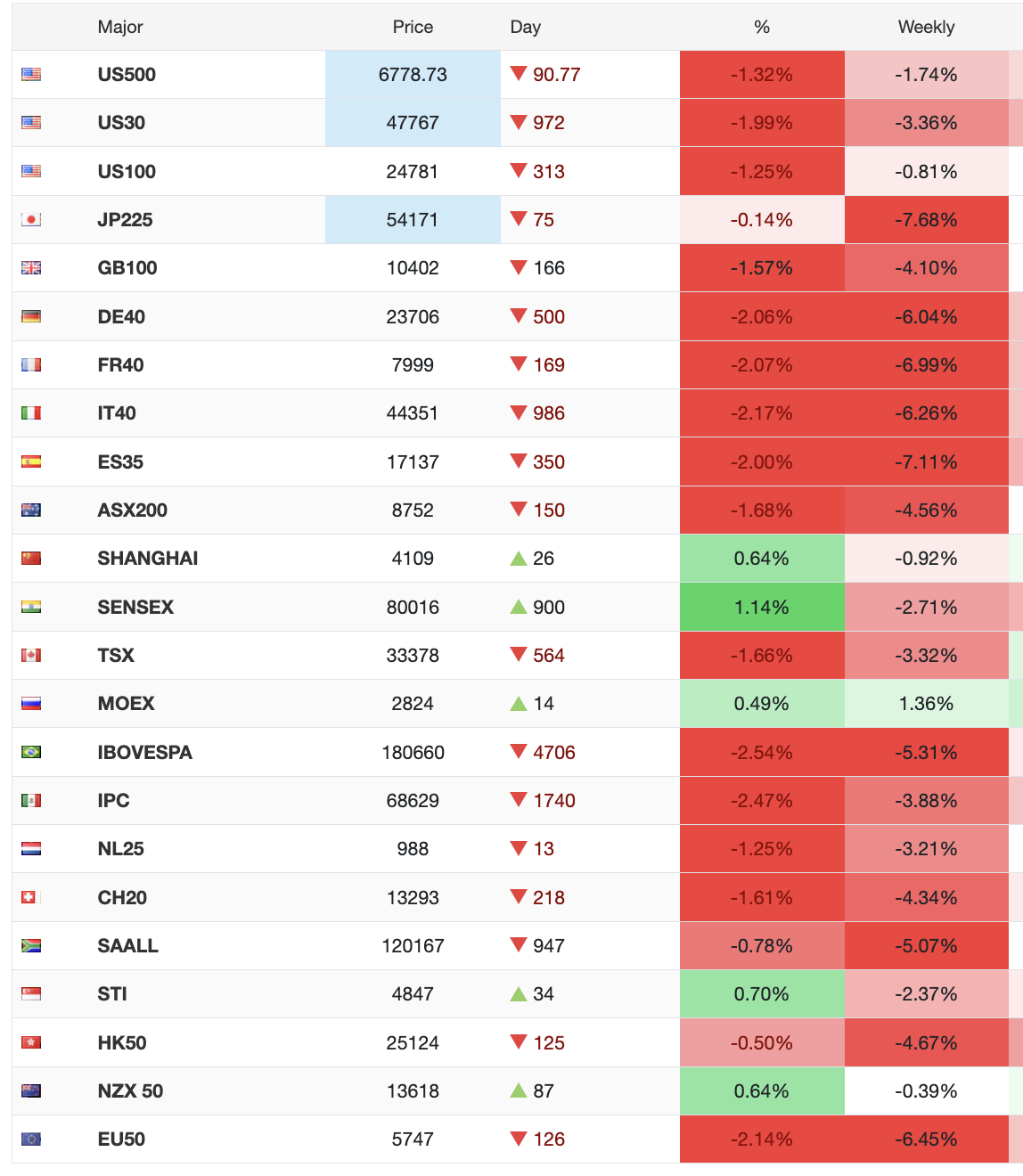
So far, risk markets are retreating, led by Bitcoin, down 30% since October 6; Oracle shares, down 42% since September 22; and oil prices (WTIC), sub-$56 a barrel — the lowest since February 2021 (nearly 6 years ago).

The AI trade is wobbling under fears of overbuild, extreme valuations, circular deals and elusive revenue. See, Wall Street Sees AI Bubble Coming and Is Betting on What Pops It:

Alphabet, Microsoft, Amazon.com Inc. and Meta Platforms Inc. are projected to spend more than $400 billion on capital expenditures in the next 12 months, most of it for data centers. While those companies are seeing AI-related revenue growth from cloud-computing and advertising businesses, it’s nowhere near the costs they’re incurring.

“Any plateauing of growth projections or decelerations, we’re going to wind up in a situation where the market says, ‘Ok, there’s an issue here,’” said Michael O’Rourke, chief market strategist at Jonestrading.

Earnings growth for the Magnificent Seven tech giants, which also includes Apple Inc., Nvidia and Tesla Inc., is projected to be 18% in 2026, the slowest in four years and slightly better than the S&P 500, according to data compiled by Bloomberg Intelligence.

Rising depreciation expenses from the data center binge is a major worry. Alphabet, Microsoft and Meta combined for about $10 billion in depreciation costs in the final quarter of 2023. The figure rose to nearly $22 billion in the quarter that just ended in September. And it’s expected to be about $30 billion by this time next year.

All of this could put pressure on buybacks and dividends, which return cash to stockholders. In 2026, Meta and Microsoft are expected to have negative free cash flow after accounting for shareholder returns, while Alphabet is seen roughly breaking even, according to data compiled by Bloomberg Intelligence.

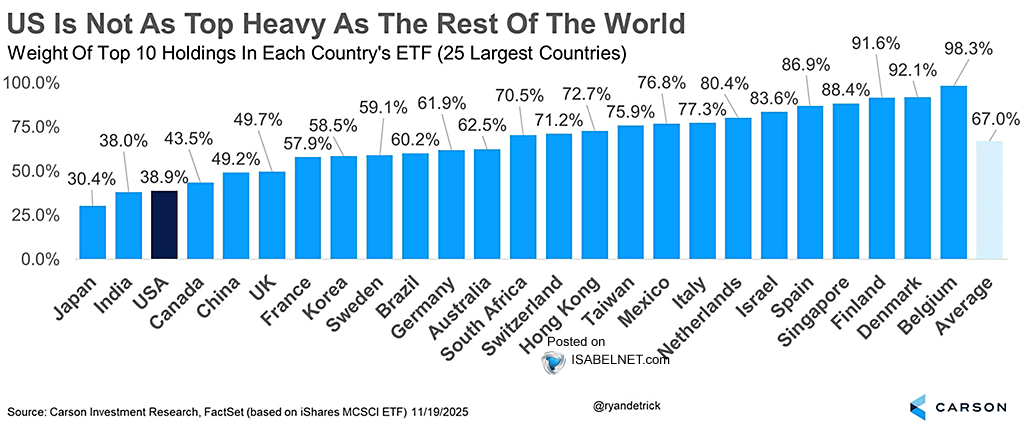
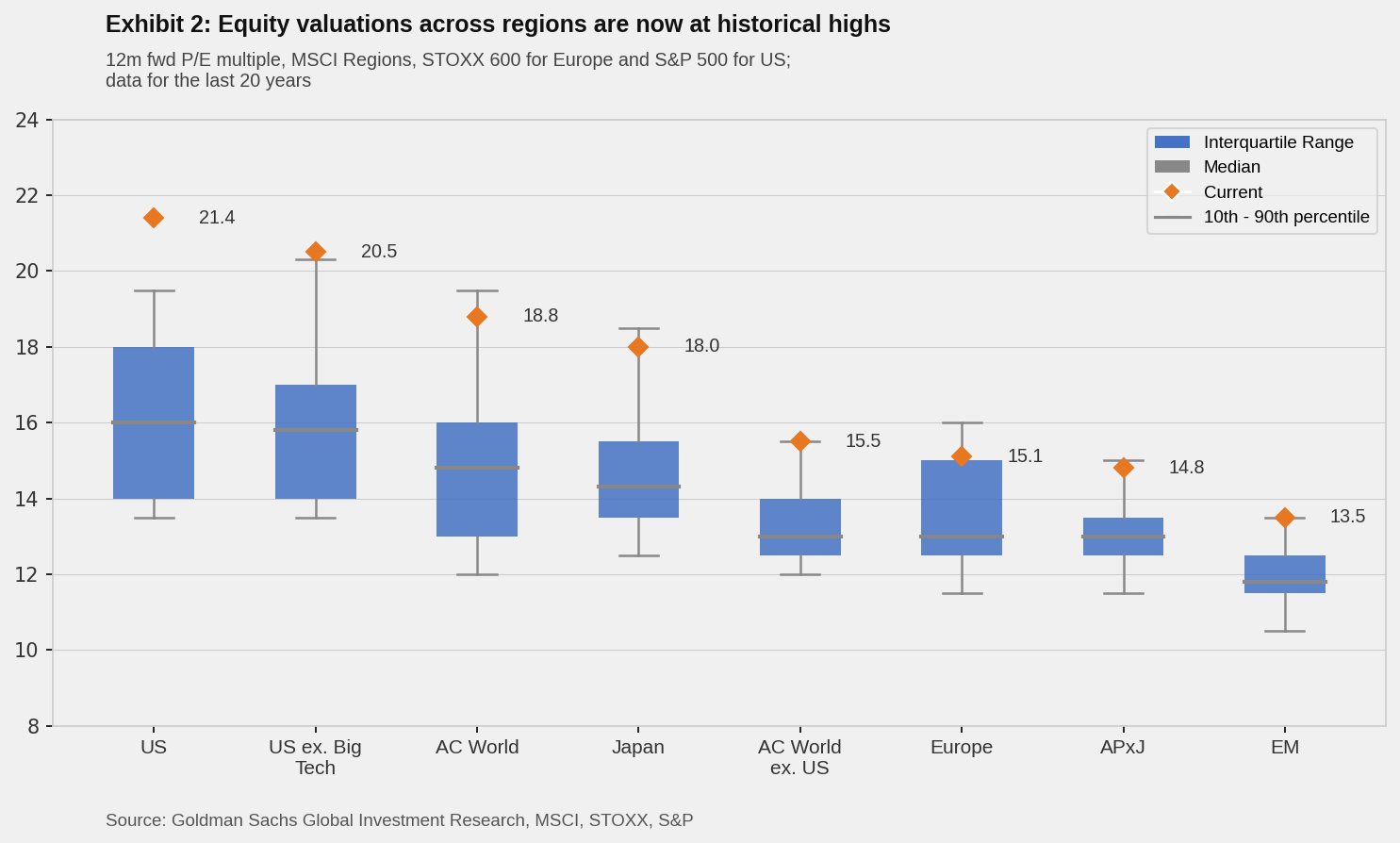
Financial markets have rarely been so richly valued as today, and there has never been a time when the S&P 500 had a Cyclically Adjusted Price-to-Earnings ratio (CAPE) above 40x (like now) that yielded a positive investment return over the following 1, 3, 5 or 10-year period. Still, as noted by the BIS in its December 2025 Quarterly Review this week, investors are taking the over on that bet.

And with leverage: US margin debt (borrowing against investment portfolios) has reached a record $1.2 trillion, up 36% year-to-date.

So-called professionals are risk-drenched too with fund manager cash levels at a record low of 3.3% (Chart 1 below since 1999), sentiment the highest since the 2021 peak (Chart 2 below,) and those overweight equities and commodities also the highest since the 2021 top (dark blue in Chart 3 below, overshooting ISM manufacturing in light blue), all courtesy of Bank of America (via Macro Charts).
No one can be sure when mean reversion will complete, but the pieces are in place for a historic loss cycle, and very few will have liquid cash to take advantage of clearance sales. The time to prepare is before storms hit, and individuals need to look out for themselves.

Posted in Main Page | Comments Off on All in and more

BIS warns on rare simultaneous bubble in stocks and gold

The Bank for International Settlements (BIS), the central bank of central banks globally, warns in its December 2025 Quarterly Review that a rare, simultaneous bubble in the price of stocks and gold has increased financial risks and the prospect of a significant correction and negative or subdued future returns:

A widely used statistical test to detect the explosiveness of a price process suggests that both the S&P 500 and the price of gold have entered explosive territory in recent months. Historically, the prices of US equities and gold have breached the explosive behaviour threshold at different times (Graph C1.A, on lower left).

This was often followed by a significant correction, such as in 1980 for gold (after having surged during the Great Inflation) and the burst of the dotcom bubble for US equities… Also note that the past few quarters represent the only time in at least the last 50 years in which gold and equities have entered this territory simultaneously.

Following its explosive phase, a bubble typically bursts with a sharp and swift correction. Graph C1.B (lower right) suggests that high values of the test statistics – hinting at an ongoing bubble – are typically followed by periods of negative or subdued returns.

In other words, we are living through a pandemic of financial fever, and those who believe they are protected by holding a ‘diversified’ portfolio of corporate securities and precious metals are at high risk of being disappointed.

Moreover, retail exuberance is a classic bubble symptom, and we are there:

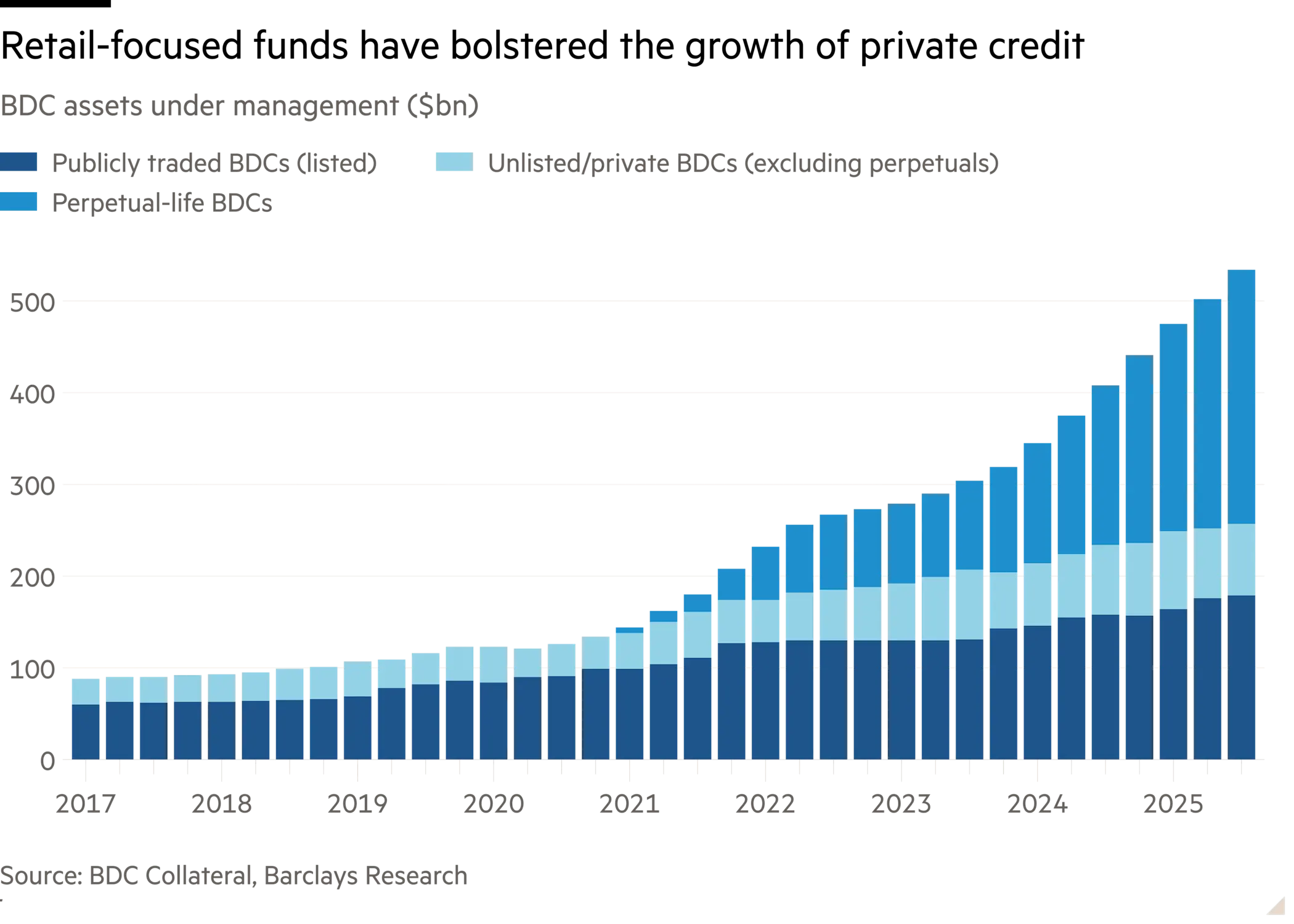
A typical symptom of a developing bubble is the growing influence of retail investors trying to chase price trends. At times of media hype and surging prices, retail investors can be lured to riskier assets that they would normally shun, compounded by herd-like behaviour, social interactions and fear of missing out. Indeed, measures of retail investors’ interest in markets, such as internet searches, tend to surge at times of frothiness (Graph C2.A, on lower left).

This time around, there is also evidence that retail investor exuberance and appetite for seemingly easy capital gains have spilled over to a traditional safe haven such as gold. Since the beginning of 2025, gold exchange-traded fund (ETF) prices have been consistently trading at a premium relative to their net asset value (NAV) amid growing retail investor interest (Graph C2.B, blue line, middle, below). ETF prices exceeding their NAV signal strong buying pressure coupled with impediments to arbitrage.

Fund flow data reveal it was mostly retail investors who recently poured money into US equities and gold funds. Furthermore, retail investors have increasingly taken trading positions that run counter to those of their institutional counterparts: the latter were taking money out of US equities or maintaining flat positions in gold, while retail investors recorded inflows (Graph C2.C, lower right).


Although the influx of retail investors has mitigated the
impact of institutional investor outflows, their growing prominence could threaten market stability down the road, given their propensity to engage in herd-like behaviour, amplifying price gyrations should fire sales occur.

Posted in Main Page | Comments Off on BIS warns on rare simultaneous bubble in stocks and gold

Rethinking value add

Lots of disturbing news this morning, fortunately, there are also positive developments.

As endless video content and computing devour more and more power, renewable sources and battery storage to balance demand are an obvious evolution.

Interestingly, people often cite payback periods in rejecting investment in power production and storage, while freely spending on aesthetic items like upgraded countertops and landscaping that have no hope of ever lowering operating costs.

For a long time, rising home prices made non-productive capital-allocation decisions seem justified. Now that home prices and revenue are falling in many areas, interest in reducing expenses and waste is back on the agenda.

Home battery storage systems are becoming an essential key to a successful energy transition. Australia has understood this and has acted promptly to embrace the technology. Spain’s recent blackout suggests European countries have a lot of catching up to do. So can we do it? Here is a direct video link.

Posted in Main Page | Comments Off on Rethinking value add