Record debt payments and rising unemployment

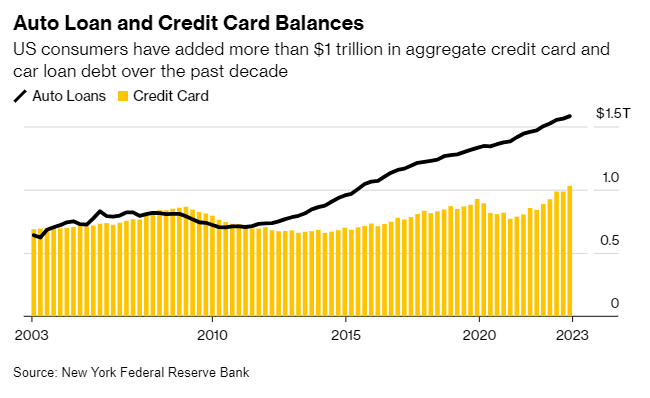
US household debt has surpassed a fresh record of $17.1 trillion. $12 trillion is in mortgages (more than twice the 2006 bubble top), $1.6 trillion in auto loans, and over $1 trillion in credit card debt, all with the highest interest rates in 22 years and rising unemployment. Courtesy of Bloomberg, the chart below shows the trend in auto (black line) and credit card balances (yellow) since 2003. The discussion below lays out the economic implications well.
Ted Oakley interviews Danielle DiMartino Booth discussing current Fed policy, employment implications, and debt implications. Here is a direct video link.

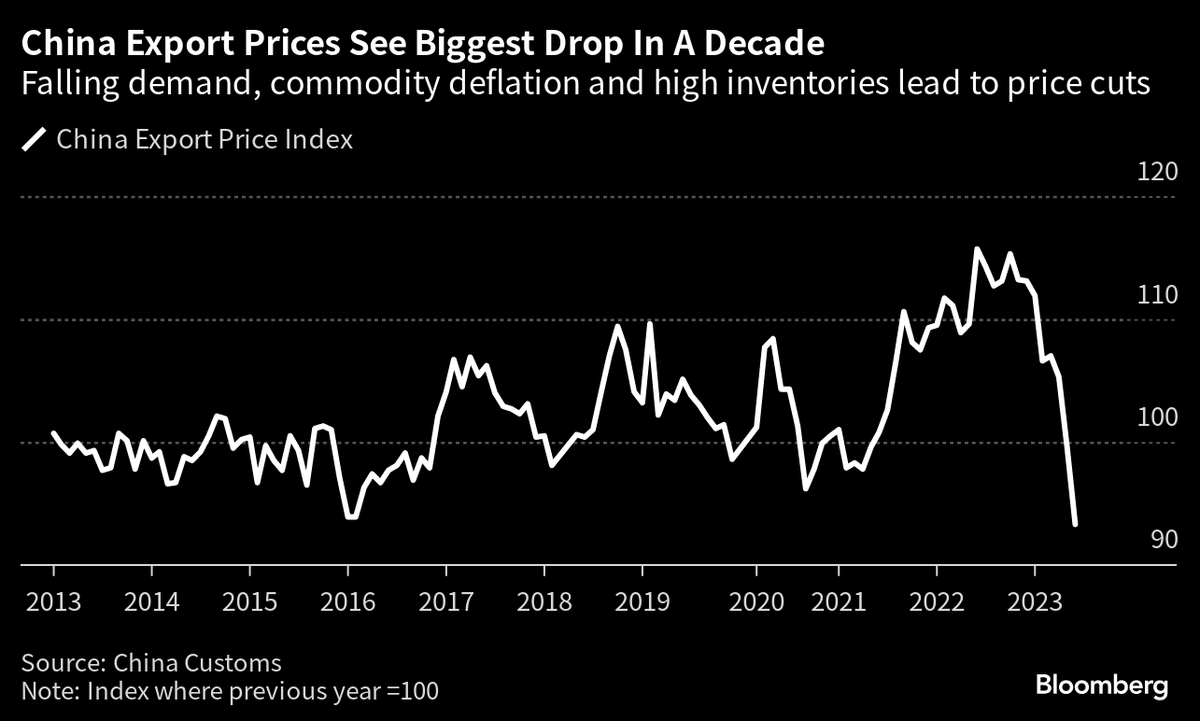
Not just in America, China’s debt crisis is also compounding, see China’s largest surviving developer, sinks into crisis. Meanwhile, the year-to-date freefall in China’s export prices is shown below as softening consumer demand and inflated inventories force prices lower for the world’s second largest economy #disinflation. See China slides into deflation as consumer, factory prices drop. Also, China slips into deflation in warning sign for world economy.
Posted in Main Page | Comments Off on Record debt payments and rising unemployment

No time for delusions

Bullish sentiment roared back in the first half of 2023 on the blind belief that low unemployment numbers mean that this time is different and the sharpest monetary tightening in 40 years is not triggering a recession.

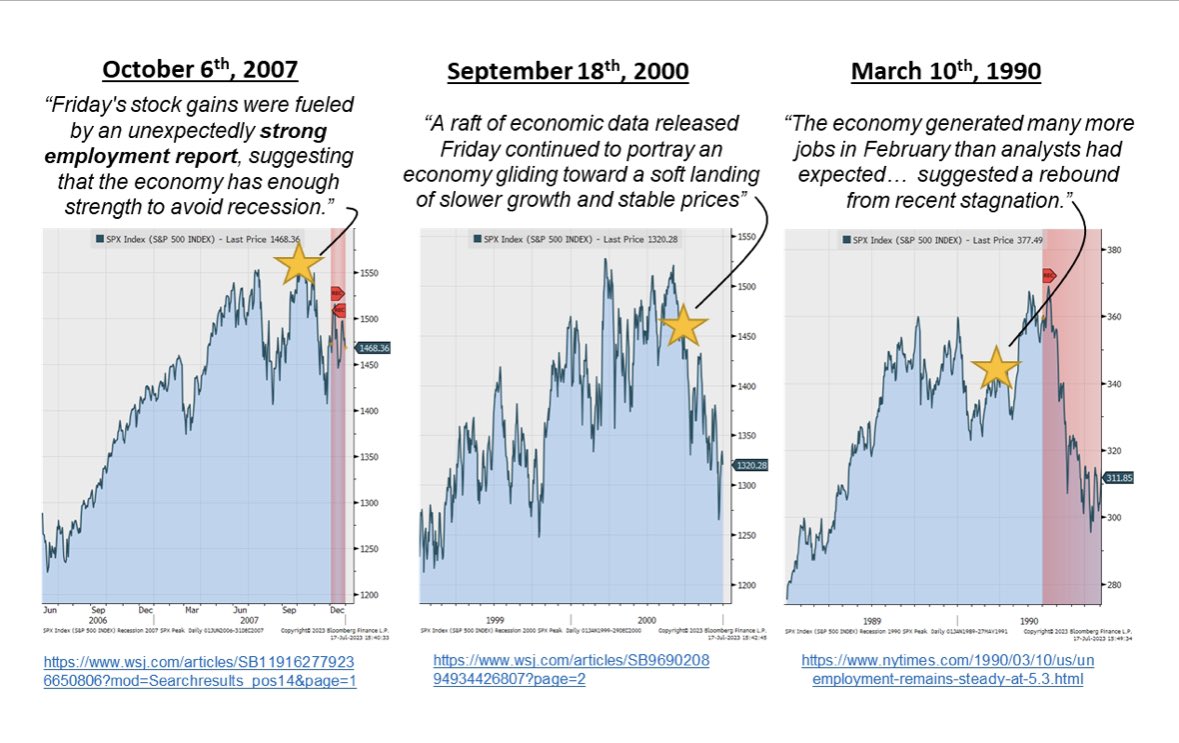
In reality, changes in unemployment lag behind changes in monetary policy by 12 to 24 months, and mainstream commentators make premature all-clear proclamations before the worst of market losses, every cycle. The chart below, courtesy of Michael Kantrowitz, evidences similar overconfidence during the 1990, 2000 and 2007 downcycles.Meanwhile, last week’s jobs data showed leading signs of employment distress with declines in the average work week (to the lowest since April 2020), temporary help, and full-time jobs, both in Canada and the US. The number of people taking on more than one job to make ends meet leapt in June and July to the highest since January 2020.

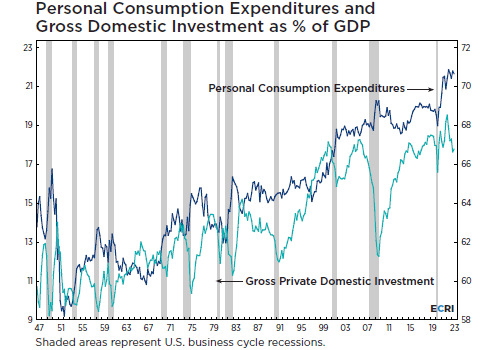
Others point to strong consumer spending as evidence that households can sustain economic growth. In reality, consumer spending as a percentage of GDP (below in blue since 1947) always soars in the run-up to recessions and typically stays in an uptrend until after the end of the recession. Gross Private Domestic Investment (GPDI) as a percentage of GDP (below in green), on the other hand, typically falls heading into recessions (marked in grey). The divergence between these two indicators year to date is entirely consistent with the onset of past recessions.  ECRI elaborates on their website here.

Posted in Main Page | Comments Off on No time for delusions

“Normalized” rates and record debt mean tough times

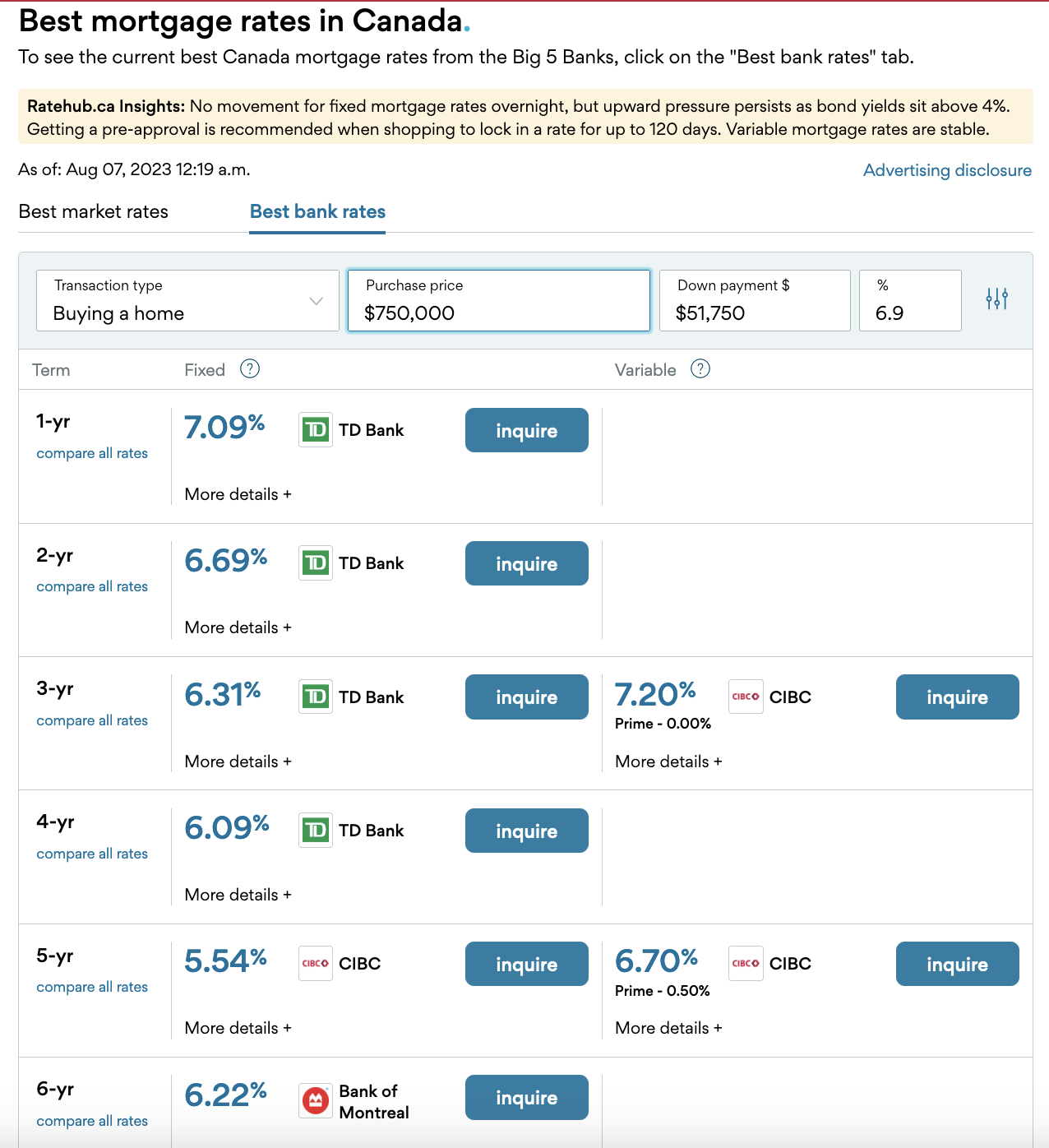
Canadian banks are offering mortgage rates above 6% for 1, 2, 3, 4 and 6-year terms on new purchases (below via Ratehub). Home equity lines of credit are above 7%.
These are historically average mortgage rates. The trouble is that after 13 years of unnaturally low rates (2009-2022), people are carrying debt loads far above the long-term average. The highest debt + the highest interest rates in 22 years is a crushing weight for consumer-dependent economies worldwide. Make no mistake: this pain is contagious; there’s no quick fix, and it’s just getting started. Best to understand and plan accordingly.

John Shmuel, managing editor with RATESDOTCA, joins BNN Bloomberg to discuss how more Canadian homeowners are starting to worry about their mortgage renewals as rates continue to grind higher. Here is a direct video link.

Also, see WSJ, A real-estate haven turns perilous with roughly $1 trillion coming due:

Apartment buildings, long considered a real-estate haven, are emerging as the next major trouble spot in the beleaguered commercial-property world.

Investors bid up the prices of multifamily buildings for years, attracted by steadily rising rents and the prospect of outsize returns. Many took on too much debt, expecting they could raise rents fast enough to pay it down.

Posted in Main Page | Comments Off on “Normalized” rates and record debt mean tough times