The Rich Roll Podcast is typically excellent; this conversation is a must-listen.
Renowned epidemiologist and gut health expert Tim Spector, MD joins Rich to talk about recent breakthroughs in microbiome science, the importance of plant diversity in your diet, and how personalized nutrition is revolutionizing the future of healthcare. Here is a direct video link.
Posted inMain Page|Comments Off on Understanding gut health and disease
Danielle was a guest with Jim Goddard on Talk Digital Network talking about recent developments in the world economy and markets. Here is a direct video link.
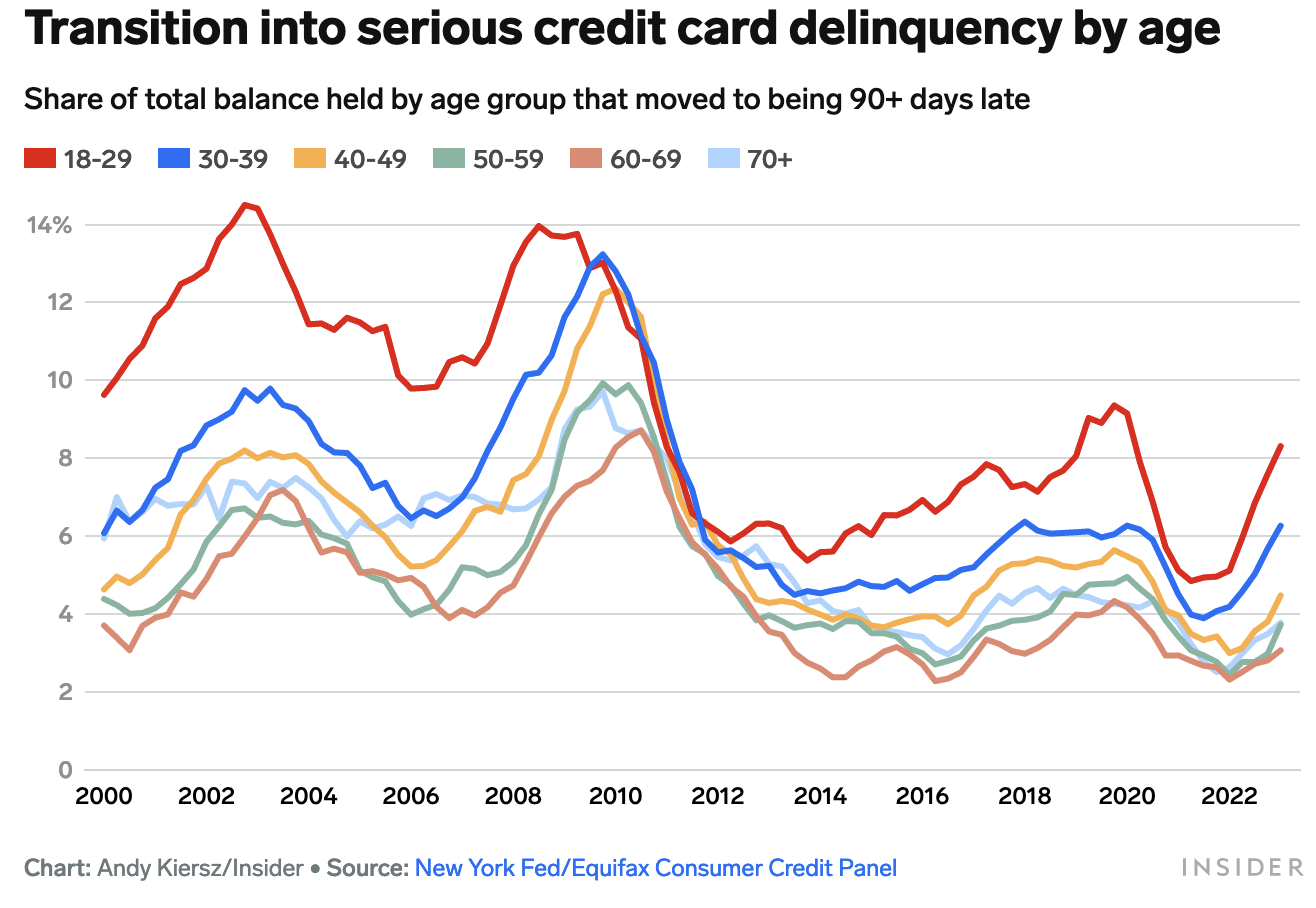
The chart below shows payment delinquency cycles for US credit cards by age group since 2000.
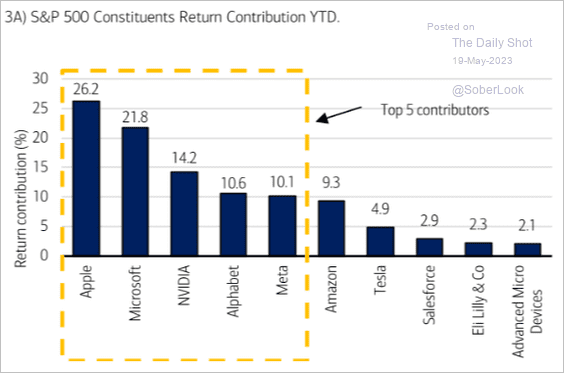
Markets are weak when they are highly concentrated. The chart below, courtesy of DailyShot.com, shows the percentage of S&P 500 year-to-date gains that have come from the ten most expensive tech companies. Today we have the most concentrated (weakest) US stock market in decades.
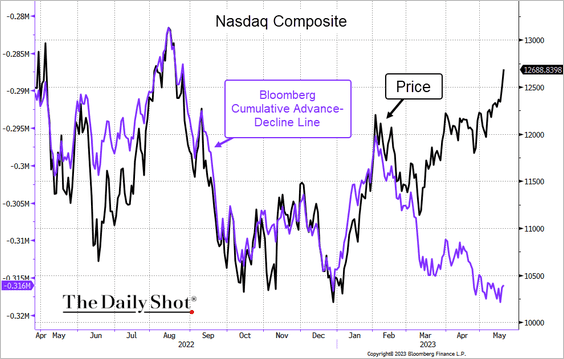
The same vulnerability is evident in the NASDAQ Index (price below in black over the last two years), where the number of decliners has far outpaced advancers year-to-date (purple line). The gap is unsustainable.
Posted inMain Page|Comments Off on Danielle’s biweekly market update
The segment below offers interesting insight into the Chinese real estate cycle as the easy credit era ends. Similar trends are happening around the world, all at the same time.
The May Day Golden Week used to be one of the peak seasons for real estate sales in China. However, this year’s May Day holiday saw extremely quiet sales in property sales offices and second-hand housing transaction venues, with very few transactions taking place. Even first-tier cities like Beijing and Shanghai were no exception. For example, Beijing’s newly signed contracts for commercial residential properties were only 114 units, with a transaction area of only 14,000 square meters. This represents a decrease of over 60% compared to the same period last year when Beijing was almost under lockdown due to the pandemic. The market conditions are poor, and developers in urgent need of capital have to find ways to promote sales, with price reduction being the most effective method. However, under the rule of the Chinese Communist Party, it is not solely up to the real estate companies to decide on price reductions. Recently, a major news story emerged in the Chinese real estate industry. Two property projects in Kunshan City, Jiangsu Province, significantly reduced prices by 30% during the May Day period. As a result, the developers were fined heavily by the local housing and construction bureau and their online signing business was suspended. The real estate companies were required to rectify their actions, which also meant they were not allowed to engage in selling activities for a while. The explanation given by the housing and construction bureau was that unauthorized price reductions disrupt the market and make it difficult to sell neighbouring properties. Such unauthorized price reductions are considered dishonest and lack integrity and have been officially documented as misconduct in the annual integrity file! Here is a direct video link.
Posted inMain Page|Comments Off on Chinese property market in turmoil too
“An explosive critique about the investment industry: provocative and well worth reading.”
Financial Post
“Juggling Dynamite, #1 pick for best new books about money and markets.”
Money Sense
“Park manages to not only explain finances well for the average person, she also manages to entertain and educate while cutting through the clutter of information she knows every investor faces.”
Toronto Sun