
Canadian monthly home sales in September were -32% year-over-year and 12% below the pre-pandemic 10-year average for September (chart below since 2007 courtesy of Martin Pelletier). October sales appear to have been worse. 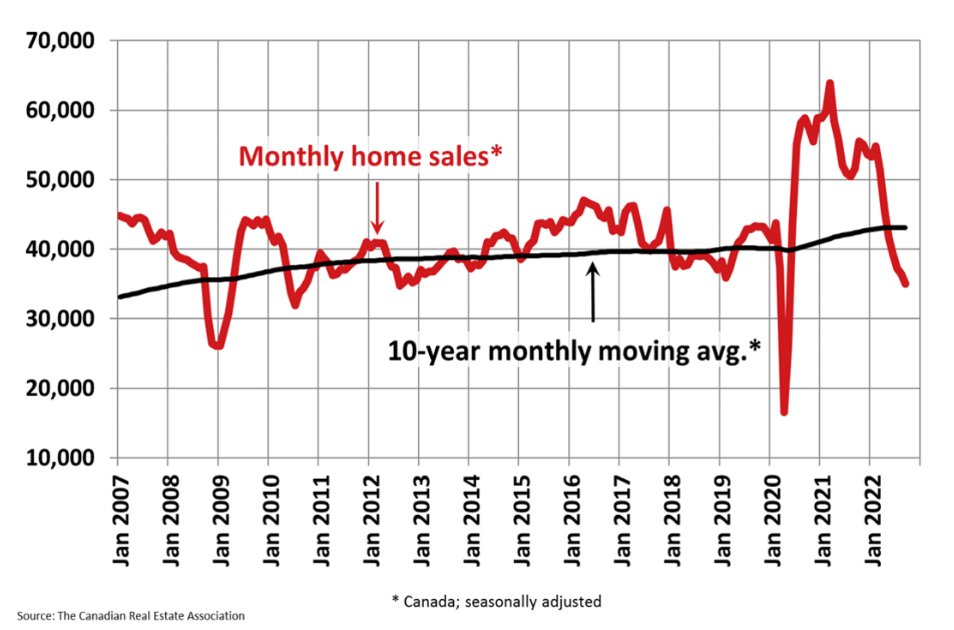 Many who bought properties during the 2020-2022 frenzy are now underwater in terms of resale value. Others refinanced existing properties to extract equity which has since been spent. Private mortgages are harder to find as many previous providers borrowed funds against their own properties to lend to others and are now suffering too.
Still, as evident in this GTA billboard below, hope springs eternal that “Toronto buyers” will continue to have more credit access than math skills. Ah, the good ol’ days. In the FOMO (fear of missing out) of 2020-22, some 40% of purchases in the US and Canada were second homes bought for ‘investment,’ occasional use and short-term rental. Suddenly, negative carry has grown deadly on leaping utility and mortgage expenses. At the same time, rent disinflation is set to accelerate as more owners seek short- and long-term renters. An estimated 50% of Airbnb rental listings were added in the last two years.
With shelter costs making up a third of the consumer price index (CPI), central banks need deflation there to get the CPI back down to target; and they are starting to succeed. Their too-loose for too-long policies enabled the inflation they want to kill, but that’s yesterday’s news.
On the commercial side, a 7 million US small businesses survey found that 37% could not pay their full rent in October, up from 30% in September. See Bloomberg: More than a third of US small businesses couldn’t pay their rent in October. About 49% of restaurants could not pay their rent, along with 37% of real estate agents.
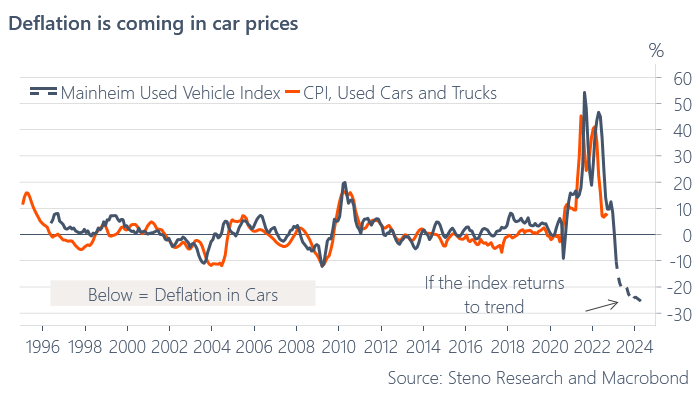
Next comes rising auto loans and lease defaults-especially on the more expensive makes. It’s typical for auto inventories to rise during recessions. But like the mathless buying in realty the past couple of years, financial harakiri in the auto space has been extra-extraordinary too. As shown below, since 1996, parabolic prices from 2020 to 2022 are mean reverting and suggest that prices should continue to fall through 2024. Undoubtedly, some of the loans advanced in this mess will not prove money good.
 On the upside, much lower shelter and transportation costs will improve productivity and financial viability. In time, clearance pricing will help fuel the next recovery out of the ashes of the unfolding bust. And so the cycle goes.









