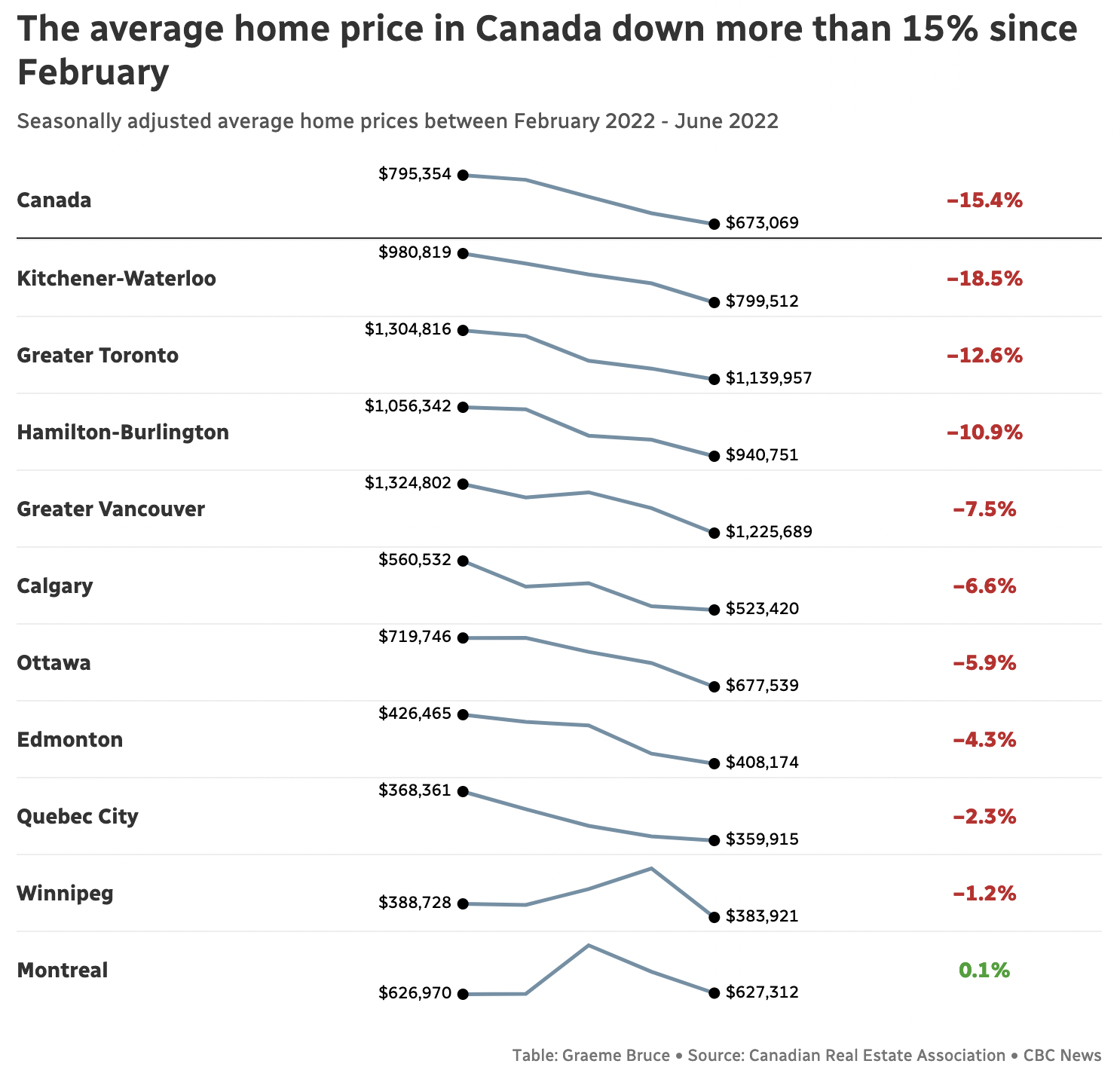
In 2021, the median Canadian home price was $531,000 and some 161% of the median Canadian household net worth ($329,000 per the latest available StatsCan data 2019). In February 2022, the average Canadian home price at $816,720 was some 145% of the average Canadian household net worth ($562,000 in 2021). Other studies estimate that real estate makes up 65% of Canadian household net worth.
A slightly higher 70% of household wealth in China is estimated to ride on real estate.
In recent years, families in both countries have been pooling resources to ‘help’ each other enter otherwise unaffordable home markets. This activity can seem reasonable when prices rise. But, it’s hard-hitting when they fall, magnified because the overall economy became co-dependent with the real estate boom now turning to bust.
Canada saw a record influx of capital from Chinese property buyers over the last decade. As commodity demand slumps with property prices, what happens in China won’t stay in China. Disgruntled masses are on the rise in many countries for similar reasons. See, Xi faces surprise revolt from Chinese homebuyers on Mortgage Boycott:
“[President Xi Jinping] now faces a surprise challenge from middle-class homeowners who are watching their family wealth slip away with a sustained slide in the property market, which makes up a fifth of China’s economic activity. Some 70% of household wealth in China is tied up in property, far more than in the US, making it one of the most sensitive political issues for the Communist Party.
For months Xi has stood firm in reining in over-leveraged Chinese developers, spurring a record wave of defaults that spooked global investors and brought at least 24 leading property companies to the brink of collapse. In the process, more than $80 billion has been wiped from its offshore bond market.
But now ordinary Chinese people are publicly revolting, with rapidly escalating boycotts on mortgage payments spread across at least 301 projects in about 91 cities. These homeowners accuse developers of failing to deliver apartments they’ve already paid for: the value of mortgages that could be affected has swelled to an estimated 2 trillion yuan ($297 billion).
“Chinese homebuyers usually pool the whole family’s resources to buy a home,” said Alfred Wu, an associate professor at the National University of Singapore’s Lee Kuan Yew School of Public Policy. “It is a life-and-death matter for them if their homes become negative assets.”
Also watch:
China may allow homeowners a grace period of mortgage payments for stalled property projects without incurring penalties. Here is a direct video link.