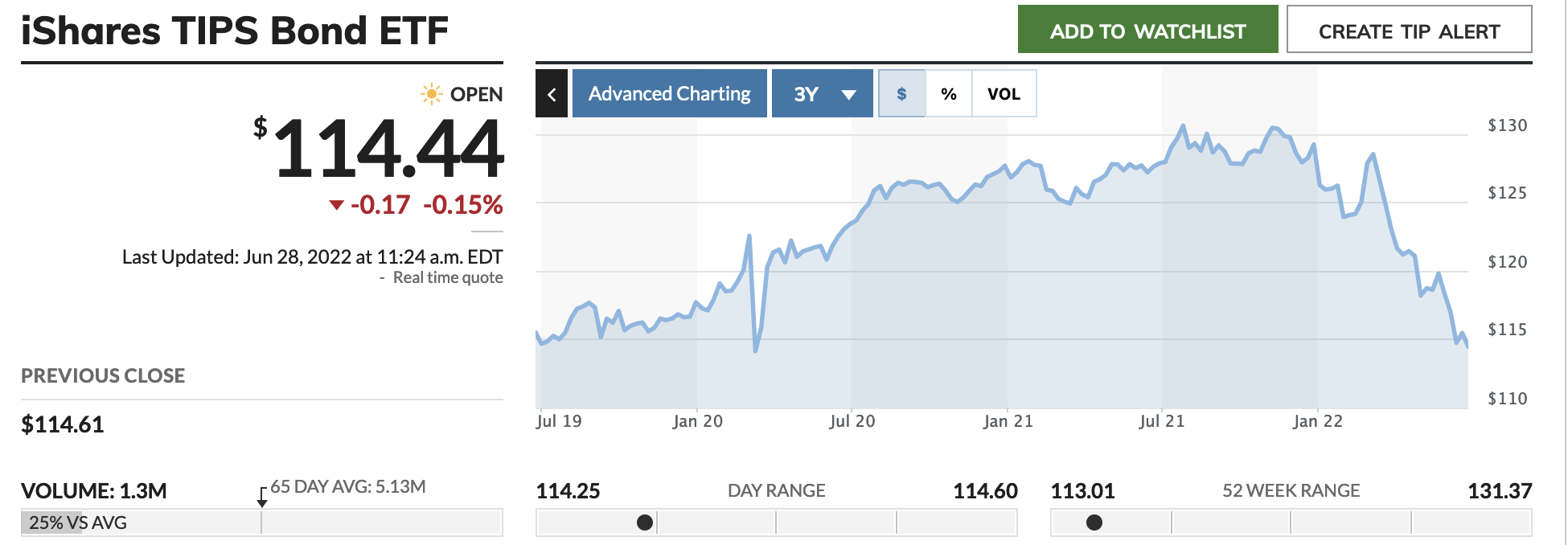
Amid the highest inflation readings in decades (a backward-looking lagging indicator) and talk of central bank tightening through 2023, it’s worth noting that Treasury inflation-protected securities have fallen 12% since last summer.
The TIPS ETF price (below since July 2019) is now back to the same level as in March 2020, when markets were staring down the steepest global recession in decades.
Commodities (used in the production of goods) are considered a leading indicator of inflation. The CRB commodities index has fallen 9% since June 9th, while many key constituents are down more: oil -15% since March, natural gas -30%, copper -24%, aluminum -36%, nickel -54%, wheat -28%, cotton -38% etc. The price of goods makes up 40% of the consumer price index (CPI).
There’s never been a time when US inflation (8.6% annualized reading in May) rose above 5% that the economy did not fall into recession. There’s never been a recession that didn’t help squash inflation, commodities, profits, employment, equities and corporate bond prices while boosting government bonds (lower yields).
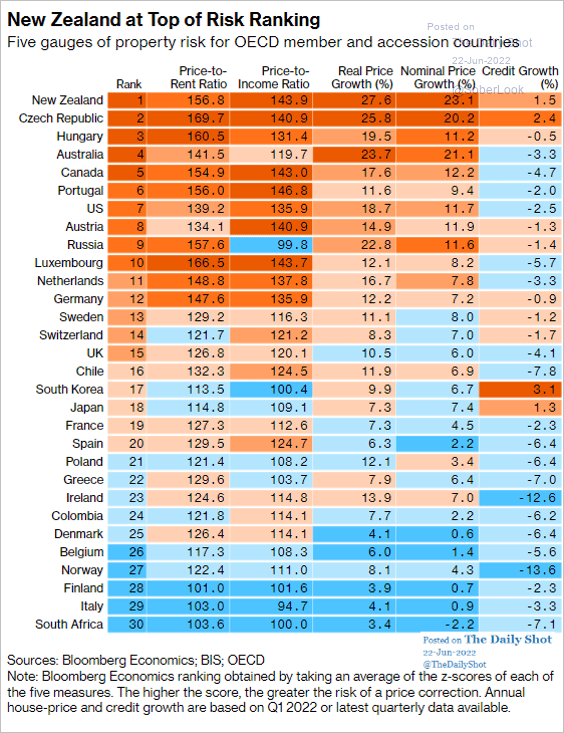
Real estate prices have a 93% correlation with equity prices. Periods of falling real estate prices (the most widely held and leveraged asset) have coincided with the deepest recessions in history.
Recessions are officially recognized many months later in retrospect by NBER, often after they have ended. Recessions are a normal corrective phase of the economic cycle, but politicians, central banks, most financial advisors and economists never see them coming.
The average S&P 500 decline accompanying a recession has been 42% over 16 months. Even when central banks go back to easing, monetary policy works at a multi-month lag, so stock markets typically don’t bottom until some 15 months after the Fed’s first rate cut, when the masses are liquidating in losses.
Central bank policies can help inflate asset bubbles but cannot prevent their bust phase. It’s up to individuals to anticipate and manage financial risks.