
Higher costs weighing on Canadian households

The Bank of Canada doubled its overnight lending rate this week to 1% and is expected to move it above 2.5% by year-end. The interest cost on floating rate loans moves with the BOC rate, so each .50% increase adds about $500 per year for each 100k of floating rate debt. In short, rate hikes add up and reduce cash available for everything else, especially in Canada, where households have added debt at a record clip over the past two years. Credit-rating agency Moody’s is warning about pent-down demand effects; see Moody’s:  Mortgage rate rises likely to stifle housing market demand:

“Clearly consumers were attracted by these low-interest rates and really ramped up their borrowing. However, that pulls forward a lot of demand.  As these interest rates rise, consumer appetite for debt will diminish — quite significantly… Originations are going to be much slower through this tightening cycle than anything we’ve seen in recent history. Households are carrying a lot of debt already. There’s not a lot of appetite to take much more on.”

Bankruptcy trustee Doug Hoyes explained Canadian impacts well in this segment.

Doug Hoyes, co-founder of Hoyes, Michalos & Associates, joins BNN Bloomberg to share reaction to Bank of Canada hiking rates and what this means for Canadian consumers. He says Canadians will need to earn significantly more to keep up with rising everyday costs. Here is a direct video link.
Posted in Main Page | Comments Off on Higher costs weighing on Canadian households

Rosenberg and Pomboy Part 2: Market Hell Ahead?

Building off of their analysis in Part 1 of this interview, David Rosenberg & Stephanie Pomboy continue explaining why a recession looms dead ahead, one likely to be accompanied by serious downward corrections in stocks, bonds (except long-dated US Treasurys), real estate and many other assets. Here is a direct video link.

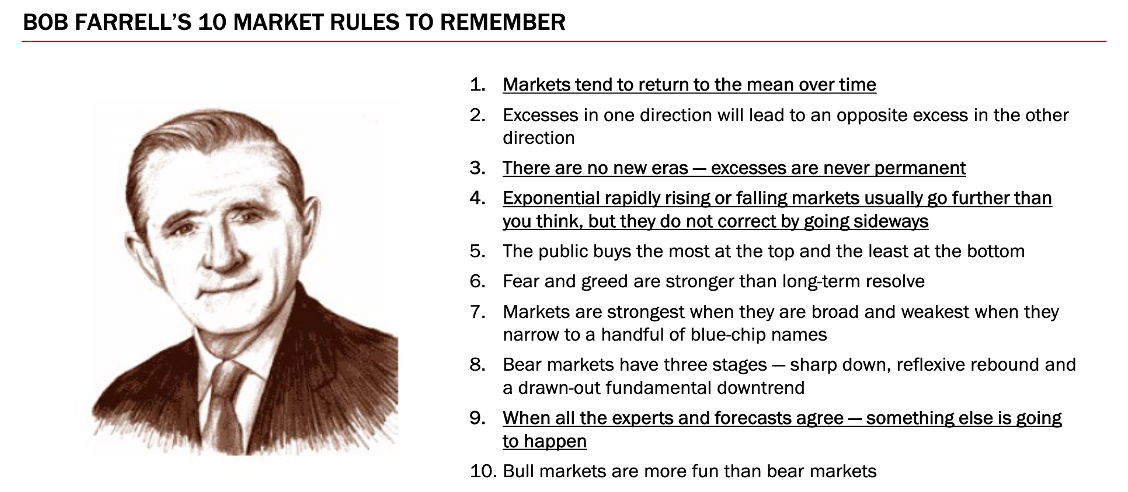
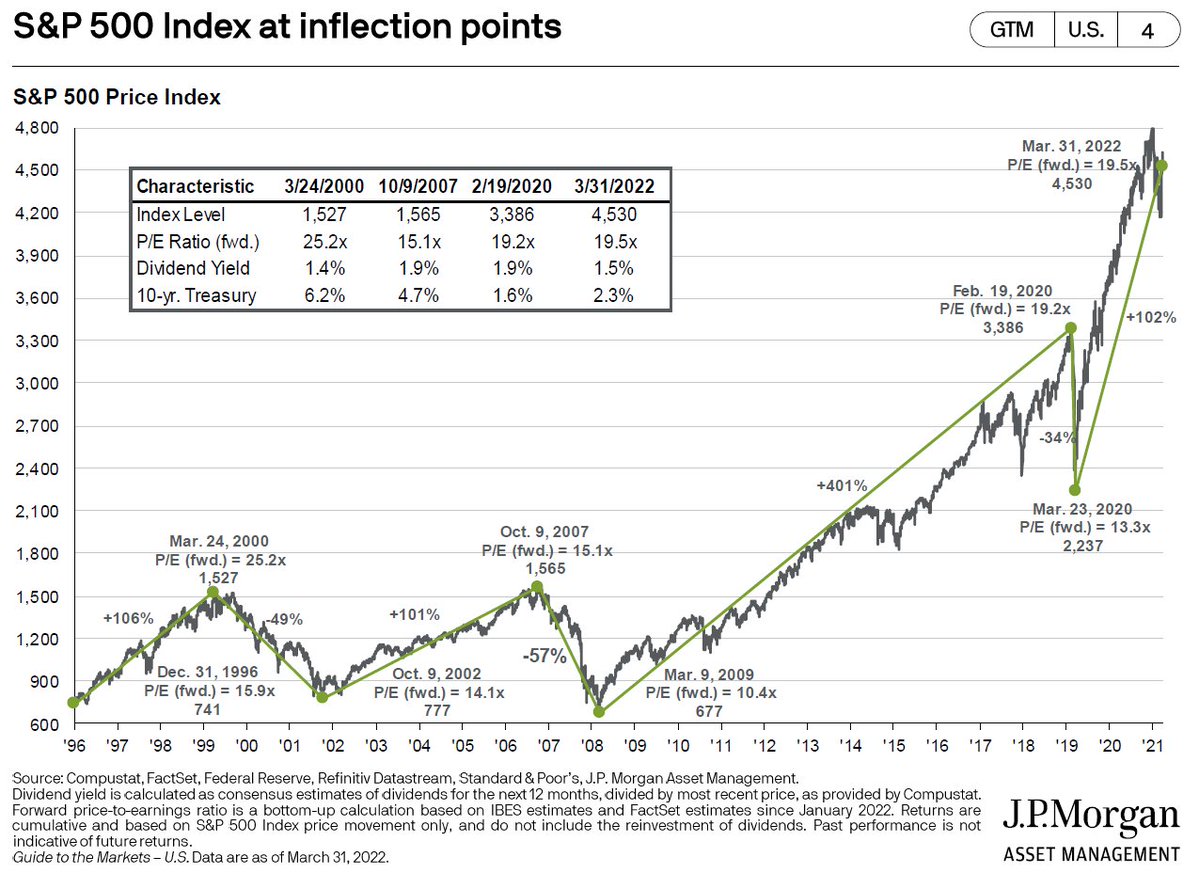
If you’ve not yet watched Part 1, you can do so here.  For your reference, we include Bob Farrell’s time-tested ten market truisms below, as well as a big picture chart of the S&P 500 since 1996.  The 1500 area of the 2000 and 2007 cycle peaks (from 4400 now) would be a historically ‘normal’ retest area.  Believe it or not.

Posted in Main Page | Comments Off on Rosenberg and Pomboy Part 2: Market Hell Ahead?

The ‘top is off’ Canadian housing

New data from Statistics Canada’s Housing Statistic Program shows multiple-property owners held between 29 and 41 percent of the housing stock in Ontario, British Columbia, Nova Scotia and New Brunswick in 2019 and 2020.  In a word: unsustainable.

Nova Scotia is the latest province to respond with a new deed transfer tax and a property tax targeting non-resident homeowners in its provincial budget in late March. Both took effect April 1 and are aimed at giving Nova Scotians greater access to housing.  See:  Multiple-property owners hold up to 41% of housing in some provinces:  Stats Can.

These policy changes join a sharp increase in mortgage rates already cooling demand.  See more in The ‘top is off’: Home prices show signs of cracking in Canada’s hot market.

Bloomberg reporter Ari Altstedter explained his article on BNN.  Here is a direct video link.

Posted in Main Page | Comments Off on The ‘top is off’ Canadian housing




