Mortgage math matters

The Bank of Canada is now expected to hike the base interest rate by .50% at its next several meetings toward 2.5% by year-end. The bond market has sold off sharply to price in these aspirations, so fixed mortgage rates (priced off bond yields) are already higher. The mortgage math matters:

Before the pandemic, the median Canadian home price was $580,000 when record monetary and fiscal interventions pushed five-year fixed mortgage rates to 1.5%. A conventional five-year fixed mortgage payment at 1.5% (with 25% down) on a median-priced home was $1855 per month.

Fast forward two years, with the median Canadian home price now 52% higher at $880,000, the same five-year fixed mortgage rate is above 3.5%, and the monthly payment on that median home is now $3475–87% higher than in 2020.

Given the rise in 5-year Canadian bond yields to date, the five-year fixed mortgage rate should move above 4% shortly, and the monthly payment on that same median home price will be just over $3661 per month–a double from 2020.

Moreover, the bulk of Canada’s population lives in the southern half of Ontario and British Columbia where median home prices (condos and single-family houses) are now above $1 million, which means conventional 5-year fixed mortgage payments at 3.5% are north of $5200 a month from $3200 in 2020.

The spike in debt-service costs is already free-cash-flow-crushing. An inflating housing bubble enabled household spending and real estate speculation over the last decade. There is no way that a doubling in mortgage payments is not deleterious to those trends and housing-dependent economic activity.

Yet,  mainstream economic forecasters (most of whom work for banks and other lenders) are not pencilling in declining home prices nor rising unemployment as they forecast higher interest rates. BC realtor Steve Saretsky calls BS on this in his latest podcast.

The Canada 5 year bond yield is ripping higher. This is repricing mortgage rates across the country. We could see 5 year fixed rate mortgages north of 4% in the next couple of weeks. This will act as a brake on the housing market, and potentially worse if rates hold here for a period of time. Proceed with caution. Here is a direct video link.

 

Posted in Main Page | Comments Off on Mortgage math matters

When “guaranteed returns” are everything but

The free-for-all of asset bubbles builds a world of hurt for would-be “investors” who neglect math and due diligence work.  Old lessons are ripe for relearning here.  See:  Real estate company collapses, 500 homes affected, $10m from investors across Canada missing.  “Fund-A-Flip…hassle-free landlord programs”…so many red flags…

A judge has assigned a special investigator to look into the collapse of a Saskatoon real estate group in January. Epic Alliance managed more than 400 properties in Saskatoon, most in core neighbourhoods. It also had a pool of more than $10 million from investors. Here is a direct video link.

Posted in Main Page | Comments Off on When “guaranteed returns” are everything but

Betting on more of the same?

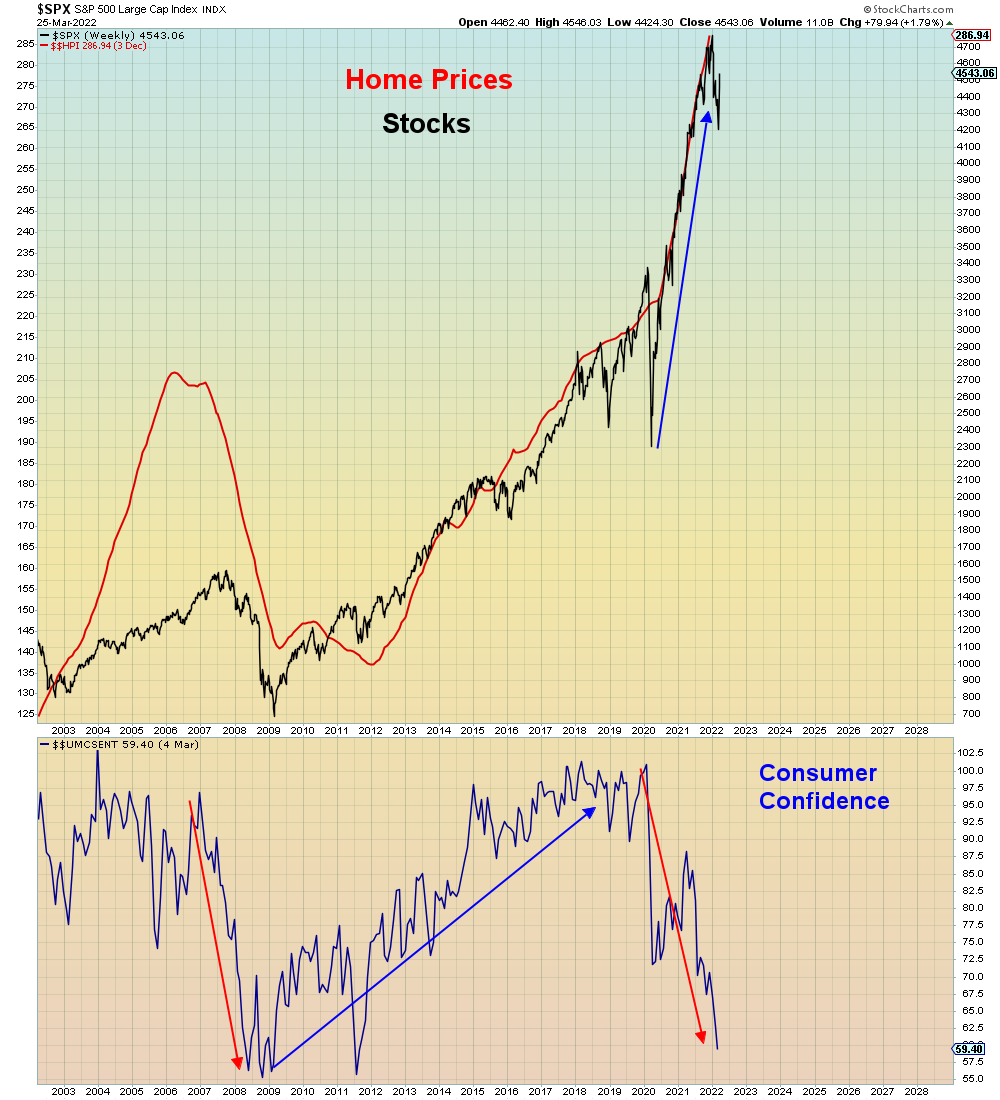
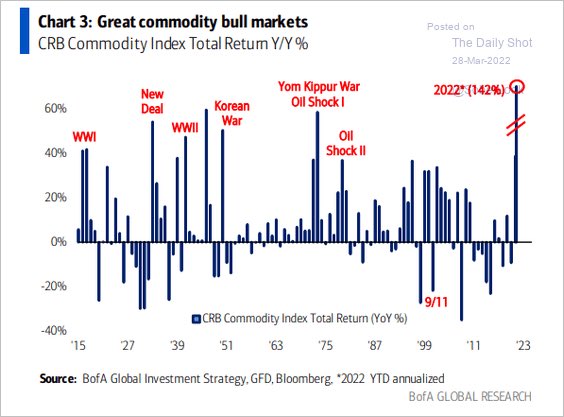
The CRB commodity price index (39% fossil fuels and 41% agriculture) has leapt 25% since Russia invaded Ukraine on February 24th and is up 38% year-to-date. If that pace of increase were to continue over the balance of 2022, it would amount to an unprecedented 142% year-over-year annualized appreciation; by far, the most of the last century (as shown below). The cost of living shock is big amid negative real wage gains and a freakish jump in shelter expense over the past two years. It’s no wonder consumer confidence (lower panel below since 2003 courtesy of MAC10) has fallen near the depths of past recessions even with the S&P 500 stock index and home prices near all-time highs. The consumer-dependent economy is not well supported. As social strife spreads, pressure on central banks to do something about inflation intensifies. Missing their opportunity to tighten when consumption was far above trend last year (policy mistake), central banks are now racing to outdo one another with hyperbolic hiking plans.

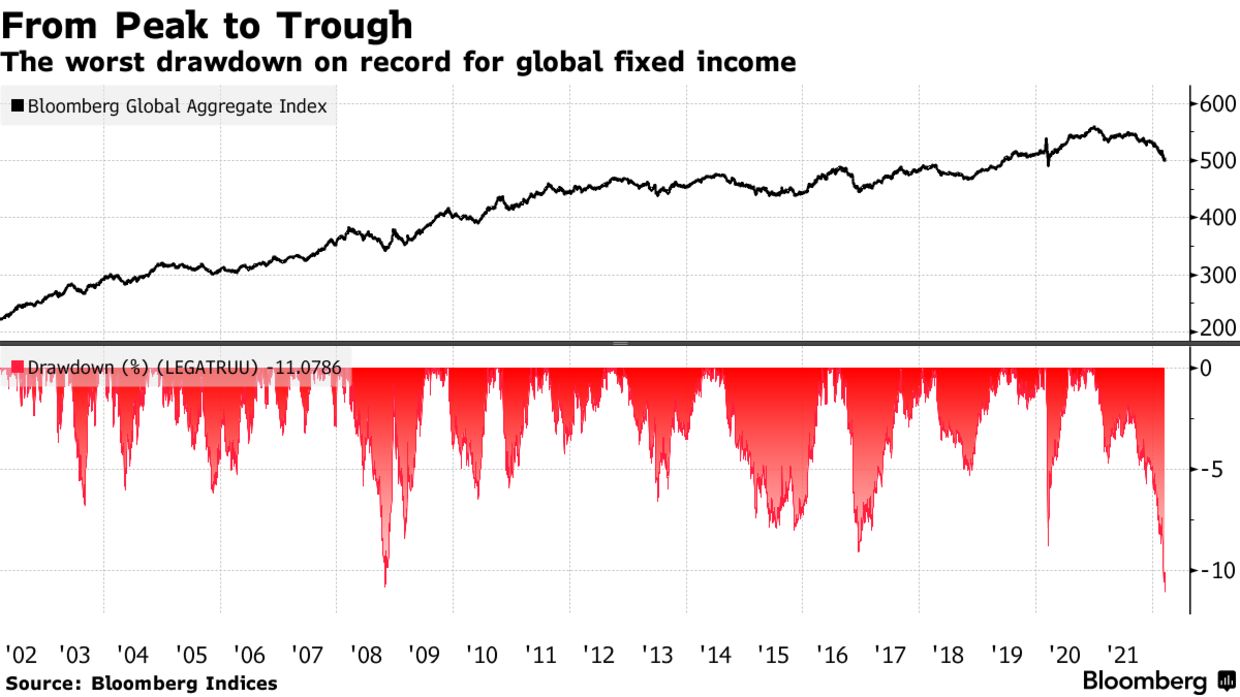
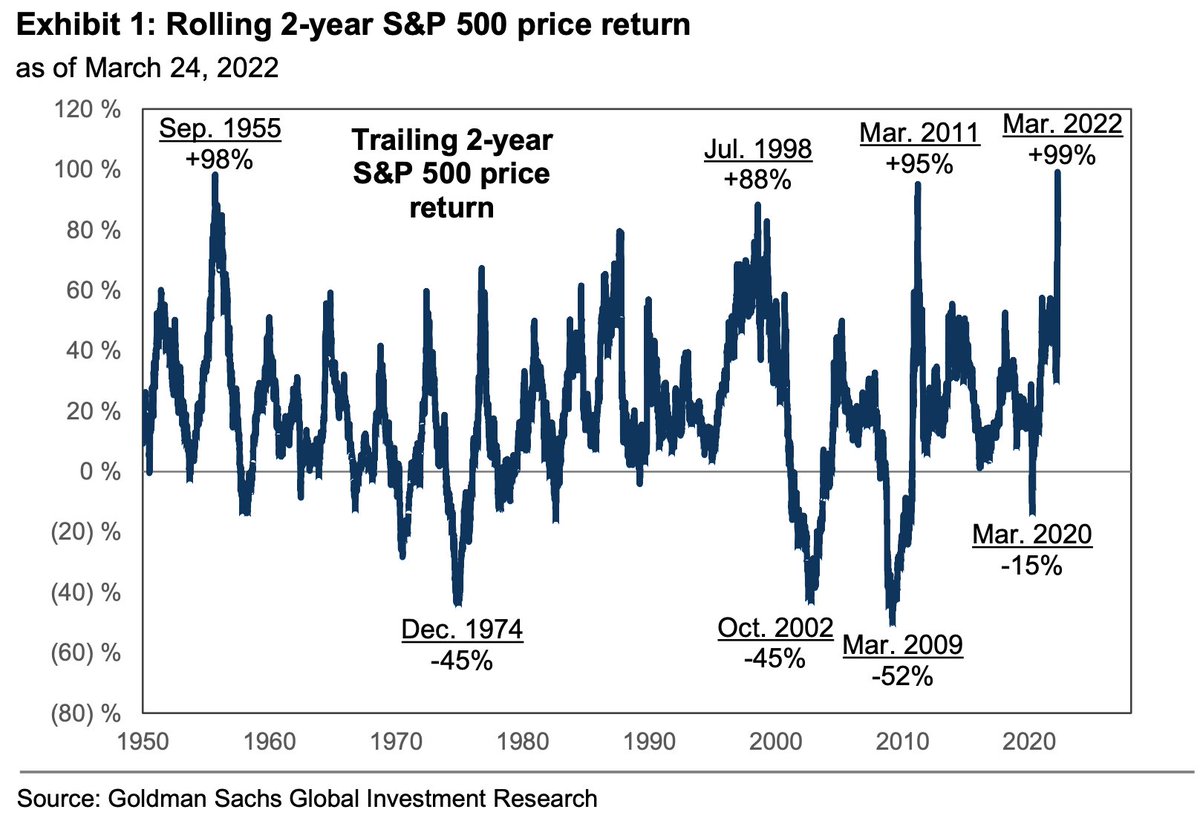
Bonds have preempted policymakers, as usual, selling off sharply in March to price in aspirations for a funds rate above 2% even as the yield curve sees the escalating downturn. Debt markets are the bedrock of the global financial system, and the total return of the Bloomberg Global Aggregate Bond Index has just staged its steepest drop since the 2008 financial crisis–the worst start to any year since 1949.  The rate shock is now compounding strife for a highly levered global economy stumbling out of a pandemic and two years of unprecedented fiscal and monetary largesse that enabled a 2-year S&P 500 appreciation–the largest since at least 1950 (as shown below). It’s typical to extrapolate past price moves and conditions indefinitely regardless of how extraordinary they have been.  Yet, reason and history suggest there are compelling reasons to fade inflationary bets from here.

Viktor Shivets offers a useful macro overview in this recent podcast.

In times of uncertainty, people often reach for historical analogies. In recent weeks and months, as inflation has continued to climb and commodity prices spike, there’s been a lot of talk of a return to the 1970s. But is that the right parallel? On this episode of Odd Lots, Tracy Alloway and Joe Weisenthal speak to Macquarie Capital Strategist Viktor Shvets about why we should instead be looking at a different historical era. He argues that central banks are at risk of raising rates too quickly and flipping the world into recession. Here is a direct audio link.

Posted in Main Page | Comments Off on Betting on more of the same?