Cultivating meat for carnivores-no animals needed

Precision fermentation (PF) and cellular agriculture (CA) are major tech-enabled disruptions attracting investment and market share away from legacy animal-based industries.

The ReThinkx August 2021 report here explains the escalating efficiency of precision fermentation (PF) protein and cell-based meats over the next 8 years–believe it or not, this is happening.

The food disruption will be driven by the economics of precision fermentation (PF) and cellular agriculture (CA), which will compete with animal products of all kinds. Our previous research found that PF will make protein production 5 times
cheaper by 2030 and 10 times cheaper by 2035 than existing animal proteins.

The precision with which proteins and other complex organic molecules will be
produced also means that foods made with them will be higher quality, safer, more consistent, and available in a far wider variety than the animal-derived
products they replace. The impact of this disruption on industrial animal farming
will be profound.
The economic competitiveness of foods made with PF technology will be
overwhelming. As the most inefficient and economically vulnerable part of the industrial food system, cow products will be the first to feel the full force of the food disruption. New PF foods will be up to 100 times more land efficient, 10-25 times more feedstock efficient, 20 times more time efficient, and 10 times more water efficient. They will also produce far less waste.

Also, see Primeval Foods Holding Tasting Events For Cultivated Lion, Tiger and Zebra Meat in London & New York.
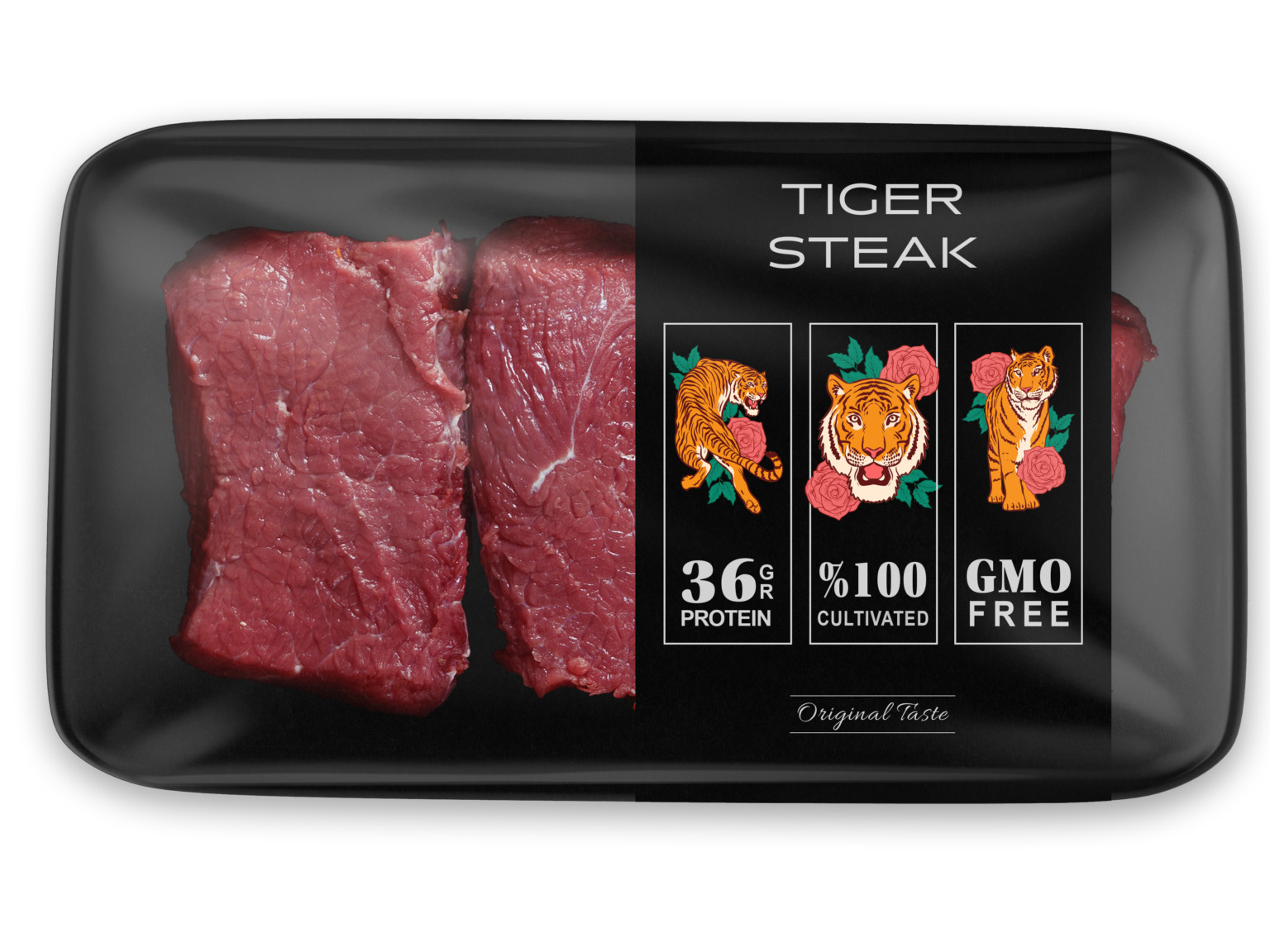
Primeval Foods, a UK cultivated meat startup, is aiming to explore an untapped and previously unavailable market through the cultivation of exotic meats, saying it plans to hold tasting events in both New York City and London in the coming months.

Now officially launched, Primeval Foods – created by the London-based venture studio Ace Ventures – is looking to make “foods that carnivores will crave”. Pending regulatory approvals, Primeval Foods states Michelin-starred restaurants will be the first channels for its cultivated exotic meats, with lion, tiger, and zebra all on the menu.
Posted in Main Page | Comments Off on Cultivating meat for carnivores-no animals needed

Interest rate shock

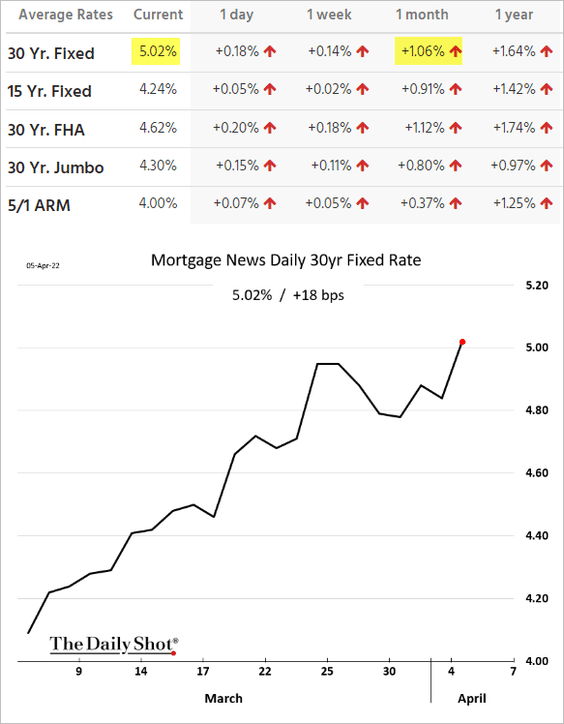
Canadian 5-year fixed mortgage rates have moved above 4% and (as shown below) US 30-year mortgage rates above 5%, up more than 1% in just the last month (similar leap in Europe). This rapid 25% increase in interest costs, coming amid highly indebted households and corporations, is the most significant financial shock since 2007.

Bond markets have now priced in the most aggressive central bank hiking cycle in the last 45 years, as shown below courtesy of Bloomberg.

In the process, the Bloomberg Global Aggregate Bond Index (shown below) has fallen under the key 100 ‘par value’ level for the first time since 2008. This level turned out to be a lucrative buying opportunity for bonds in 2008.  As the economy slows, and central banks end up walking back their tightening plans, it’s likely we will look back on this latest rate shock as another valuable opportunity to add the highest quality bonds at higher yields than we may see again for a few years.

Cycle analyst Eric Basamajian discussed the rate shock ramifications in the interview below and offers an insightful big picture on the housing market, economic cycle and more. Host Hartman asks him about many of the mainstream bullish talking points.

Eric Basmajian, economic analyst and founder of EPB Macro Research. Jason Hartman and Eric discuss the rapid decline in real personal income and standard of living, how the rate shock will filter through to the housing market and much more. Eric also talks about the single most important variable to understand where the next 10 years of the real estate market are going and the four corners of an economy: income, consumption, employment and production.  Here is a direct video link.

Posted in Main Page | Comments Off on Interest rate shock

Excess supply is the next shock

As household savings and cash flow have been increasingly needed for basic necessities like food, fuel and housing, the economically-sensitive household spending intentions on durable goods have tumbled to the lowest level since the double-dip recession of 1980-81.  One of the most impactful sectors here, auto sales fell to a 13.33 million annualized rate in March, down 30% from their cycle peak last April (shown below).

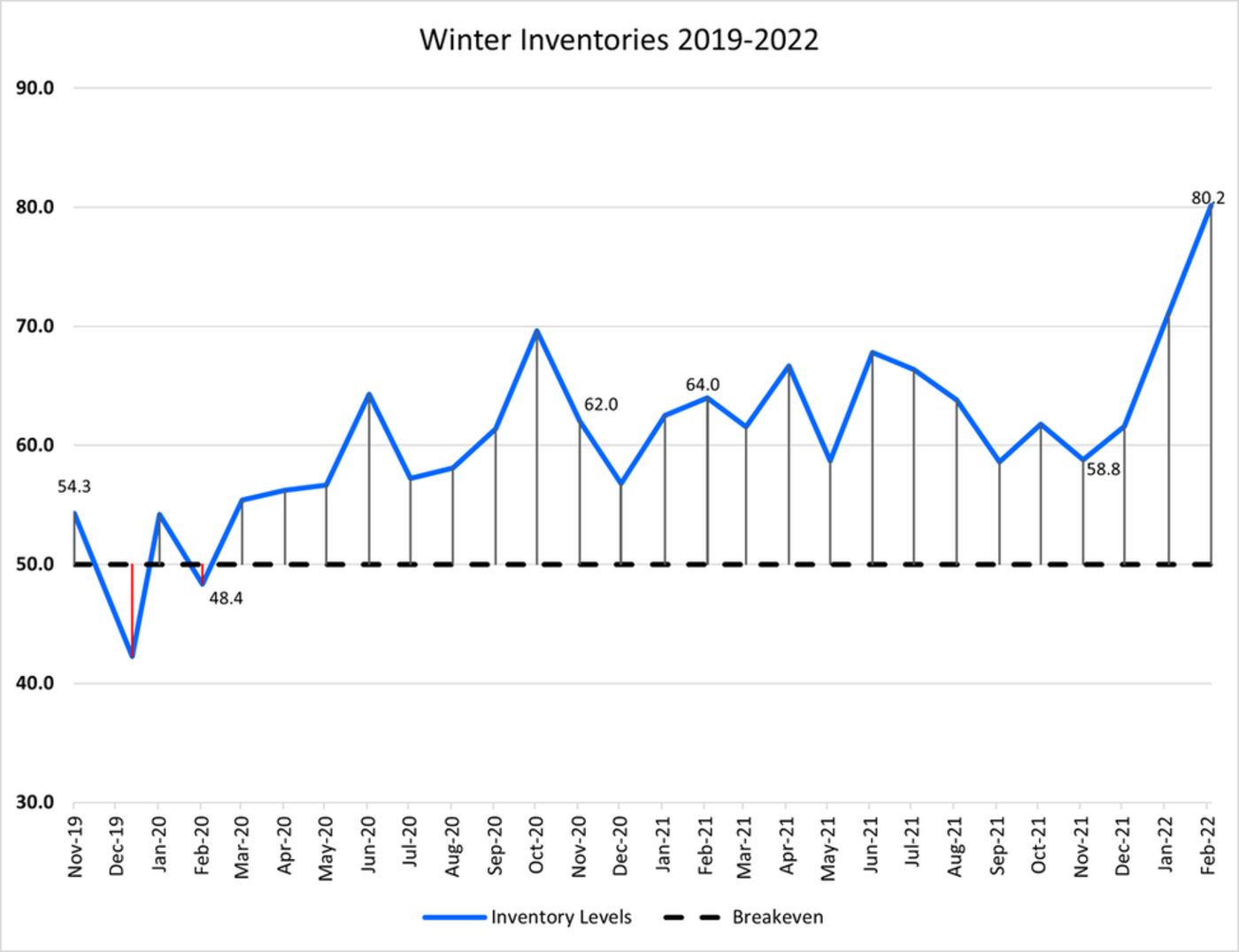
At the same time, importers of durable goods, stressed by supply chain disruptions during the pandemic, over-ordered goods in anticipation of a continuation in elevated demand.  This has helped to push inventories (logistics managers index below) to a record high above 80 as of February data. Inventory overbuilds typically lead to deflationary liquidation cycles and economic weakness as prices get marked down to clear.

The transportation sector also ramped up its fleets for hire since 2020.  In the chart below, forty-two-year transport vetran Craig Fuller shows that trucks in the market recently surpassed freight volume as they have at other cycle tops. (blue= trucks in the market; green = truckload volume).

Craig doesn’t think this time is different, as he explained on Twitter last week:

Posted in Main Page | Comments Off on Excess supply is the next shock