Government bonds have more fun

As I have explained many times, the finance industry charges the richest fees, packaging and promoting corporate securities (equities and corporate debt), as well as real estate and commodities.   Because these assets tend to rise with inflation and fall with deflation, the bias inherent is to forecast inflation and further price gains, regardless of valuations or market cycle.  High yield or junk debt is also high-risk and thus traditionally has to pay higher yields to attract buyers.  For this reason, it also pays fatter fees to the financial sector, which helps companies issue and sell this debt to the public.

On the other hand, government bonds are an institutional product used by pensions, insurance companies, foundations, and the most sophisticated high-net-worth investors.  They do not need to pay high fees to the finance sector for retail marketing or distribution.

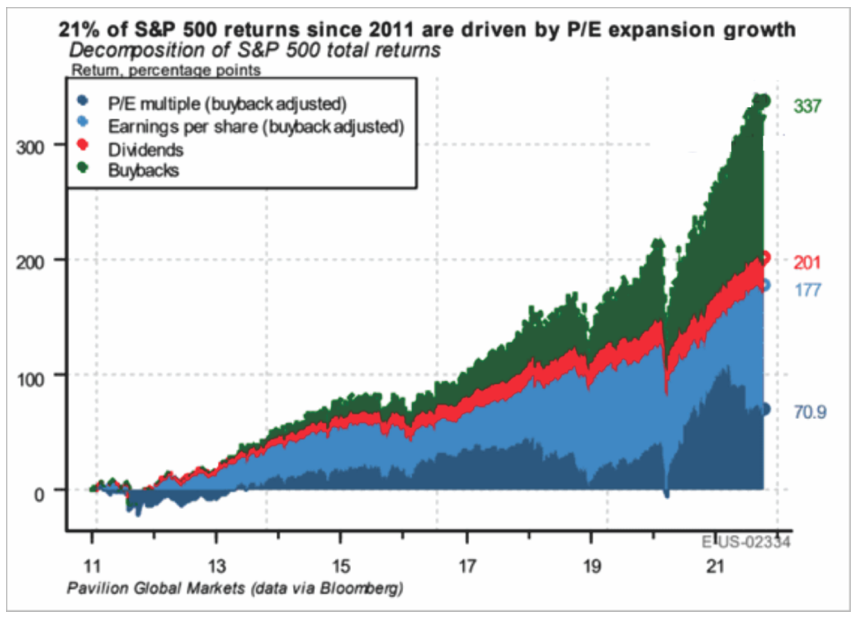
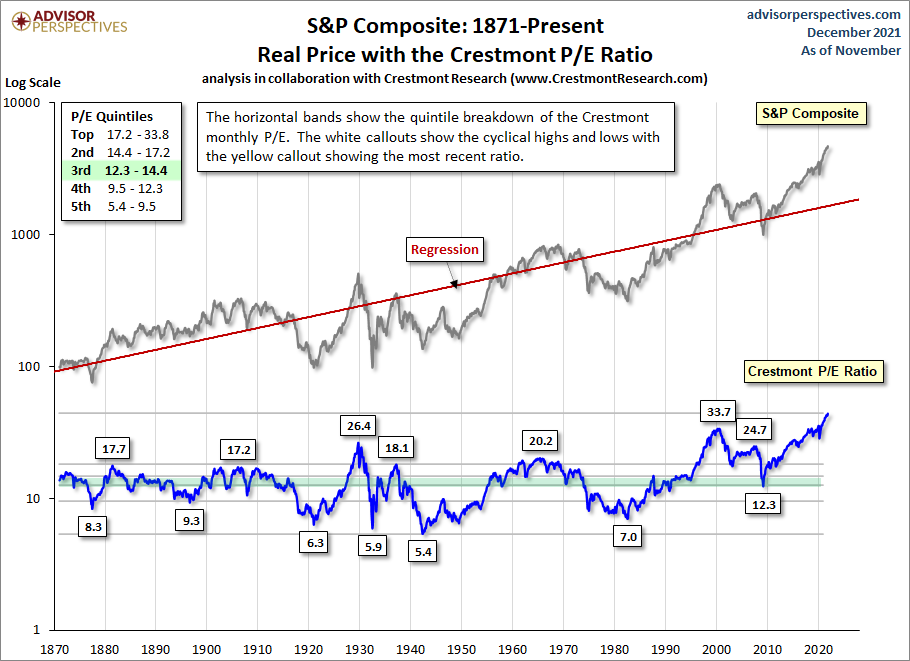
As a result, most financial folks have a bias against government bonds even though on a total return basis, they have outperformed stocks (S&P 500) by 3.5 times since 1980, with much lower volatility and capital loss risk.  They are also one of the few assets that can offer negative correlation/diversification benefits when other asset markets deflate.

Case in point, as commodities, high yield bonds and equities have been plunging of late, North American government bonds have been rising with the U.S. dollar.  These moves are typical of periods where growth and inflation expectations (at a lag) are falling.  The chart below, courtesy of The Daily Shot, shows the downward yield trends during past Fed tapering “Q.E.” efforts.
Even more than usual, portfolio managers and retail came into the latest risk-off selling with the highest concentration of equities and the lowest weight of bonds and cash on record, all while being the most levered ever.  Ditto for CBOT traders who were massively net-short Treasuries in October.

All of this helped lay the conditions for a sharp rebound in treasury prices (falling yields).  U.S. 10 and 20-year yields have moved back to levels seen in February and March of 2020. The Treasury market is not buying the inflation hype and is pricing weaker growth and deflationary weights in 2022.

The discussion below explains what only those of us ‘paid to see’ can acknowledge.

The Federal Reserve, and other central banks, buy tremendous amounts of government securities and this should impact bond prices. Should, but doesn’t. That’s because there’s an even more powerful force than the Fed, the bond market itself. We review the 2007-19 evidence.  Here is a direct video link.

Posted in Main Page | Comments Off on Government bonds have more fun

Mark Z. Jacobson: transitioning to clean energy is ours to do

In the segment below, Dr. Jacobson offers another patient explanation for laypeople about the technological solutions that are economically viable today, not just to reduce our GHG emissions, but also to clean the air of toxicity and reduce the world’s energy usage by 56% from present levels.

The host tries to counter with views commonly espoused by those who believe people and politics won’t transition from our presently self-destructive choices and systems.  Perhaps this is the luxury of those who feel they are old enough that what happens down the road is really not their problem or responsibility.

For the rest of us, the question is who is helping now by making and supporting the changes needed, from our individual behaviours on up.

Mark Z. Jacobson, a Stanford professor, has developed a model showing how it is feasible for the world to shift to 100 percent clean, renewable energy. His model takes account of the emissions from fossil fuels, of course, but also other pollutants that affect public health. When you combine these effects, it is apparent that the transition to clean energy will be a lifesaver and a great saver of energy too. Jacobson opposes the investment in nuclear power, which is far from lacking its own carbon emissions, when you count the work involved in mining, transporting, processing, and hiding and guarding the ingredients. Moreover, nuclear is far more expensive and will take far too long to create additional plants.  Here is a direct video link.

The graphic below is the Solutions Project’s viewer-friendly summary of the how and why.

Posted in Main Page | Comments Off on Mark Z. Jacobson: transitioning to clean energy is ours to do

Tightening aspirations with little room for follow-through

Fed Chair Powell says acceleration in monetary tightening may be warranted.

Perhaps it was part of his renomination agreement that he at least acknowledges the strain on households and small businesses as they seek to service high indebtedness while paying more for goods and services from less income and receding government support.

There’s a direct connection here, of course.  As shown on the left, courtesy of the Daily Shot, the countries that have inflated their M2 money supply the most since 2019 (x-axis below) have seen some of the highest consumer price inflation (y-axis).

For a few months in 2020, it looked like some of that gushing money supply was making its way into the economy as small and medium-sized companies tapped bank credit lines for emergency liquidity.  Then in Q2 of 2021, the global credit impulse (which measures the pace at which the flow of credit is growing to households and businesses) turned sharply negative as one-off support to the private sector stalled.  For their part, public companies bypassed bank lending standards by selling tons of debt at ultra-low yields to indiscriminate “TINA” buyers.

Since then, cash injections from central banks mostly just funnelled into asset markets, driving up the price of critical commodities and housing and counter-productively reducing future growth by inflating present consumption and debt well beyond any gain in incomes.

As shown below in my partner Cory Venable’s chart of the commodity index (CRB) since 2001, the price bounce off the March 2020 bottom was sharp, to be sure; but only back to the 2009 lows, before oil and gas began tumbling after other CRB constituents once more.

For its part, the US dollar index (DXY) didn’t buy Powell’s accelerated tapper talk. Rising since May, the DXY did touch a 52-week high on November 24 but yawned in ongoing consolidation on Powell’s testimony. If currency markets believed the Fed was serious about accelerated tightening, the greenback would have picked up its pace of accent.

In reality, the stronger dollar is already working at cross-purposes to the Fed’s inflation aspiration. The rising dollar brings lower commodity prices (92% priced in USD) and higher debt service costs for a world that owes more U$ debt today than ever before.

Regardless of new COVID variants, the global economy was already slowing into 2022 on pent-down demand, lower private sector incomes, and governments retreating from earlier deficit spending programs.

Presently, the US Fed is expected to end its bond-buying in the first half of 2022 and then hike rates twice by year-end, while the Bank of Canada is expected to hike its policy rate five times.  Sure thing.  They will try hiking into a downturn until deflating asset markets give cause for pause once more.  And then a return to more asset buying.  We are following Japan’s policy playbook, after all.  But lest anyone forget, decades of near-zero rates and asset-buying have not stopped Japan’s asset prices from deflating over the last 30+ years.

Monetary policy should have been normalized years ago.  Central banks should not have cut rates below 2%; they should not have spent trillions buying financial assets–we should never have allowed them such unaccountable power. But now we are here, and our fragile financial markets and economy face the payback period.

Some risk always materializes to topple unsustainable systems; this is not about a virus. Prudent management plans for problems and builds up buffers in advance.

Individuals should understand where they are and what they can do to protect themselves.

Posted in Main Page | Comments Off on Tightening aspirations with little room for follow-through