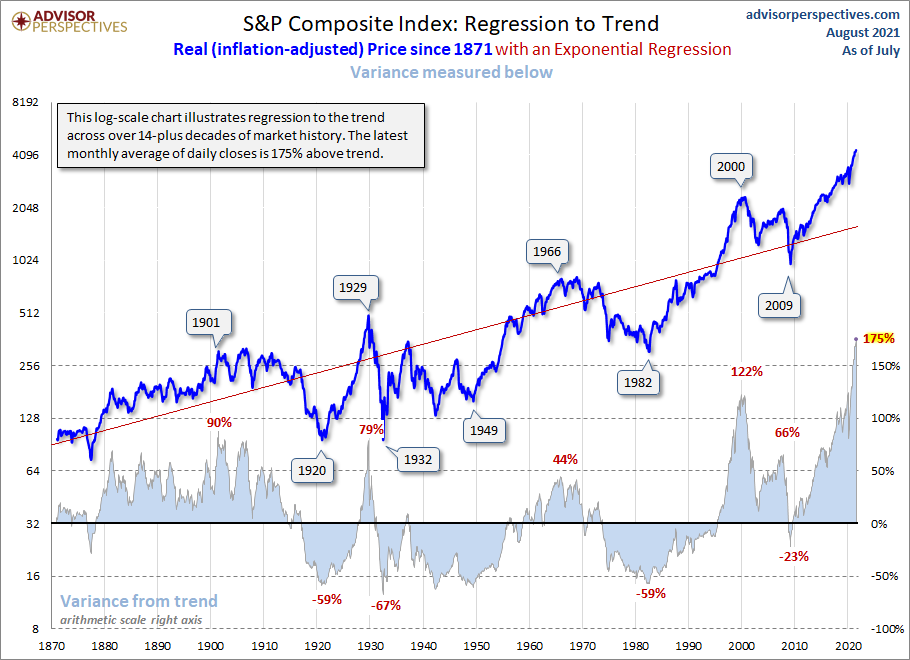
John Hussman’s August letter The Folly of Ruling Out a Collapse is historically illuminating, as always, and includes some timeless quotes on the distinction between investing and speculation from the father of value investing, Ben Graham. Here’s one excerpted from December 17, 1959:
Speculators often prosper through ignorance; it is a cliché that in a roaring bull market, knowledge is superfluous and experience a handicap. But the typical experience of the speculator is one of temporary profit and ultimate loss. Optimism and confidence have always accompanied bull markets; they have grown as the bull market advanced, and they had to grow, otherwise the bull markets could not have continued to their dizzy levels – and they have been replaced by distrust and pessimism when the bull markets of the past have collapsed. All my experience goes to show that most investment advisers take their opinions and measures of stock values from stock prices. In the stock market, value standards don’t determine prices; prices determine value standards.
The more it changes, the more it’s the same thing. The economic world has changed radically and will change even more. Most people think now that the essential nature of the stock market has been undergoing a corresponding change. Would that fact assure the investor against a costly and discouraging bear market experience? It seems to me that this is most improbable. The central level of values will be raised, but the fluctuations around these levels may well be just as wide as in the past, in fact, one might expect even wider fluctuations – the stock market will continue to be a place where a big bull market is inevitably followed by a big bear market. In other words, a place where today’s free lunches are paid for doubly tomorrow.
Typical of a rising market cycle, many participants today believe, or have been told, that they aren’t worried about extreme valuations or downmarket ‘fluctuations’ because asset prices always go up over time. The relevant questions are over what time?; and how long can the owner wait for their savings to recover?
When prices don’t bounce back within weeks and months, it is common for loss tolerance to evaporate and for holders to sell long before any recovery.
For all those who think they are investing today at the worst asset valuations in a century, Hussman offers some smelling salts:
Don’t kid yourself…If your exposure to stocks doesn’t meaningfully take account of valuations here, you’re a speculator…If your speculation is based primarily on the fact that prices have gone up in the past, it’s very likely that you’re speculating recklessly.