Timber! Lumber and Treasury yields signal slowing growth, disinflation

As always, Lacy Hunt offers a worthwhile macro update in this interview.

Lacy Hunt Ph.D. Returns to talk about dis-inflation, the velocity of money and what happens when the supply chain gets restored. Lacy Hunt is a world-famous economist and Executive Vice President of Hoisington Investment Management Company. He spoke with Vance Crowe about what his economic models suggest is going to happen as the country and world comes out of COVID. Here is a direct video link.

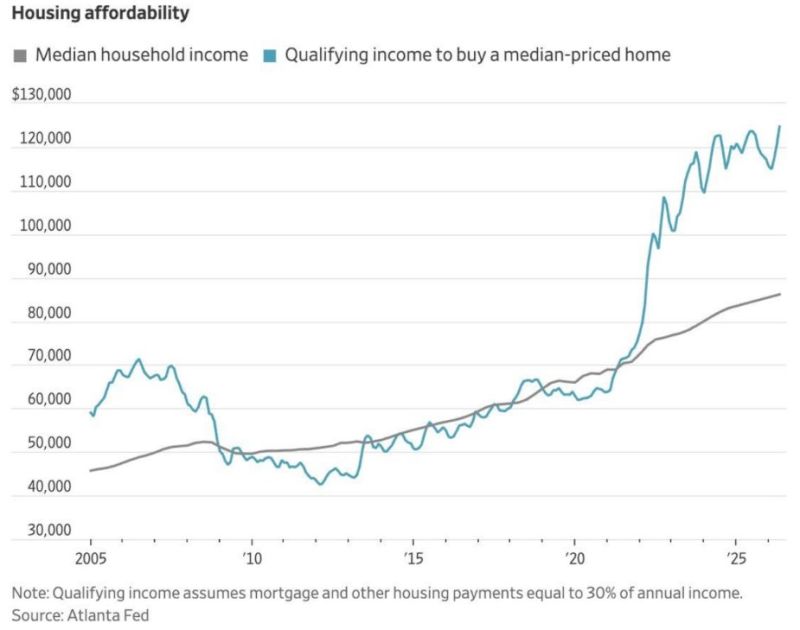
As Lacy notes that US home prices have overshot relative to income gains in the past year, consider the chart below which shows the change in US home prices relative to disposable income (1975 through 2020 on the left) compared with Canada (on the right).  Surreal it is.


Further, as Lacy explains that the US residential sector is today a relatively small 3 percent of US GDP, consider the chart below which shows that Canadian residential investment made up a record 9% of GDP in 2020.  This is 30% more than the US economy’s absurd dependence on residential investment at their last housing bubble peak in 2006, just before prices crashed and took 14 years to recover. Canadian real estate has now beat this dubious distinction.

home prices

Adding insult to the injury of this mania was the near quadrupling of lumber prices between October 2020 and May 7th, adding some $48,000 to the cost of a newly constructed 2400 square foot home.  Since then, lumber prices have done an abrupt u-turn, down more 20% in the last three weeks, but still a whopping 56% above the previous cycle high in 2018.  More downside work to do here. Timber! indeed.

From current heights, the deflationary forces of falling asset prices are likely to overwhelm all the inflationary efforts of central banks.  Treasury prices seem to agree.  As shown in the chart below from my partner Cory Venable, after leaping along with the inflation narrative from last summer to March, 10-year Treasury yields have begun to move lower again (rising Treasury prices).

Posted in Main Page | Comments Off on Timber! Lumber and Treasury yields signal slowing growth, disinflation

Rosenberg reviews inflation narrative

How well we interpret and respond to the inflation cycle defines longer-term investment outcomes more than anything else.  With the consensus now confidently in the accelerating inflation camp, alternate views are rare and worth considering.  David explains dominant factors well in this segment.

  • Are we really facing secular inflation?
  • How the recent stimulus impacts the inflation narrative
  • FED has it right – this inflation is a “transitory phenomenon”
  • How to play against the popular narrative that secular inflation is imminent
  • Why this inflation is transitory
  • Outlook on treasury yields

Here is a direct audio link starting at 11:00 minutes on the play bar.

Below is the April Citi US Economic Surprise Index David mentions as being at the lowest level in 11 months.

Posted in Main Page | Comments Off on Rosenberg reviews inflation narrative

China steps up zero tolerance for commodity ‘speculators and hoarders’

As I explained here, because commodities and commodity futures are widely stockpiled and traded by speculators, users and producers alike, prices can wildly disconnect from supply and demand factors, misleading inflation expectations and intensifying social unrest.

Over the past year of record financial stimulants and job loss, food prices have risen for 11 consecutive months, according to the Food and Agriculture Organization of the United Nations.  This is making it harder for families to afford basic staples. Corn prices are 67% higher than a year ago, while sugar is up nearly 60%, and prices for cooking oil have doubled.  See Food prices soar, compounding woes of the world’s poor.  This matters a lot in developing countries where food costs can account for more than 30% of household spending (compared with 10% in America, down from 17% in 1960).

Most commodity traders are headquartered outside of North America, where bets on staples like oil, copper and corn transact far beyond the reach of national regulators.

Capital has also been piling into industrial metals on bets that world demand will rebound strongly from the pandemic, even though it has remained strong throughout.  But as higher input costs feed into higher prices for finished goods, affordability falls, and demand tends to shrink along with a shift to cheaper substitutes.

All of this concerns export-dependent manufacturers like China a great deal.  Its economy accounts for about half of the world’s commodity demand, and its GDP sputtered to just .6% growth in Q1 2021.  This has prompted Beijing to announce new steps to clamp down on commodity speculation, and trading see China targets speculators and hoarders to stop commodity boom.  With many prices at cycle highs, an inevitable downside looms.

China stepped up its fight against soaring commodities prices, summoning top executives to a meeting that threatened severe punishment for violations ranging from excessive speculation to spreading fake news.

The government will show “zero tolerance” for monopoly behavior and hoarding, the National Development and Reform Commission said after leaders of top metals producers were called to a meeting in Beijing with multiple government departments on Sunday.

Here is a direct video link.

Posted in Main Page | Comments Off on China steps up zero tolerance for commodity ‘speculators and hoarders’