
Higher yields and commodity prices intensify recessions

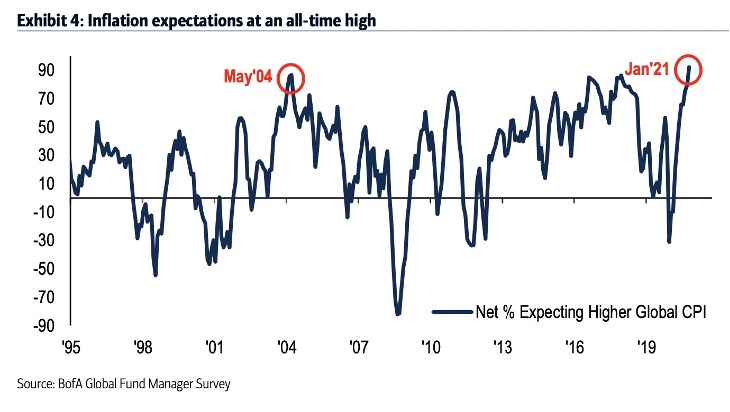
Commodity prices and inflation expectations (below since 1995) have been following government and central bank stimulus flows higher over the past six months.  This is no all-clear sign for risk markets or the economy—quite the opposite.
Treasury yields have moved higher for the ride. From a low of .43% on August 20, 2021, Canada’s 10-year yield is now 213% higher at 1.349%, and US Treasury yields 178% higher from .51% in August to 1.42% today.

Near-term rates are more hinged to central bank policy rates, so they have moved less, but the 2-year Canada yield is still up 72% from .148% at the start of the year to .255% today and the US 2-year yield at .129%, up 17% from last August.

The difference in the 2 and 10-year rate moves have served to steepen the yield curve, as shown below in my partner Cory Venable’s chart of the US 10 minus 2-year spread since 1990.  The spread between these two closely watched yields moved above 1.25 this month and significantly above the .81 threshold breached at the end of December. 
In the past three economic cycles, a breach of the .80% spread line (dotted above) saw the gap max at 2.6% amid an intensification of economic recession.  This then prompted another relapse in longer-term rates (see three blue arrows marked) as over-optimistic growth expectations downsized. We suspect a similar pattern will follow as 2021 progresses.

Higher commodity and interest rates weigh heavily on spending and recovery at this part of the economic cycle because jobs remain missing in action, and employment losses during this recession are heavier than average.

With thousands of small businesses now closed, Canada is missing some 850,000 jobs and America about 9.4 million. For some big picture, the US employment to population ratio today is 57.5%, down from 61.1% before the 2020 recession began, and compared with 59.4% at the worst point of the 2008-09 Great Recession (source:  Rosenberg Research).  It typically takes years before the employment ratio can reclaim its prior cycle high.

Low-interest rates can be constructive in helping people pay back borrowed funds faster.  But when they encourage more borrowing for the already heavily indebted and more expensive home prices, lower rates have the opposite effect:  extracting directly from future spending potential.  This is us.

If historical norms hold, longer bond yields may rise further, and the 10-2 curve steepen perhaps another percent.  This should then provide another valuable buying opportunity for government bonds and the US dollar as equity and commodity prices relapse into the next leg of the bear market that was temporarily interrupted last March.

Posted in Main Page | Comments Off on Higher yields and commodity prices intensify recessions

Here’s The Thing with Alec Baldwin

I discovered this podcast a few months ago and it has filled my walks and workouts with much enjoyment since.  Alec is an excellent interviewer and his guests are very thoughtful and diverse.  I listen to it on Spotify, but it’s available on the usual platforms including NPR and iHeartRadio.  Here are a few of my favourites.


Posted in Main Page | Comments Off on Here’s The Thing with Alec Baldwin

Psychological foibles behind financial errors

Many of today’s market participants have no first-hand experience of an extended bear market that grinds asset prices lower over many months and does not recover prior highs for many years.  Others have experienced an extended bear market in the past, they should know better, but they believe (hope) this cycle is different.

The Dunning-Kruger Effect is the psychological condition of knowing so little about a subject that a person doesn’t even realize how little they know, leading to an over-estimation of personal ability.  This common affliction, along with other textbook frailties known as cognitive dissonance and confirmation bias, makes humans highly susceptible to self-destructive financial decisions, especially during asset bubbles.  Awareness and risk-controls are keys to better outcomes.

For an excellent overview of these classic foibles and some real-life context, read All Stock Market Bubbles End.  Here’s a sample:

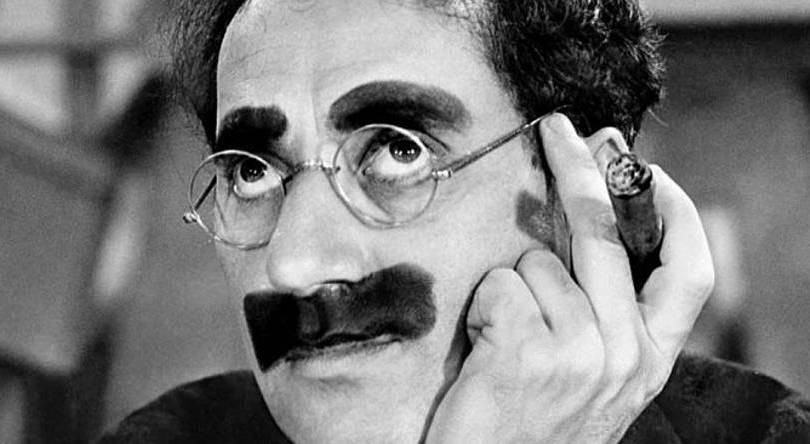
By 1929, Groucho Marx had amassed a small fortune of around $250,000 through a combination of savings and investments. However, like many new investors in the roaring 20s, Groucho was quickly realizing acting was a whole lot more work and a whole lot less financially rewarding than investing in the stock market.

“Every day (Groucho) would go in and he’d look on the big board and he’d see that his stock had climbed X number of prices, and he had made several thousand dollars without lifting a finger. And he thought, well, this is easy.” — Maury Klein, professor of history and the author of “Rainbow’s End: The Crash of 1929.

But like all stock market bubbles, the 1920s bubble suddenly came to an end. Groucho lost everything in the crash of 1929, at the age of 40. According to historians, the tremendous financial loss affected Groucho psychologically for many years.

…In some ways reminiscent of 1999 and 1929, we have many analysts in 2021 insisting stock prices aren’t too high and instead attack investors for not being even more heavily invested. They make arguments that the economy has somehow changed and valuations no longer matter.

Posted in Main Page | Comments Off on Psychological foibles behind financial errors





