John Hussman’s July letter Fundamentally Unsound is worth the time. If more people followed the simple math of how the price paid drives investment returns, fewer people would be sideswiped by financial disaster. A security is just a claim on some set of expected future cash flows. The higher the price you pay, the lower the long-term return you can expect. Hussman puts it in layperson’s language as follows:
Suppose that the $100 taped in the upper corner of the room will be delivered a decade from today, and you’re deciding how much to pay today for that future piece of paper.
Drop your hand toward the floor. If you pay $19 today for $100 a decade from now, you’ll earn 18% annually on your investment.
Raise your hand a little higher. If you pay $32, you’ll get 12% annually. Raise your hand above chest-level. If you pay $46, you’ll get 8%. Raise your hand to the top of your head. If you pay $67, you’ll get 4%. Now reach above your head. If you pay $82, you’ll get 2%. Jump in the air so your hand is even with the piece of paper. If you pay $100, you’ll get 0%. And if you’re aggressive enough to pay more than $100 today for that future $100 payment, you’ll get a negative return on your investment over the coming decade.
That’s the first rule of valuation. Given any set of future cash flows, the higher the price you pay today, the lower the long-term rate of return you can expect on your investment. Nothing about this relies on mean-reversion. It’s just arithmetic.
But don’t low interest rates justify overpaying for equities? Nope…it’s dumb and dumber:
If someone tells you, “well, stock valuations are high, but high valuations are justified by low interest rates,” they’re actually arguing that passive investors face the worst of all possible worlds. They’re saying “well, future stock returns are likely to be dismal, but dismal returns on stocks are justified because you’re going to get dismal returns on bonds too.”
Saying that extreme stock market valuations are “justified” by low interest rates is like saying that poking yourself in the eye is “justified” by smashing your thumb with a hammer.
Worse, by our estimates, the likely 10-year total return of the S&P 500 from current valuations is about -1.4% annually.
So far, from bubble valuations in March 2000 to March 2020, the S&P 500 was able to squeeze out a nominal total return of 4.4% annually (assuming zero withdrawals or fees and perpetual reinvestment of every dividend received) only because prices rebounded to reclaim irrational valuation extremes that today match or exceed March 2000 levels.
The next leg of the bear market will reduce 20-year retrospective returns for present holders toward zero and set them up for years of just trying to grow back their capital.
Those who wait to buy when prices retreat, however, will be set up for years of above-average returns from there. It’s just math.

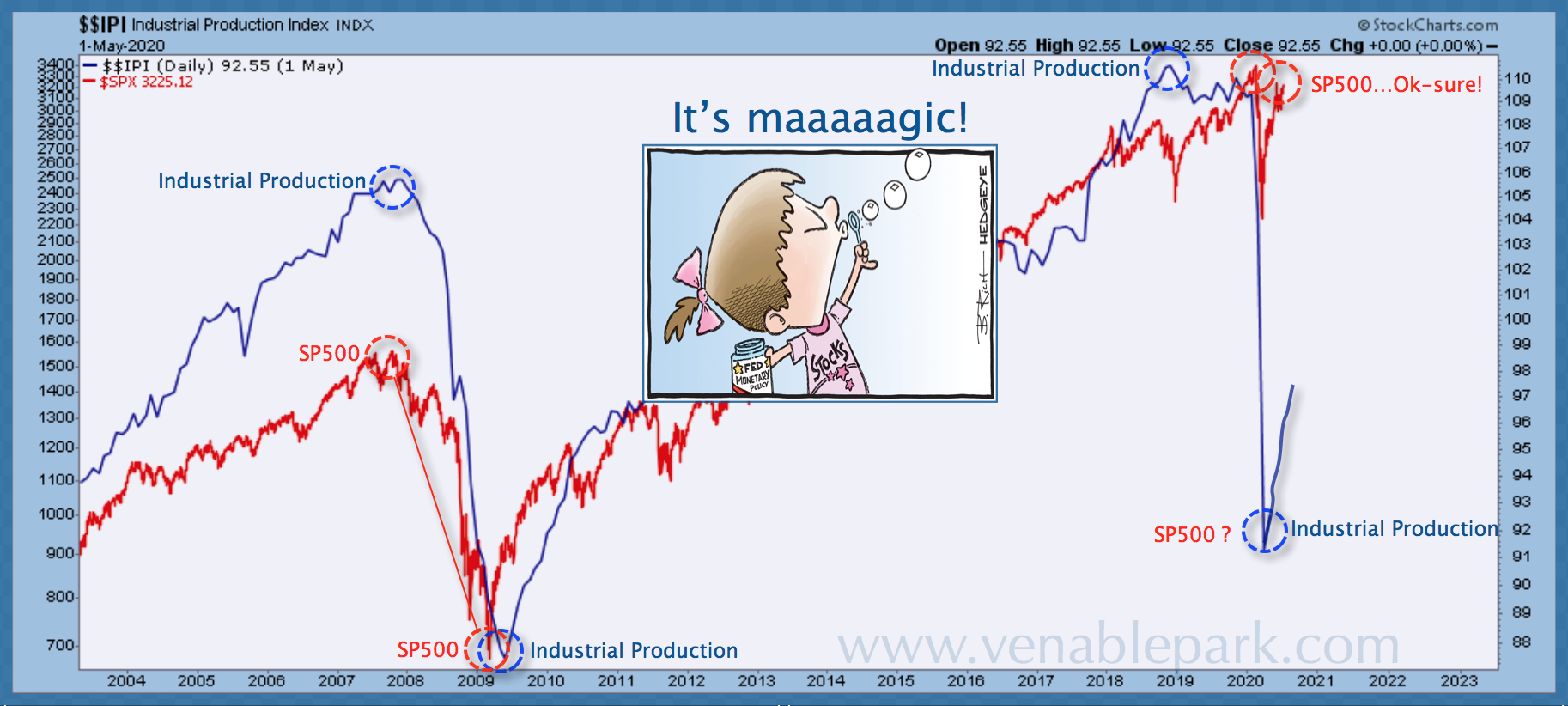
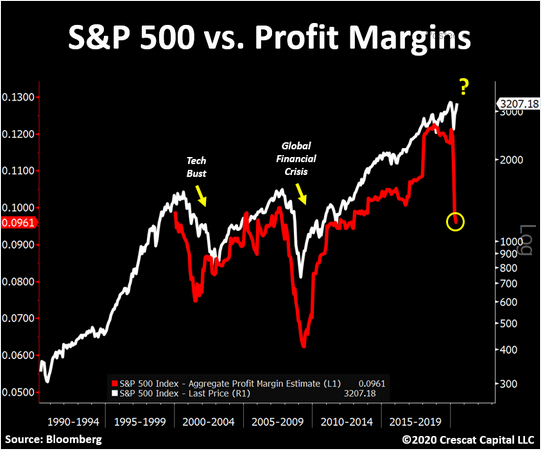
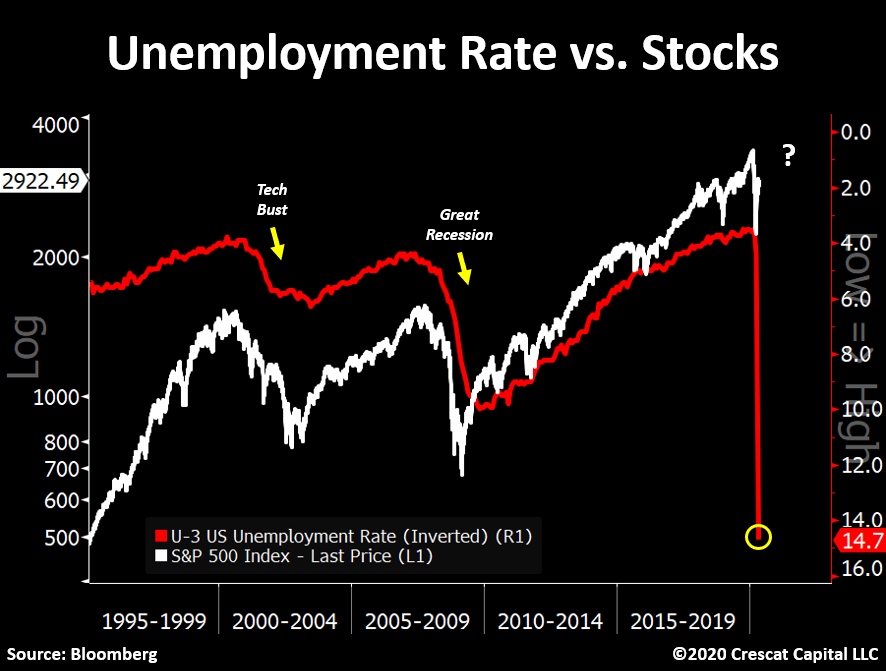 The chart below from my partner Cory Venable shows a similar picture with US industrial production in blue since 2003 versus the wildly unhinged S&P 500 price in July (red line).