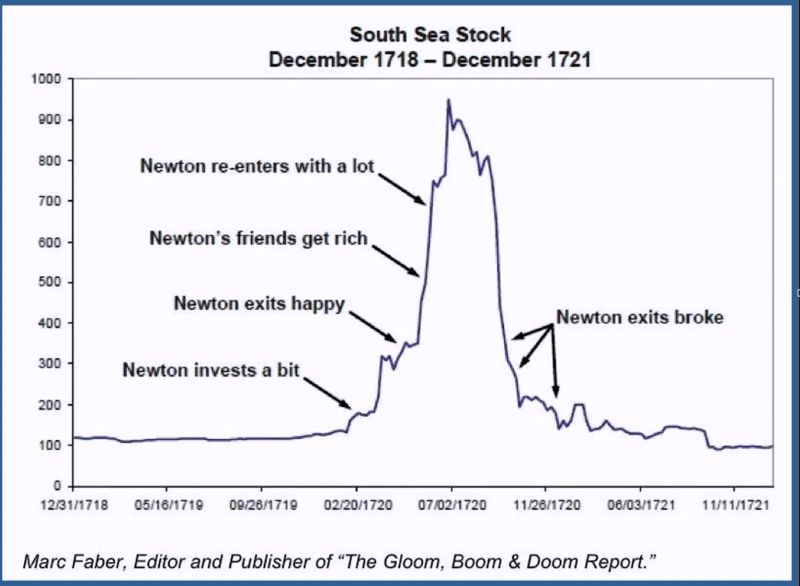
Financial shell game continues in full vigor

Last month, eleven years after the events, a judge in Milan sentenced 13 former executives of three major banks to multi-year prison terms for actions they took to hide trading losses at their institutions in 2008.

This is significant since outside of Ireland and Iceland, jail time for the directing minds of financial crimes at large institutions has been virtually non-existent in the last 20 years.

As the banks continually lobby for and achieve weaker regulation and laxer oversight, the accounting tricks and deceits prevalent ten years ago remain rampant today.  Some common activities such as ‘capital-relief trades’, ‘off-book accounting’ and share buybacks, are not expressly illegal but should be caught under broad criminal provisions against market manipulation and financial fraud.  Recent strains in the overnight lending market are just one hint of the predictable problems under the surface.

For more insight see Bankers are Playing with Fire Once Again and Wall Street Magic Tricks Make Banks Look Safer Than They Are:

For example, banks can pay someone to take their risk away for them. “Capital-relief trades” have in effect moved hundreds of billions of dollars off banks’ balance sheets by making it look as if loans the banks have made don’t exist. These trades essentially take the form of insurance policies guaranteed by counterparties that include hedge funds. It’s good to have insurance. The problem is, in a meltdown, those counterparties would need to be able to make good on their obligations for the trade to hold up…

BOTTOM LINE – Financial companies around the world are still using accounting maneuvers that mask the true state of the industry, as they did before the financial crisis. 

More personal prosecution and punishment of directing minds will be essential to help curb this destructive behaviour.  But this is only likely to come after losses are widespread and government bailouts of “too big to fail” institutions the go-t0 once more.


Posted in Main Page | Comments Off on Financial shell game continues in full vigor

Lowering sick-care costs through healthful habits

Chronic diseases are the most common and costly of all health problems, and they are also the most preventable.  According to the CDC’s National Center for Chronic Disease Prevention and Health Promotion (NCCDPHP), health-damaging but modifiable behaviours like tobacco use, insufficient physical activity, poor eating habits, and excessive alcohol use–are responsible for much of the illness, disability, and premature death related to chronic disease.  They are also driving some 80% of our increasingly unaffordable sick-care costs.  More stick and carrot incentives are inevitable because the present system is unsustainable.

In the never-too-late file, comes the story of Joan.

At age 70, Joan quite typically weighed nearly 200 pounds and took daily medication for high blood pressure, high cholesterol, and acid reflux.

She previously had a tumour removed from her abdomen, underwent knee surgery, and had fallen down a handful of times. On top of that, she had progressive arthritis.  Then she let her daughter show her how to eat healthily and follow a regular exercise regime.  See Trim and toned at 73: How this Ontario senior overhauled her failing health:

“But what she cares most about is being completely off medication and feeling a new lease on life. Her body, mind, and relationships are much healthier.

“We’re only here for a short time so I want to make the most of it. I don’t want to be what I was because I was slowly dying. Now I’m going to live,” said Joan.

Today, she’s 62 pounds lighter than three years ago. She goes to the gym at least four mornings a week, with two days focused on cardio and different muscle groups for the rest, and eats five balanced meals a day.”

Posted in Main Page | Comments Off on Lowering sick-care costs through healthful habits

Using drones to help reforest earth

Funny how deforestation machinery can run at catastrophic scale and speed, but replanting trees is still largely done by hand and shovel.  An Ontario-based start-up aims to improve this equation using new drone technology.  Good idea. See First drone project of its kind planning to plant a billion trees by 2028:

While this is not the world’s first drone-headed reforestation project, Flash Forest advisor Angelique Ahlstrom told Good News Network in an email that their startup is the first of its kind in Canada.

“Our goals are to have a significant and measurable impact on mitigating climate change in the next decade, while combatting deforestation and biodiversity loss on a global scale,” wrote Ahlstrom. “Using this technology, we aim to plant at least 1 billion trees by the year 2028.

“We feel we are one of the only ways that the federal government will be able to fulfill its pledge to plant 2 billion trees in the next ten years,” she added.

Posted in Main Page | Comments Off on Using drones to help reforest earth