
As we discussed in our May 2019 client letter The Next Big Shift available here, in the early-ages, horses were the transportation of nobles and people of means, while everyone else had to walk or be pulled by oxen-cart. By the late 19th century, however, the use of horses for all things transport became pervasive and the four-legged wonder was referred to as a “living machine”.
By the 1890s, horses were so plentiful in urban centers it was said that a banker could encounter more horses in Boston than a cowboy in Colorado.
Founded in 1867, McLaughlin Carriage Works of Oshawa, Ontario became the largest carriage maker in the British Empire just as ‘horseless carriages’ began appearing on the scene.
As with horses before them, automobiles were initially viewed as playthings for the wealthy—noisy contraptions with no utility but to alienate the poor.
By 1908, McLaughlin Carriage Works evolved to McLaughlin Motors and began making internal combustion Buick engines. In 1918 it was bought by US-based General Motors.
In 1990, General Motors unveiled an electric concept car called Impact which caught the imagination of consumers and regulators alike. To combat rising air pollution problems, the California Air Resources Board (CARB) mandated the production of zero-emission vehicles (ZEV) for automakers who wanted to continue marketing vehicles in the state.
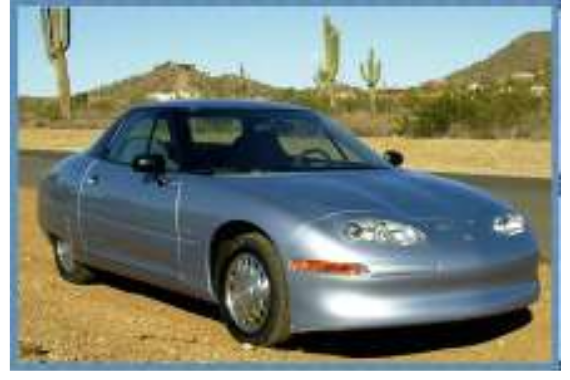 GM evolved its Impact car and produced the EV1 from 1996 to 1999 as the modern era’s first mass-produced electric vehicle (EV). The car was available by lease only, and owners were part of GM’s feasibility study of commuter EVs in California, Arizona and Georgia.
Although just two seats and a range of fewer than 100 miles, the car was a big hit with drivers. However, automakers soon realized that fewer parts, less friction and maintenance, meant EV’s were long-lasting and less profitable for service-reliant dealer networks.
ICE automakers joined forces to challenge California’s ZEV stipulation in court and cleared the way for them to produce more profitable ‘low-emission’, natural gas and hybrid gas/electric rather than pure electric vehicles. In 2002, over passionate resistance from their drivers, GM collected its entire fleet of leased EV1 cars and crushed 99% of them.
In 2003, the Oshawa, Ontario GM plant churned out a record 1 million internal combustion (ICE) vehicles.
In 2008, the highly indebted GM went bankrupt and was bailed out by governments.
In 2018, the Oshawa plant made just 130 thousand ICE vehicles. Eighteen years after they foolishly crushed their EV1 cars, GM says that the Oshawa plant will make zero ICE vehicles in 2020, but become a test site for their new line of electric vehicles. The story continues.
See: GM Roots run deep in Canada’s fading motor city and this direct video link.








