
The credit cycle is running its course–plan for it

In the first two credit-tightening cycles of the last 27 years, the US central bank hiked its base interest rate 108% from August 1992 to May 2000 (3 to 6.5), and 425% from June 2003 to June 2006 (1 to 5.25).

While household savings were higher coming into those cycles and total debt levels much lower than present, both ended in recession and a 50%+ average loss in stock prices. Going back much further, recessions have followed 93%–13 of 14– credit tightening efforts since the second world war.  (See this link for a good summary of rate history and accompanying events).

Lest anyone misdiagnose the disease here though, the catalyst for recessions and financial market dislocations is not the ‘normalizing’ of lending rates and standards, but rather the years of low standards, excessive spending and poor risk mismanagement that proceeded them. And in this, the 2008 to 2018 cycle will go down as an all-star for the history books.

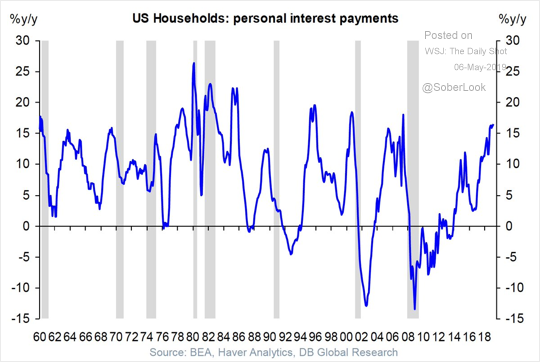
In the chart below, Deutsche Bank notes that the 15% year-on-year increase in household interest payments to date has already matched the pace that proceeded the last two recessions.  Thus even though base rates remain less than 43% of previous cycle highs today, no one should be surprised that consumption-based economies are faltering and The Mighty US Consumer is Struggling. (Canadians too!).
Similarly, the New York Fed’s indicator showing recession probability twelve months ahead (black line below), and the last eight recessions in blue, has also touched its highest level since 2007.
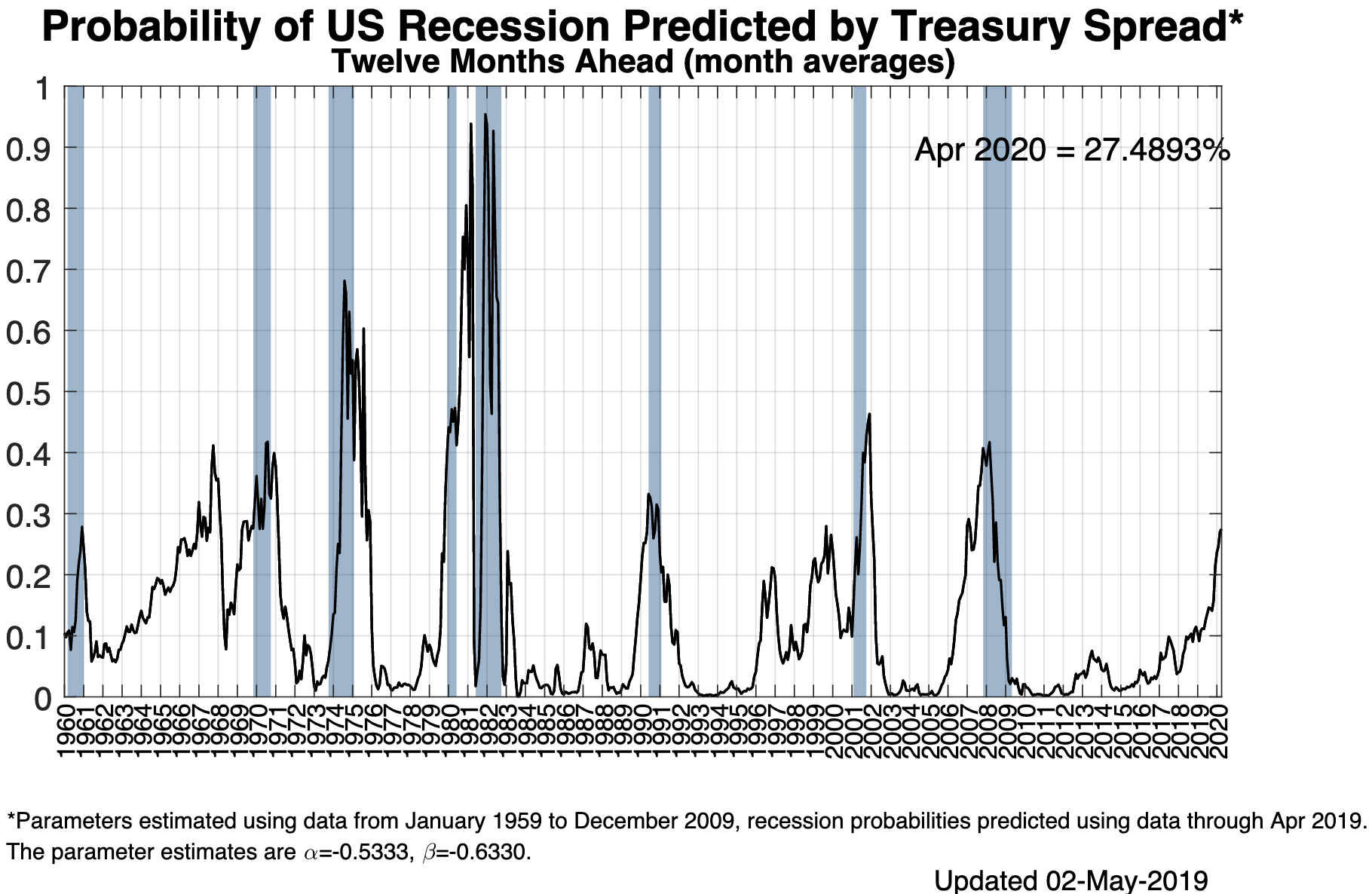

Economist David Rosenberg explained this historically relevant indicator along with others in an appearance on Bloomberg this morning.  Here is a direct video link.

This epic credit cycle is mean-reverting whether we are ready or not.  Individuals and businesses need a plan to help shield life savings from end of cycle losses (hold and hope are not good), while maintaining liquidity and a discipline to buy assets on deep discount once cycle lows return once more.


Posted in Main Page | Comments Off on The credit cycle is running its course–plan for it

‘Conservative and low-risk’ funds cloak large capital danger for many

A decade of ultra-low yields and financial gimmicks have turned a generation of savers unwittingly into gamblers and fueled a marketing bonanza of ‘high yield’ funds, products and strategies sold to gullible masses hoping for more than the safest assets were offering.  As in the last two cycles, this speculative frenzy was always destined to end with widespread losses, upset and lawsuits.

Sudden price drops in the third quarter of 2018 were a warning shot for anyone willing to see the truth.  For those who fell back to complacent sleep in the rebound that followed, the nightmare is yet unfolding.

Some lawsuits are already underway from UBS clients in a ‘yield enhancement strategy’ who saw losses greater than 20% in 2018 in an investment they were told was ‘conservative’ and ‘low risk.’   See:  UBS clients burned by iron condor strategy:

The goal of the Yield Enhancement Strategy is to give investors better returns or cash flow, typically on assets that don’t themselves yield much, according to marketing materials for YES… [DP: this is a widespread marketing mantra today]

To do that, the YES team uses an investor’s assets as collateral in a margin account to execute an esoteric options strategy called an “iron condor.”…As long as the price stays within the breakeven points created by the spreads, you make money.

When the price moves out of the ‘breakeven’ points, you lose a ton. What could possibly go wrong, right?


Posted in Main Page | Comments Off on ‘Conservative and low-risk’ funds cloak large capital danger for many

Fed warns on the high-risk leverage that its policies have enabled

The Federal Reserve escalated its warnings about the perils of risky borrowing by businesses Monday, saying firms with the worst credit profiles are the ones taking on more and more debt.

“The historically high level of business debt and the recent concentration of debt growth among the riskiest firms could pose a risk to those firms and, potentially, their creditors,” the Fed said.  Here is a direct video link.

Also see: Fed’s Powell says financial risks are moderate; these charts don’t agree.

While the Fed is warning on credit risk, as usual, they have enabled it and have no plan to help deflate the problem.  After keeping policy rates near the zero bound for years, the Fed has paused hiking plans at a base rate of just 2.5% heading into an economic downturn.  There is no cavalry available to fight the next recession.

Posted in Main Page | Comments Off on Fed warns on the high-risk leverage that its policies have enabled



