‘Single biggest way’ to reduce impact one earth? eat plants

Our individual consumption choices drive all the health or harm in the world, especially in what we chose to eat “far bigger than cutting down on your flights or buying an electric car”.

A new study published in the journal Science, compiled a dataset of almost 40,000 farms in 119 countries and covering 40 food products that represent 90% of all that is eaten. It assessed the full impact of these foods, from farm to fork, on land use, climate change emissions, freshwater use, water pollution (eutrophication) and air pollution (acidification).

Just one standout finding:  livestock takes up 83% of global farmland, while providing just 18% of calories consumed.  See Avoiding meat and dairy is ‘single biggest way ‘to reduce your impact on earth:

Avoiding meat and dairy products is the single biggest way to reduce your environmental impact on the planet, according to the scientists behind the most comprehensive analysis to date of the damage farming does to the planet.

The new research shows that without meat and dairy consumption, global farmland use could be reduced by more than 75% – an area equivalent to the US, China, European Union and Australia combined – and still feed the world. Loss of wild areas to agriculture is the leading cause of the current mass extinction of wildlife.

The new analysis shows that while meat and dairy provide just 18% of calories and 37% of protein, it uses the vast majority – 83% – of farmland and produces 60% of agriculture’s greenhouse gas emissions. Other recent research shows 86% of all land mammals are now livestock or humans. The scientists also found that even the very lowest impact meat and dairy products still cause much more environmental harm than the least sustainable vegetable and cereal growing.
 

Posted in Main Page | Comments Off on ‘Single biggest way’ to reduce impact one earth? eat plants

Tesla leading global energy storage

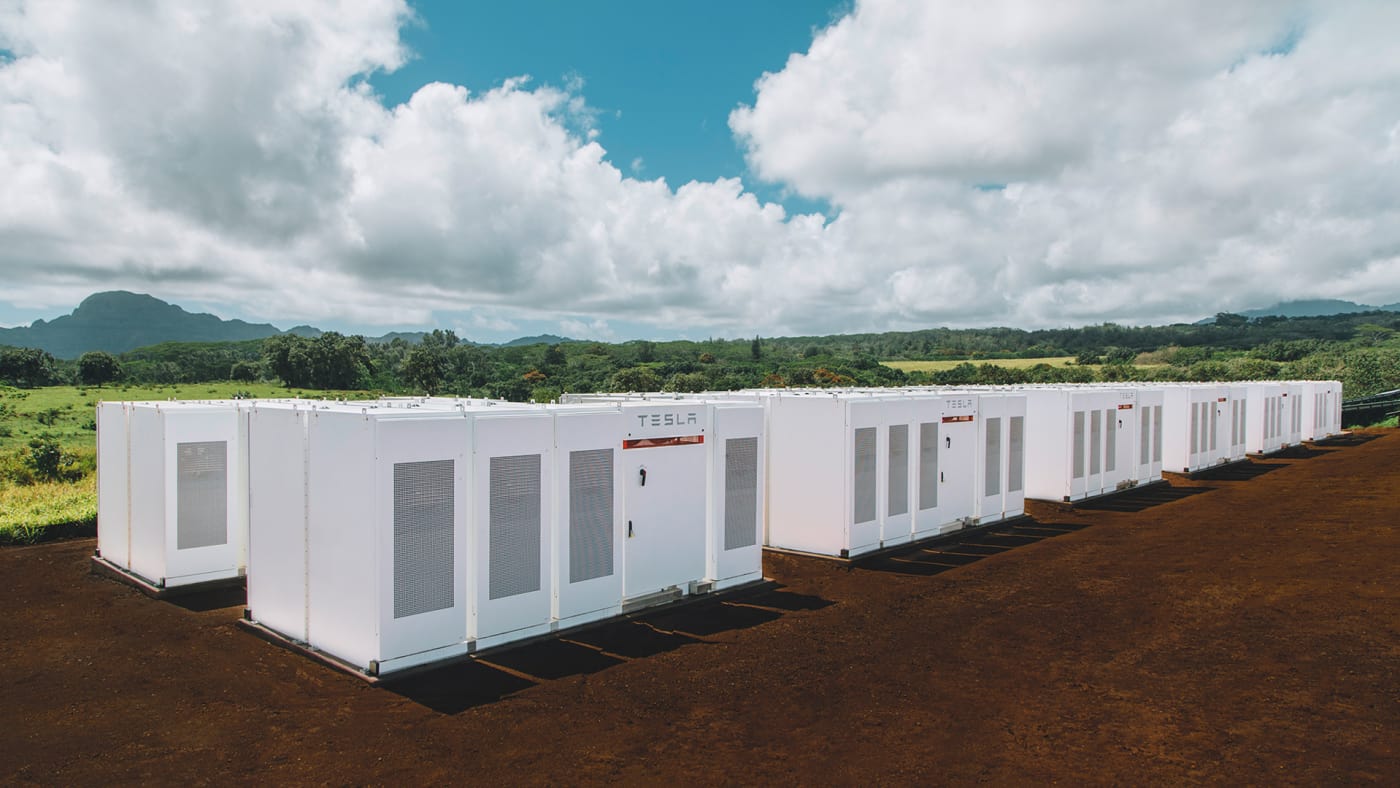
While haters hate…Tesla getting it done.  See: Tesla has installed a truly huge amount of energy storage:

Tesla, it’s been said, is less a car company than a battery company that sells cars. Today, the company is announcing a new milestone: Since 2015, it has installed a worldwide total of a gigawatt-hour of energy storage–technology that is critical for using renewable energy at scale. For comparison, that’s nearly half of the entire amount of energy storage installed globally last year. As the company’s electric car business quickly grows, the energy side of its business is growing even faster.


And EV cars now charge on solar day and night with Tesla Powerpacks at new ‘smart solar charging station’:

During the day, electric vehicles can charge on sunlight and the excess solar power is stored in Tesla’s battery packs, which is also connected to the grid, if there aren’t enough EVs charging.

After the sun goes down, the Powerpack can feed the solar power back to the charging station.

Posted in Main Page | Comments Off on Tesla leading global energy storage

Hold and hope at extreme valuations suggests compound losses

It is appreciated and rare when financial advisors acknowledge the math of loss and the truth about why compound return expectations routinely disappoint in real life.  This article from Lance Roberts is a gem:  The buy-and-hold investing approach is part of one of the most ‘hazardous’ stock myths:

Avoiding losses weighs far more heavily in compounding wealth than does chasing returns…investing in markets that are expensive may provide short-term satisfaction but more than likely will severely harm your ability to meet your retirement goals.  The reason…this message seems lost on many investment professionals and individuals is because:

    • They have never been through a major market reversion
    • They have only lived through one (2008) and assume another “financial crisis” cannot happen in our lifetimes.
    • They find it easier to passively manage money and blame major drawdowns on the markets rather than commit to the efforts, rigorous analysis, and mental fortitude to go against the crowd. These are all important traits needed to manage an active investment strategy.

Even if we suspend reality and fantasize that an investor–does not pay any fees or taxes, nor make withdrawals at any time, nor amass the bulk of their life saving late in life, nor add lump sums to expensive securities near cycle highs nor sell after cyclical drops–even if we assume all of this–and that a person added the same amount of savings to buy stocks every year, never more never less, and automatically reinvested every single dividend 100% back into more shares–that theoretical person still has spent 10+ years trying to grow their capital back to even after each manic secular peak in equity and corporate debt valuations since 1920.

And while this fantastical best-case-person is spending 10-15 years growing back losses to accomplish zero net gains, there is a high probability that their emotional, family and physical life have been negatively impacted, and too-late-to-fix financial plans substantially undone.

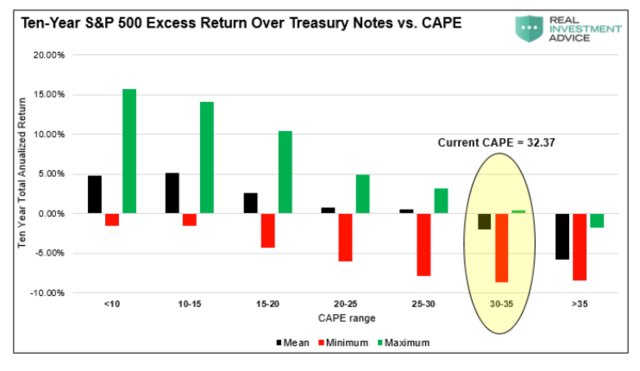
Consider that from 2000 through 2013, the S&P 500 Index, including dividends and inflation, delivered a zero rate of return. And from 2000 through 2017, it returned a scant 0.30% more than risk-free Treasury bonds (5.4% annualized for stocks versus 5.1% annualized for bonds). Further, to reach that return it required the expansion of valuation multiples to extreme and risky levels. Equity investors have endured two 50% draw downs, and over a decade of no returns, to achieve an 18-year, 30 basis point annualized pickup over bonds. In recent years that entailed holding equities that were well above long-term averages and presented a poor risk/return framework.

Today we are facing another decade+ of zero real return prospects for equity holders from the current extreme valuation (CAPE) of 32 on the S&P 500. The chart below shows the annualized performance of 10-year equity returns versus 10-year U.S. Treasury notes based on over 100 years of history.


Holding equity risk at these levels is not savvy, it’s financially suicidal. Standing clear of toppling trees and then going in to pick up fire wood after the fall, is a much more rational plan. But that takes personal discipline and patience on the part of clients, as well as the fortitude of advisors to put their clients’ best interests ahead of the industry’s short-focused asset ‘growth’ targets.

Posted in Main Page | Comments Off on Hold and hope at extreme valuations suggests compound losses