Housing speculation undermining social stability

Excellent article on why the social contract and stability requires us to curb housing speculation and tax foreign ‘investment’ flows.  Read Speculation tax is essential for housing affordability:

A problem arises, however, when people can buy housing with income or wealth not generated locally, and yet are still able to use social services — education, health care, etc. — and infrastructure — roads, bridges, legal system, etc.

If property taxes are comparatively low, as they are in B.C., this allows such individuals to pay much less than their fair share of taxes. They can, in short, free ride on the contributions of others.

What will be the effect of that dynamic? If the jurisdiction is an attractive place to live, it will mean that wealthy people from around the world will want to place their families there. They will buy expensive housing, pay minimal income taxes, and enjoy public amenities and services — all for the modest cost of their property taxes.

That prevailing dynamic means that housing prices come to reflect the purchasing power of a global elite, not local working people. Those working people, meanwhile, are left to subsidize that elite with their income taxes, and they struggle to save up enough to pay for what is now unaffordable housing.

…Should young working British Columbians [or Ontarians or anywhere else] be forced to subsidize those who are using foreign funds to out-compete them for housing? Would you accept that situation if you were in their shoes?

 

Posted in Main Page | Comments Off on Housing speculation undermining social stability

Oil and loonie looking vulnerable

Oil and the Canadian dollar are hyped up once more on record speculative long bets. Downside now looms large on the slightest de-escalation in the Middle East amid slowing world demand and a secular increase in global inventories.

Ed Morse, global head of commodities at Citigroup Research, and Bloomberg View columnist Gary Shilling, discuss the outlook for the price of oil amid geopolitical risks. Here is a direct video link.

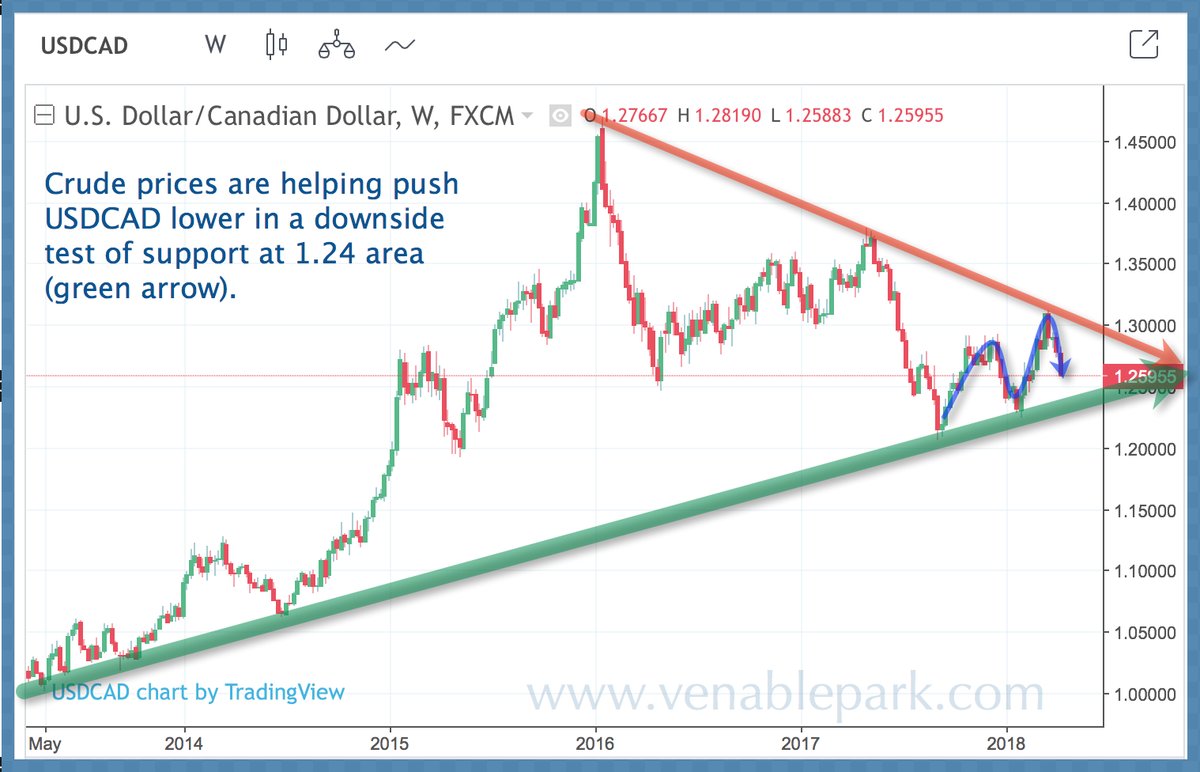
So far, the US/CAD index is bouncing this morning.  Longer term support remains in the $1.24 per C$ area (green line below) as shown in this chart from my partner Cory Venable.  Fundamental factors suggesting lower for longer loonie, remain in tact.

Posted in Main Page | Comments Off on Oil and loonie looking vulnerable

Recession and 40% plunge in equities baked in by extreme debt and prices

Interesting comment in this recent segment about US home prices having less downside risk and being more affordable relative to income today than in 2008. That is true in many cities. Not that several ‘hot’ markets are not set up for correction again, but risk is a function of price, so less overvalued this cycle should mean less far to fall than in 2008.  And despite the rebound enabled by rising debt over the past 5 years again, many US markets have still not seen home prices recover their 2006-07 peaks–a decade+ of negative and stagnant prices is typical after secular realty bubbles burst.

Unfortunately, the opposite trends are true of Canada. Here the median price for homes sold in February was $494k (versus a 232K median US home price sold in March) and Canada’s credit bust and decade+ mean reversion in asset valuations is just barely started.

Scott Minerd, who warned clients in a recent note that the market is on a “collision course with disaster,” expects the worst of the damage to start in late 2019 and into 2020.

Along with the decline in equities, a rise in corporate bond defaults is likely as the Federal Reserve raises interest rates and companies struggle to pay off record debt levels.   Here is a direct video link.

Guggenheim’s Scott Minerd’s dire forecast for financial markets from CNBC.

Posted in Main Page | Comments Off on Recession and 40% plunge in equities baked in by extreme debt and prices