
IMF: Synchronous asset bubbles risk synchronous global bust

The International Monetary Fund has stepped up its warning on the economic and social risk of the synchronized housing bubbles that have billowed around the world on QE-driven mania, particularly since 2013.  You can read their April report here:  Global Financial Stability Report April 2018.

Some key takeaways are summarized in this article, see Sydney, Melbourne house prices are now global, IMF warns

“…during the past three decades house prices have become increasingly synchronised across countries, especially among major cities.

“Thus, policymakers cannot ignore the possibility that shocks to house prices elsewhere may affect domestic markets.”

“Increasingly, house prices have become determined at the global level,” the IMF said in the report.

“…a decline in external demand may exacerbate the challenges of stabilising household balance sheets, financial markets, and economic activity…

Worryingly for investors who like to believe houses are “always safer than stocks”, the IMF report cautions that “the dynamics of house prices are similar to those of other financial assets”.

Posted in Main Page | Comments Off on IMF: Synchronous asset bubbles risk synchronous global bust

Housing speculation undermining social stability

Excellent article on why the social contract and stability requires us to curb housing speculation and tax foreign ‘investment’ flows.  Read Speculation tax is essential for housing affordability:

A problem arises, however, when people can buy housing with income or wealth not generated locally, and yet are still able to use social services — education, health care, etc. — and infrastructure — roads, bridges, legal system, etc.

If property taxes are comparatively low, as they are in B.C., this allows such individuals to pay much less than their fair share of taxes. They can, in short, free ride on the contributions of others.

What will be the effect of that dynamic? If the jurisdiction is an attractive place to live, it will mean that wealthy people from around the world will want to place their families there. They will buy expensive housing, pay minimal income taxes, and enjoy public amenities and services — all for the modest cost of their property taxes.

That prevailing dynamic means that housing prices come to reflect the purchasing power of a global elite, not local working people. Those working people, meanwhile, are left to subsidize that elite with their income taxes, and they struggle to save up enough to pay for what is now unaffordable housing.

…Should young working British Columbians [or Ontarians or anywhere else] be forced to subsidize those who are using foreign funds to out-compete them for housing? Would you accept that situation if you were in their shoes?


Posted in Main Page | Comments Off on Housing speculation undermining social stability

Oil and loonie looking vulnerable

Oil and the Canadian dollar are hyped up once more on record speculative long bets. Downside now looms large on the slightest de-escalation in the Middle East amid slowing world demand and a secular increase in global inventories.

Ed Morse, global head of commodities at Citigroup Research, and Bloomberg View columnist Gary Shilling, discuss the outlook for the price of oil amid geopolitical risks. Here is a direct video link.

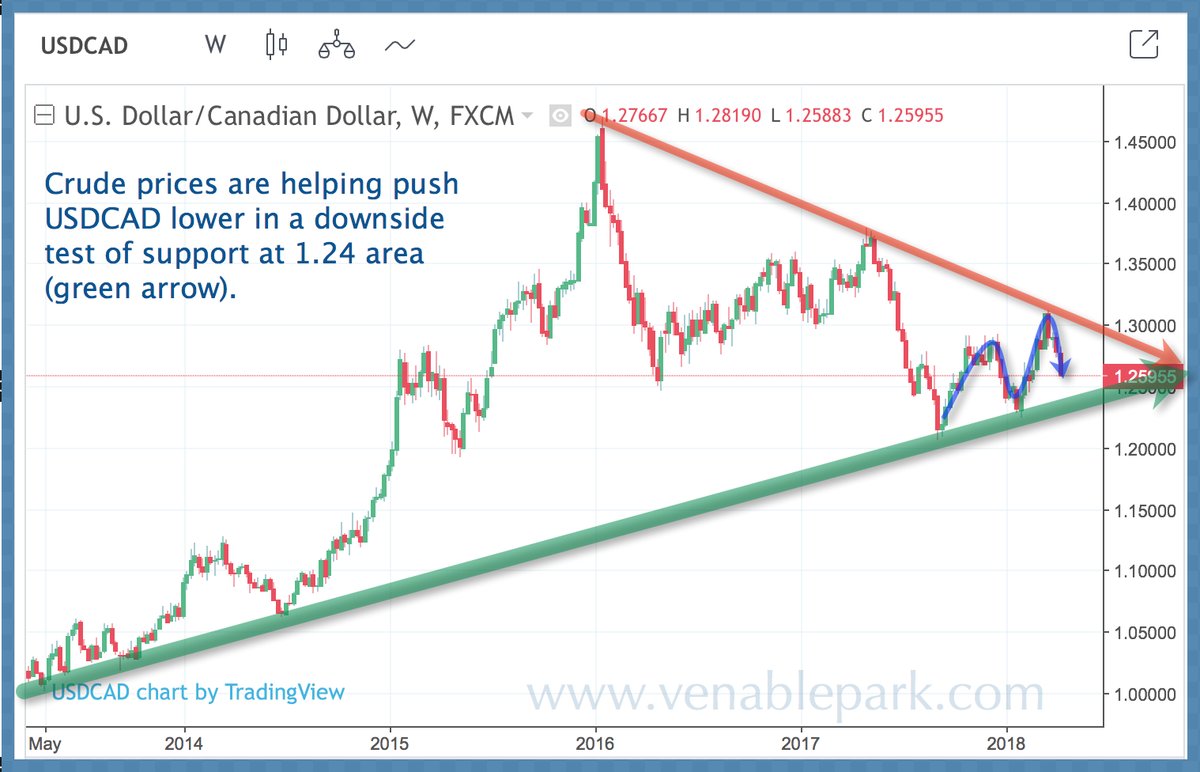
So far, the US/CAD index is bouncing this morning.  Longer term support remains in the $1.24 per C$ area (green line below) as shown in this chart from my partner Cory Venable.  Fundamental factors suggesting lower for longer loonie, remain in tact.

Posted in Main Page | Comments Off on Oil and loonie looking vulnerable




