As the world remains focused on all sorts of counter-productive information and behaviors, the most valuable commodity–widely wasted and taken for granted in much of North America--is rapidly becoming more scarce. It will command more of our attention in time.
The Bank for International Settlements is a board comprised of 60 central bank heads around the world. As explained on their website here: at bimonthly meetings, normally held in Basel, Governors and other senior officials of BIS member central banks discuss current developments and the outlook for the world economy and financial markets. They also exchange views and experiences on issues of special and topical interest to central banks and issue reports on current conditions.
Most entertaining (for me at least), is the traditional Pythonesque dichotomy between the typically sanguine statements on financial conditions central bankers issue about their own economies at home, and the pull-no-punches-warnings in collective statements issued as part of the BIS board, once abroad.
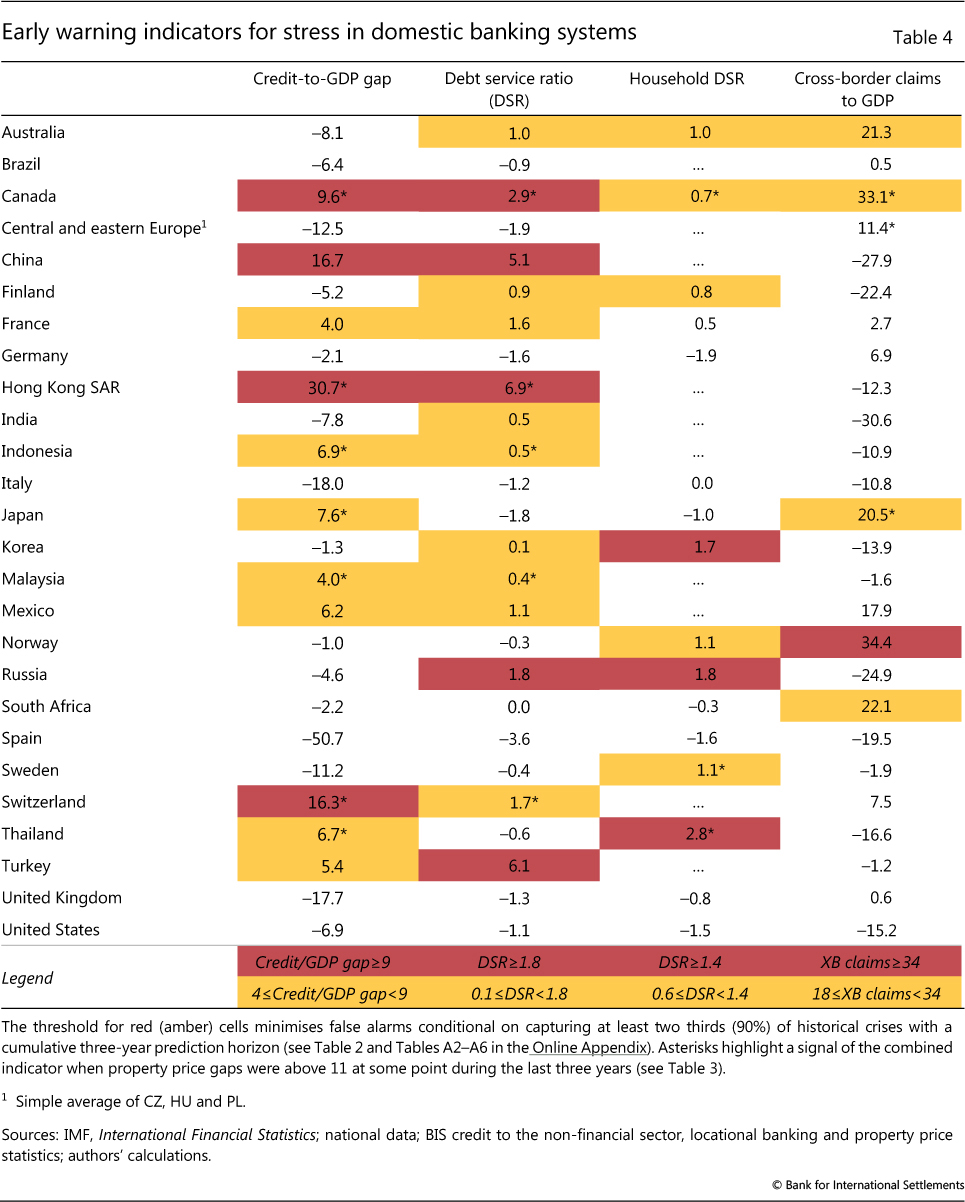
In their latest March 11 review here, two of the four key measures they track for signs of stress in domestic banking systems–credit-to-GDP gap and its total debt-service ratio – came up code red for high risk of banking crisis in coming years in three countries: Canada, China and Hong Kong. This is shown here on their chart.
The BIS warning comes as Canada’s household-debt levels hit a record $1.8 trillion in Q4 2017, debt to household income measured 171% in the latest Statscan report (December) and housing prices in the highest population areas are the most overvalued, relative to rents and income, of anywhere in the world.
Not to worry, executives at Canadian banks reassured shareholders this week that the environment is benign and that their own lending books are relatively blemish-free.
“When the music stops, in terms of liquidity, things will be complicated. But as long as the music is playing, you’ve got to get up and dance. We’re still dancing.”
For those who are not being paid bonuses to take reckless risks and look the other way, the Bank of International Settlements posted this handy little video primer on why Canada’s households, businesses and economy (along with other highly indebted countries) are now set up for a period of prolonged rough patch.
As the CFP Board prepares to release a new set of standards of conduct for planners, investor advocates are calling for last-minute changes to strengthen the fiduciary responsibilities associated with the certification.
The board’s proposed standards don’t go far enough to address conflicts of interest and must also tackle advisors’ compensation arrangements, says Knut Rostad, president of the Institute for the Fiduciary Standard. Rostad said he would like to see the CFP Board’s fiduciary standard follow in the spirit of the Department of Labor’s rule and the fiduciary responsibilities that grew out of the Investment Advisers Act.
…”Here’s the rub: CFPs [CFA’s too!] mostly work in brokerage sales where these things are hard, or, frankly plain impossible,” Rostad said.
“Without guidance … brokers rely on industry training, culture and experience,” he added. “BDs live by suitability rules, and these are the home field to hidden conflicts.”
Rostad and his allies are also pressing the board to take a firmer stance on conflicts, urging elimination and mitigation over disclosure. They would also like to see language requiring transparency and clarity on conflicts and fees.
…Kahler finds the marketing campaign branding CFPs [CFA’s and other financial ‘advisors’] as trusted advisors particularly troubling. That promotional effort has been a bad-faith exercise representing all CFP holders as adherents to the highest code of ethics when the board’s own standards of conduct fall well short of that mark, he argues.
“At best I think our campaign has been misleading,” he says. “At worst I think it may border on being fraudulent.”
Bottom line: the financial sales side spends hundreds of millions a year on sponsorship, lobbying regulators and promotional materials that pull on the public’s heart strings with laudable ideas like planning for the future and looking after our loved ones. All the while resisting and trampling on fiduciary standards that require their ‘advisers’ to put the best interests of trusting customers ahead of maximizing their own fees and commissions.
In doing so, they are committing fraud and causing great public harm.
We must demand that sales is separated from advising in finance. We need a return to Glass-Stegall-syle divisions. Yes we can. We have to.
Posted inMain Page|Comments Off on Most financial ‘advisors’ are paid to sell their clients capital risk
“An explosive critique about the investment industry: provocative and well worth reading.”
Financial Post
“Juggling Dynamite, #1 pick for best new books about money and markets.”
Money Sense
“Park manages to not only explain finances well for the average person, she also manages to entertain and educate while cutting through the clutter of information she knows every investor faces.”
Toronto Sun